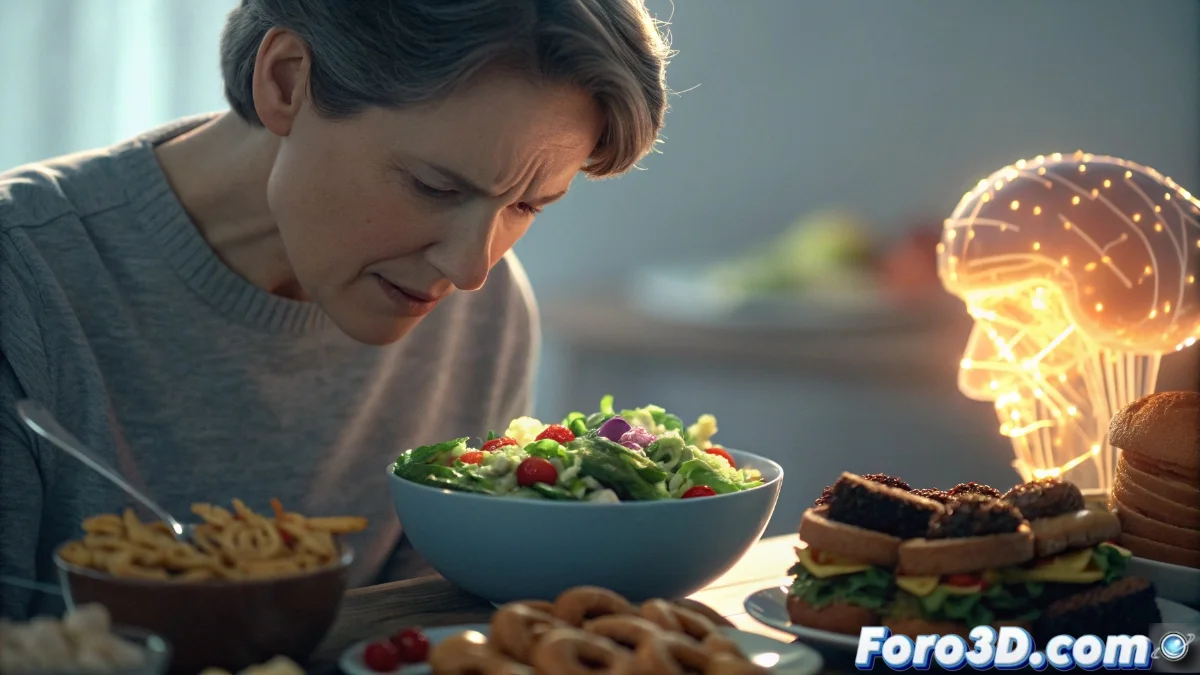
Why Our Brain Sabotages Diets: Neuroscientific Bases
Neurobiology reveals why maintaining restrictive diets is so challenging for most people. Our evolved brain is programmed to prioritize the search for energy-dense foods, an ancestral survival mechanism that today creates conflicts in societies with food abundance. 🧠
Brain Reward Mechanisms
Functional neuroimaging studies demonstrate that hyperpalatable foods activate the same neuronal circuits as some substances with addictive potential. This activation generates a constant internal battle between immediate gratification and long-term health goals.
Key neurobiological factors:- Activation of the mesolimbic system in response to highly processed food stimuli
- Release of dopamine in the nucleus accumbens when consuming caloric foods
- Decrease in sensitivity to natural rewards with continuous exposure
Our biology prepared us for scarcity, not to resist the constant temptation of ultra-processed foods
Hormonal Regulation of Appetite
The endocrine system plays a crucial role in energy balance regulation. Leptin produced by adipose tissue and ghrelin secreted by the stomach maintain a homeostatic balance that is drastically altered during caloric restrictions.
Hormonal responses to restriction:- Significant increase in ghrelin, generating constant hunger sensation
- Marked decrease in leptin, reducing the sensation of satiety
- Activation of compensatory mechanisms that favor caloric intake
Environmental and Genetic Factors
Our modern context represents a constant challenge to food self-regulation. Permanent exposure to obesogenic stimuli, processed food advertising, and constant availability create conditions that overwhelm the adaptive capacity of our ancestral biological mechanisms.
Elements of the obesogenic environment:- Continuous exposure to food cues in media and public spaces
- Permanent availability of ultra-processed foods with high energy density
- Influence of genetic variants such as the FTO gene on appetite regulation
The Modern Evolutionary Paradox
The fundamental irony lies in blaming willpower when we actually face evolutionary mechanisms developed over millions of years. Our ancestral programming drives us to consume immediately available energy, while our contemporary self tries to impose artificial restrictions. Understanding these biological bases allows for developing more effective strategies that consider our neurobiological nature rather than fighting against it. 💡