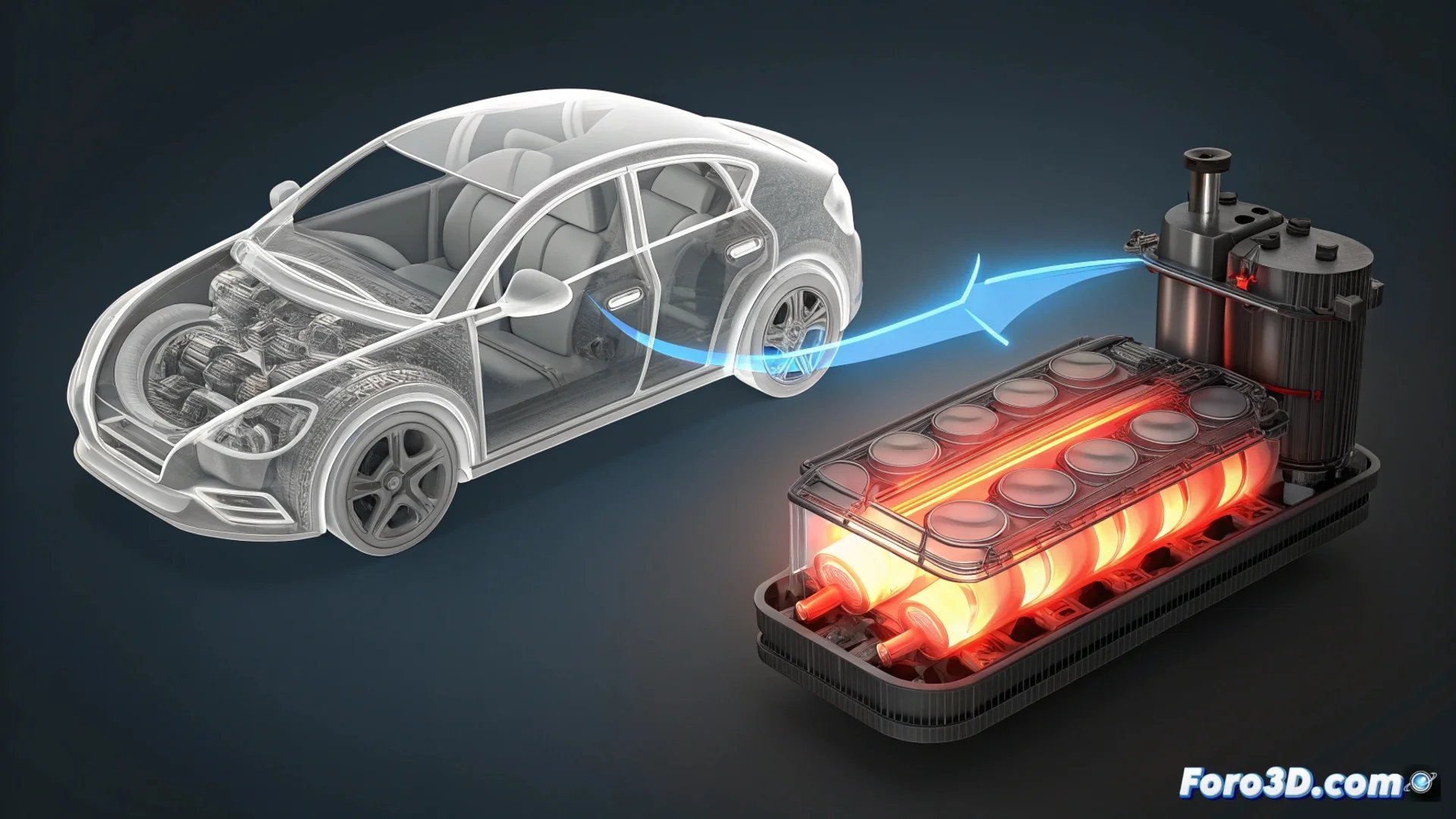
Why an Electric Motor Outperforms a Combustion Engine in Efficiency
Evaluating energy efficiency involves measuring how much useful energy is generated from the energy expended. An internal combustion engine transforms the chemical energy of fuel into motion, but a large part dissipates as heat that does not move the vehicle. In contrast, an electric motor converts battery energy into motion more directly, losing less energy as heat and making better use of what is available. ⚡
The Fundamental Limit Imposed by Thermodynamics
The laws of thermodynamics govern these processes. An engine that burns fuel operates between a high combustion temperature and a low exhaust gas temperature. This difference establishes a theoretical maximum efficiency limit, known as the Carnot cycle. Even under ideal conditions, a significant portion of energy is inevitably lost. Electric motors are not subject to this same thermodynamic limit, as their operating principle is based on electromagnetism and not a thermal cycle.
Key Points of the Thermodynamic Comparison:- Combustion engines are limited by the Carnot cycle, which dictates a theoretical maximum efficiency based on the temperature difference.
- A substantial part of the fuel's energy dissipates as heat in the radiator and exhaust gases, without possibility of use.
- Electric motors, by using electromagnetic conversion, largely avoid this inherent thermodynamic barrier of heat processes. 🔬
It's like comparing a piping system full of leaks with a direct and well-sealed line; no matter how much you repair the leaks, the direct line will always deliver more water.
How Losses at Each Stage Affect Performance
In a combustion engine vehicle, energy is lost at multiple stages. The engine dissipates heat through the radiator and exhaust. The mechanical transmission and internal friction consume additional energy. In the end, only a small fraction of the original fuel energy reaches the wheels. An electric vehicle follows a simpler and more efficient energy path.
Differences in the Energy Path:- Combustion Vehicle: Fuel energy → Heat losses in engine → Transmission losses → Friction losses → Energy at the wheels.
- Electric Vehicle: Battery energy → Electric motor (minimal losses) → Energy at the wheels. Regenerative braking recovers energy that in a conventional system would be lost as heat in the brakes. 🔋
- The simplicity of the electric powertrain, with fewer mechanical components, drastically reduces the points where losses occur.
The Final Impact on Overall Efficiency
The conclusion is clear: the energy efficiency of an electric motor is inherently superior. While a combustion engine struggles against thermodynamic limits and multiple energy leakage points, the electric motor offers more direct conversion and a system that allows energy recovery. This advantage is not just theoretical; it translates into smarter use of available resources, whether electricity or fuel. 🚗💨