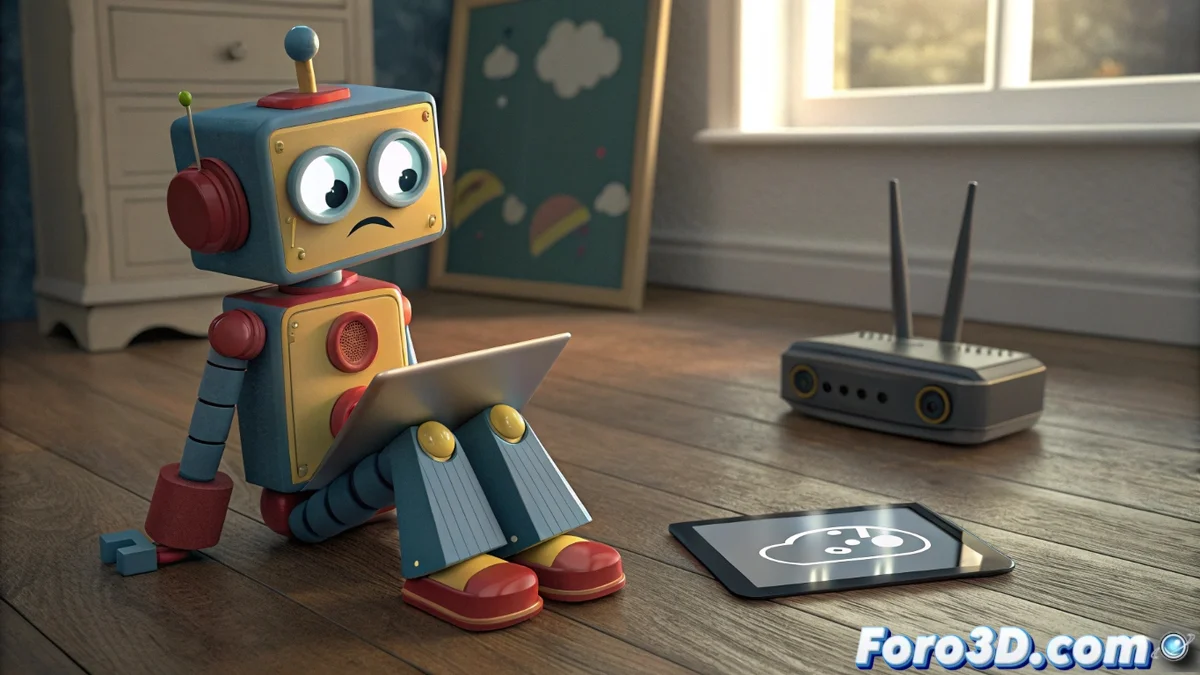
When the servers shut down, your connected toy stops working
A current electronic toy is no longer just an object you hold. To operate fully, numerous models require a permanent internet connection. These devices obtain new content from the cloud and link with mobile apps for user interaction. Their main value lies in that constant connection that sustains the promised experience. 🧸
Service abandonment as a form of obsolescence
The central conflict arises when the manufacturer decides to abandon the product. Whether because the company ceases operations or stops maintaining the online infrastructure, the result is the same: the servers that gave life to the toy are disconnected. At that moment, the device loses access to its essential functions. What was dynamic and interactive transforms into a static item, with minimal capabilities or directly unusable. The owner can do nothing to reverse this, as it depends on an external system that has disappeared.
Immediate consequences of the shutdown:- The toy loses the ability to download new content, such as songs, voices, or games.
- Communication with the associated mobile app is completely interrupted.
- Interactive and intelligent response functionalities stop operating.
You buy a sophisticated robotic friend, but in reality, you're only renting its personality until the company decides to wipe it off the map.
Are you buying a product or renting a service?
This scenario generates a deep discussion about what the consumer actually acquires. You pay for physical hardware, but its practical utility is tied to a software service with an unpredictable lifespan. The right to repair movement extends its fight here, demanding that companies release the source code or communication protocols when they stop supporting a product. This would allow the community to create alternative servers and prevent the toy from becoming scrap prematurely.
Solutions proposed by the community:- That manufacturers publish technical specifications and APIs when withdrawing a service.
- Develop open-source software that emulates official servers.
- Modify the toy's hardware to work with local and independent systems.
An uncertain future for ownership
The current landscape leads us to a model where we do not fully own what we buy. Your talking doll can, from one day to the next, only know how to maintain an absolute and very expensive silence. Dependence on cloud services not only affects toys, but a growing range of home devices. The battle for control over what we buy and the ability to keep it alive beyond the manufacturer's commercial interest is one of the crucial technological debates of our era. 🤖⚙️