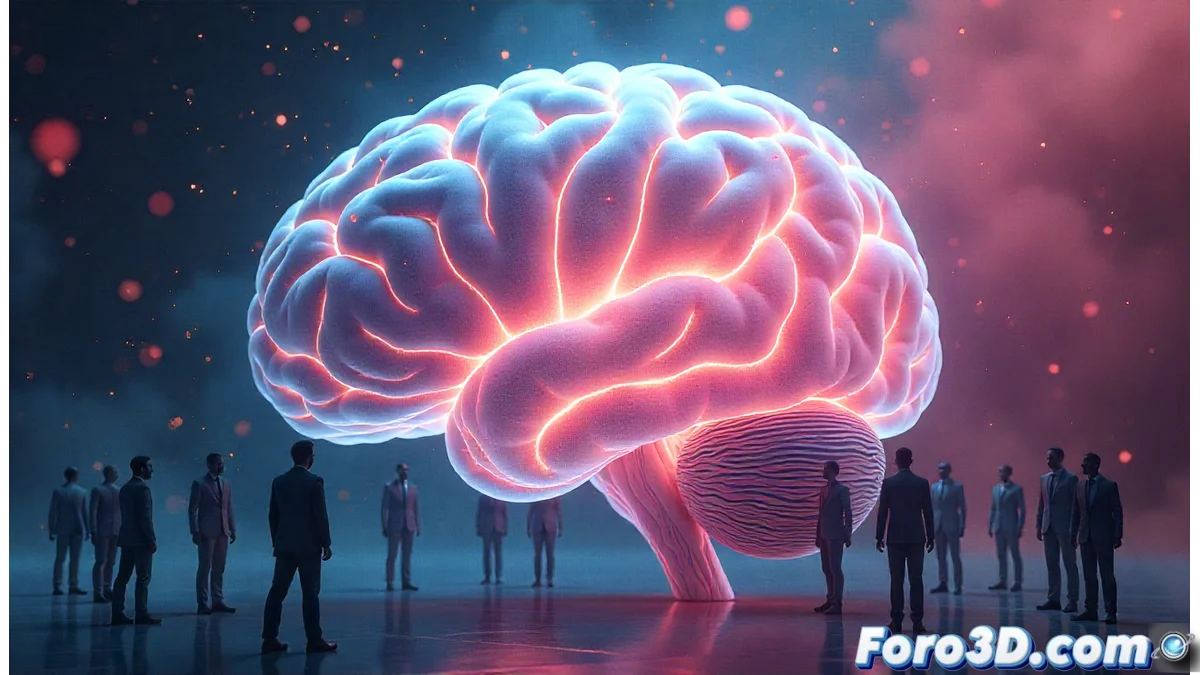
When the Brain Detects a Politician Breaking Promises
The brain's response to the breaking of political promises is a fascinating neuroscientific phenomenon that combines intense emotions and complex cognitive processes. 🧠
Emotional Activation and Breakdown of Trust
When a voter perceives that their candidate has betrayed their commitments, a neuronal storm is triggered in key brain areas. The amygdala, the central nucleus of emotional responses, activates intensely, generating an alarm signal similar to reactions to imminent dangers. Simultaneously, the medial prefrontal cortex, a region linked to building trust and social relationships, experiences a notable decrease in its activity, reflecting the collapse of the bond established with the political representative.
Brain Processes Involved:- The amygdala generates intense emotional responses of alertness and disappointment
- The medial prefrontal cortex reduces its activity as trust is broken
- A conflict arises between previous beliefs and current evidence
The political brain does not forget disappointments; it records them in its neural circuits for future decisions
Cognitive Dissonance and Processing of Deception
This scenario triggers a state of cognitive dissonance where previous beliefs about the politician clash head-on with the reality of their behavior. The brain attempts to resolve this contradiction through complex reevaluation processes that can lead to both forced justifications and absolute rejection of the candidate. The insula, an area specialized in processing negative emotions like disgust and disillusionment, activates powerfully, conditioning future attitudes towards the political class and fostering growing skepticism.
Immediate Psychological Consequences:- Mental conflict between political expectations and reality
- Intense activation of the insula in response to negative emotions
- Constant reevaluation of available information
Impact on Future Political Behavior
The experience of political disappointment permanently modifies the brain patterns related to reward and punishment systems. The hippocampus, a crucial structure for memory formation, consolidates this event as a significant negative experience, developing protective mechanisms that make us more analytical and critical before placing our trust in future candidates. This neuropsychological process can lead to more informed and reflective political participation, although it also runs the risk of generating generalized distrust towards the democratic system as a whole.
Our brain seems to advise us that, instead of blindly trusting political promises, we should apply the same critical logic we use when checking reviews before choosing a restaurant, with the caveat that in politics, the menu often changes after we have placed our electoral order. ⚖️