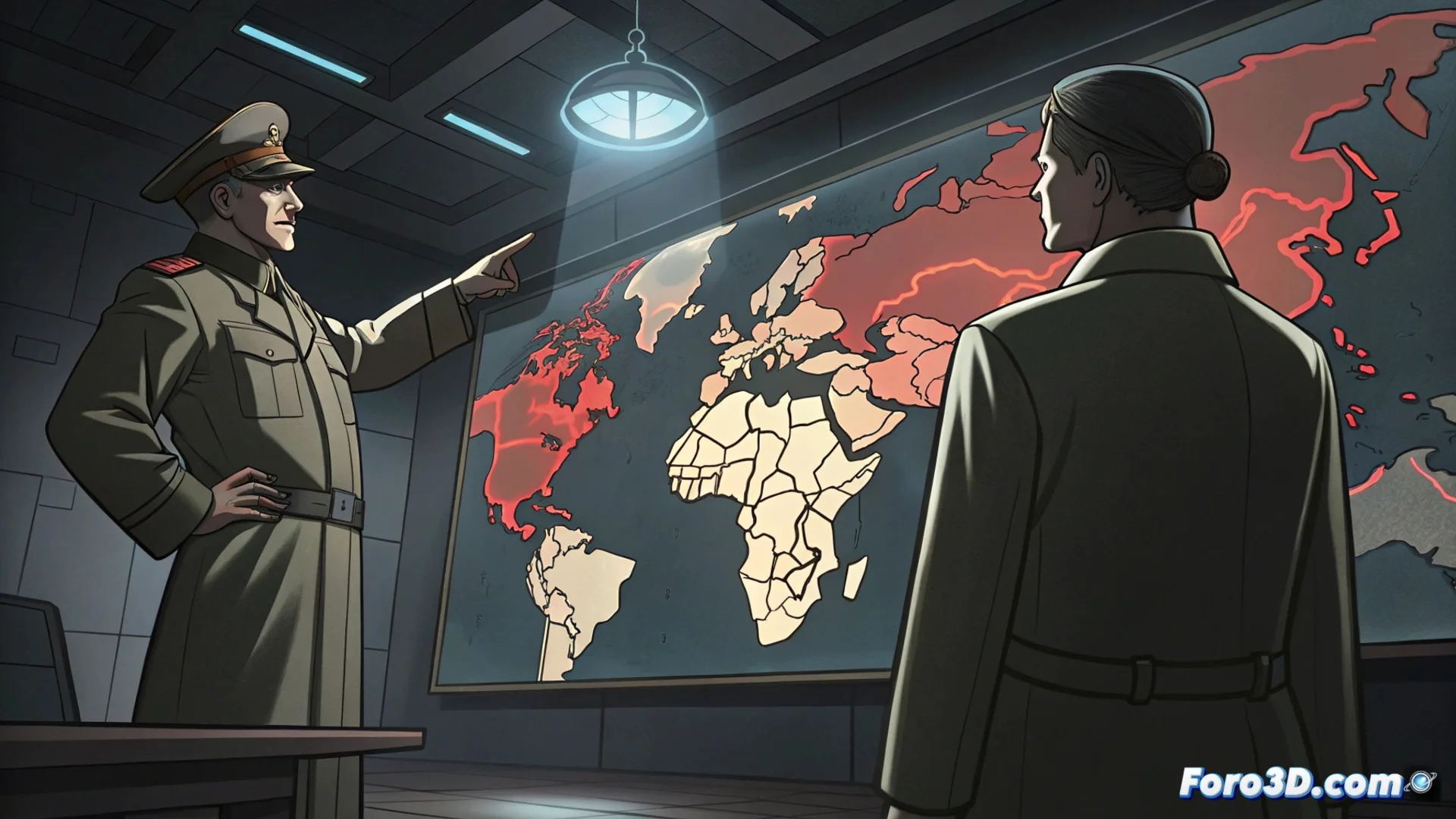
When Europe and the United States Collide: A New Order Emerges
Imagine a scenario where the two main pillars of the Western world enter into a direct military clash. Although its probability is low, the consequences would immediately alter the global balance. This confrontation would consume the resources of both powers, weakening them mutually and creating an unprecedented systemic crisis. The collective security architecture, embodied in NATO, would break apart, and the economic order that has governed since 1945 would collapse. This chaos opens a huge door for other actors watching from the sidelines. 🌍⚡
A Strategic Window for Moscow and Beijing
By staying out of the main conflict, Russia and China gain a position of relative strength. They can operate with greater freedom to advance their objectives in their zones of influence. Russia could attempt to consolidate its control over territories in the post-Soviet space or press more decisively in Eastern Europe, taking advantage of the divided attention of Washington and Brussels. China, for its part, could accelerate its moves on Taiwan or be firmer in the South China Sea, calculating that the West's capacity to respond is very limited. 🧭
Key actions they could deploy:- Russia pressures its borders and consolidates territorial gains in former Soviet states.
- China advances its maritime claims and accelerates its plans to integrate Taiwan.
- Both nations offer diplomatic and military support to regional allies, eroding Western influence.
While two titans clash, two others watch, sharpen their tools, and carefully measure the ground they will soon claim for themselves.
Expansion in Multiple Dimensions
The strategy is not limited to the military plane. Political and economic influence expands in parallel. Moscow and Beijing can offer advantageous trade agreements, financial aid, or diplomatic support to countries that feel abandoned by their traditional partners in the West. This allows them to weave a broader and more loyal network of alliances. Additionally, they can attempt to shape international institutions in their favor, propose new financial systems that challenge the dollar, or increase their investment in critical infrastructure in Africa, Asia, and Latin America, filling the void left by the Western retreat. 💼🌐
Non-military influence fronts:- Implement bilateral trade agreements that depend less on the Western system.
- Promote alternative financial and development institutions, such as the Asian Infrastructure Investment Bank.
- Invest in energy, transportation, and communications projects in developing countries to gain lasting influence.
Reconfiguring the Global Board
The final outcome of this hypothetical conflict would be a profound reconfiguration of world power. The geopolitical center of gravity would shift. Nations that have historically orbited around the Euro-Atlantic sphere would seek new patrons or adopt a more neutral stance. A more defined, and potentially more unstable, multipolar order would take shape, with Russia and China as much more consolidated power poles. The world would learn that when the guardians of the old order clash, it is others who write the new rules. 🏛️➡️🧩