What is Pillowing or Cushioning in 3D Printing and How to Fix It
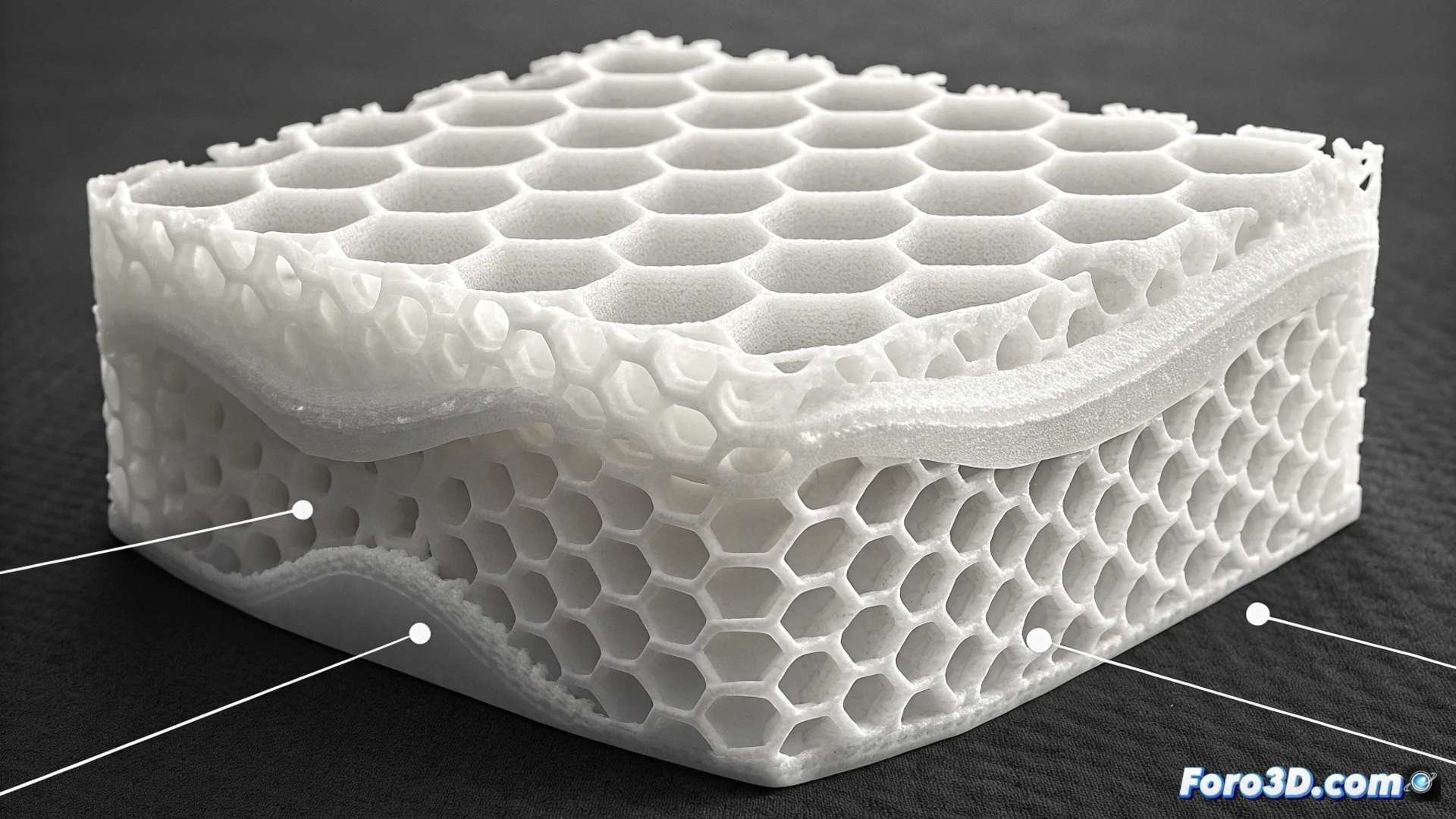
In the world of additive manufacturing, a common problem that spoils the final finish is pillowing or cushioning. This defect appears as a bulging and wavy top surface, far from being flat and smooth. It occurs when the layers forming the top of the part sink inward because they lack adequate support underneath. 🛌
Why the Cushioning Defect Appears
The root of the problem lies in the internal structure of the part. When the internal fill has low density or the top solid layers are too few, the molten plastic on the surface has nowhere to stably support itself as it cools and contracts. This generates tension that deforms the layer, creating those characteristic bumps.
Key factors that cause it:- A fill percentage that is too low, leaving large unsupported gaps.
- Setting an insufficient number of top layers in the slicer.
- Printing parts with very large surface areas without adequate internal support.
The model seems to want to take a nap and sinks into its own plastic mattress, a rest we didn't plan for.
How to Prevent the Surface from Sinking
Fixing this defect involves providing more structural support to the top of the print. This is achieved by modifying two main parameters in the slicing software.
Effective strategies to resolve it:- Increase top solid layers: This is the most direct solution. Adding more layers (between 4 and 6 is a common value) builds a more robust bridge over the fill pattern, better distributing the tension.
- Increase fill density: Raising the internal fill percentage, for example to 25% or more, provides a more continuous and solid base for the top layers to rest on.
- Combine both adjustments: For large parts or those with extensive surfaces, using more top layers along with denser fill usually gives the best result.
Final Tip for a Perfect Finish
Pillowing is a predictable and therefore avoidable defect. Check the top layers and fill settings before printing