What is a 3D Laparoscopic Tower and How Does It Revolutionize Surgery?
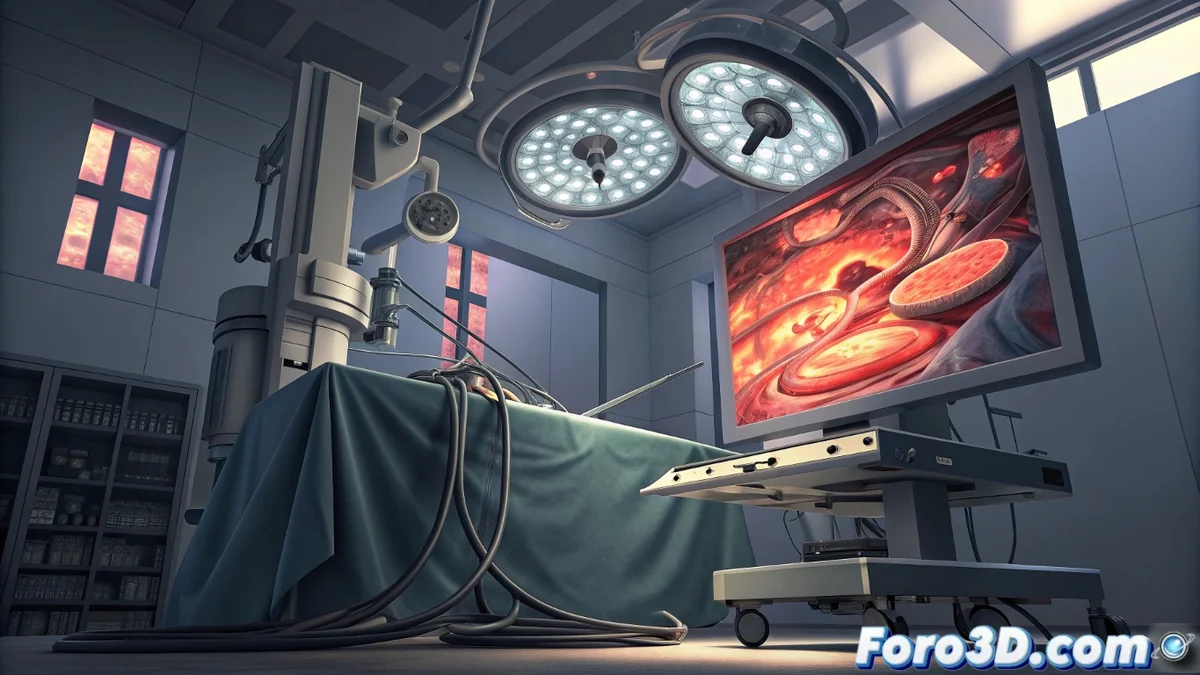
In the field of minimally invasive surgery, the 3D laparoscopic tower represents a monumental technological leap. This sophisticated system replaces traditional flat visualization with an immersive stereoscopic experience, restoring to the surgeon the crucial depth perception lost with 2D equipment. Its core is a binocular endoscope that, mimicking human vision, captures two simultaneous images to create a detailed three-dimensional model of the surgical field. 🏥
Modular Architecture of a Cutting-Edge System
Far from being a single unit, the 3D laparoscopic tower is an ecosystem integrated by high-precision modules. Each component plays a vital role in the visualization and control chain of the surgical environment.
Fundamental Elements of the System:- Endoscope and 3D Camera: The entry point. It uses dual optics to capture images from slightly different angles, which are processed by an ultra-high-definition video camera.
- Specialized 3D Monitor: High-frequency screen that displays the composite image. The surgeon uses polarized glasses (active or passive) to perceive the three-dimensional effect without visual fatigue.
- Processing Unit: The "brain" of the system. It manages video signals, adjusts parameters such as white balance and sharpness, and prepares the output for the monitor.
- Cold Light Source and Insufflator: They provide homogeneous illumination without excessive heat and keep the body cavity inflated with gas (such as CO2), creating the necessary space to operate.
- Ergonomic Mobile Cart: Platform that integrates all modules, allowing flexible transport and positioning around the patient in the operating room.
The restoration of binocular vision through 3D technology marks a before and after in the precision of complex laparoscopic surgery.
Tangible Benefits in the Operating Field
The implementation of this technology is not merely a visual whim; it brings measurable improvements in surgical outcomes. The main advantage is superior anatomical navigation, where tissue planes, blood vessels, and nerves are distinguished with unprecedented clarity.
Applications and Key Advantages:- Accelerated Learning Curve: For surgeons trained in open techniques, the transition to laparoscopy is more intuitive, as 3D visualization replicates natural spatial perception.
- Greater Precision in Dissection and Suturing: Delicate procedures such as radical prostatectomy or colorectal surgery benefit from safer and more accurate instrumental movements, reducing the risk of damage to adjacent structures.
- Operational Efficiency: Clinical studies indicate a potential reduction in surgical time and a decrease in complication rates, optimizing operating room resources.
- 3D Documentation: Many systems allow recording interventions in stereoscopic format, invaluable for training, postoperative analysis, and telemedicine.
Practical Considerations and Future of the Technology
Adopting a 3D laparoscopic tower involves a significant economic investment 💸, a crucial factor for hospital management departments. Additionally, it requires the surgical team to adapt to the use of special glasses, an element that, although functional, adds an ergonomic component to consider. However, the consensus in the medical community points to the fact that the benefits in precision and patient safety more than justify these initial challenges. This technology not only improves current procedures but also paves the way for future advances such as integration with augmented reality and robot-assisted surgery, establishing itself as a fundamental pillar in the evolution toward smarter and more effective minimally invasive surgery. 🔬