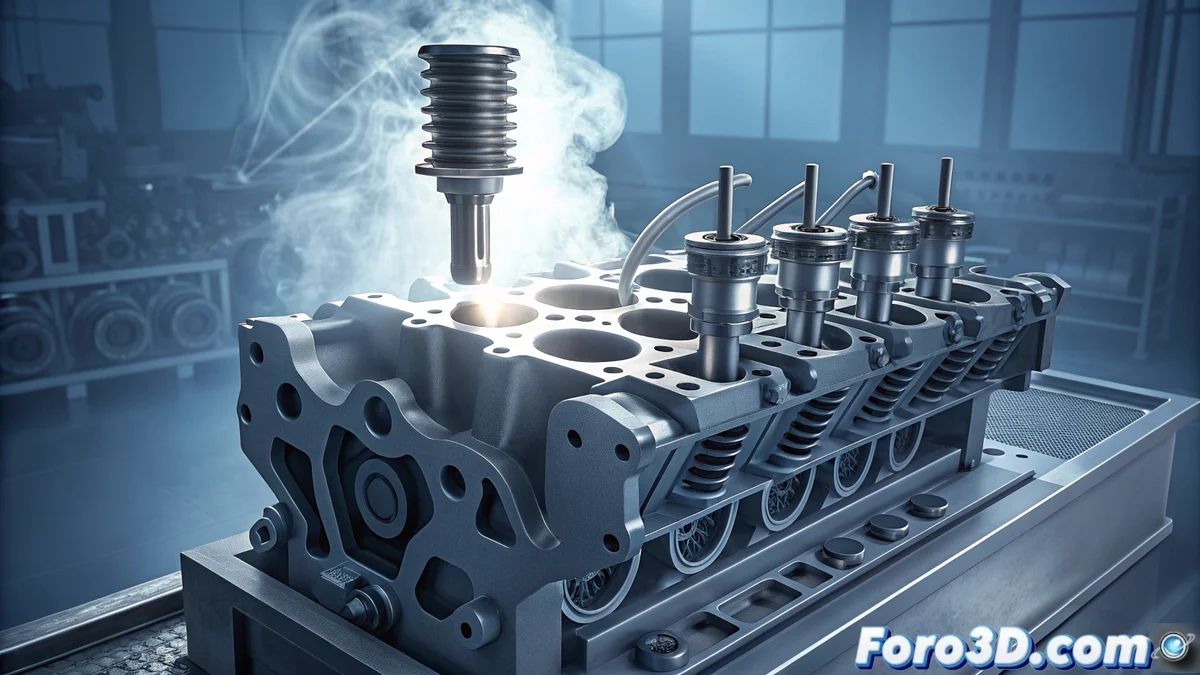
Water Can Reduce Diesel Engine Emissions
The idea of mixing water with a diesel engine has always sounded like a sure breakdown. However, current research demonstrates that introducing water precisely into the combustion can have positive effects. This long-known practice is now being reevaluated with modern instrumentation to quantify its real benefits. 💧
Mechanism of Water Injection in Diesel Engines
The system atomizes a minimal amount of water and incorporates it into the intake air flow or injects it into the cylinder. Upon reaching the combustion chamber, the water evaporates instantly. This process absorbs thermal energy and cools the active mixture. The lower temperature during combustion limits the formation of nitrogen oxides (NOx), key pollutants in these engines. Additionally, it allows the engine to operate with more advance without the risk of knocking, which can increase its performance. 🔬
Key advantages of the process:- Significantly reduces NOx generation.
- Slightly decreases the amount of soot particles.
- Allows optimizing the ignition timing to improve thermodynamic efficiency.
“Water injection acts as an internal coolant, modulating the peak combustion temperatures that generate NOx.”
Research Findings and Trade-offs
Engine bench tests confirmed a remarkable reduction in NOx emissions. However, implementing this system involves practical challenges. It requires additional components: a water tank, pumps, dedicated injectors, and an electronic control unit. This increases mechanical complexity, the final price, and the vehicle's weight.
System limitations and requirements:- Requires demineralized water to avoid limescale buildup in the engine.
- The driver must refill the water tank periodically.
- Adds one more item to the car's routine maintenance list.
Practical Perspective for the User
The technique presents a paradox: an environmental benefit against an additional operational burden. The driver already has to monitor fuel, oil, brake fluid, coolant, and windshield washer levels. Adding another tank to refill may be perceived as a logistical inconvenience. The final viability will depend on balancing the emissions gain with user acceptance of this new maintenance. ⚖️