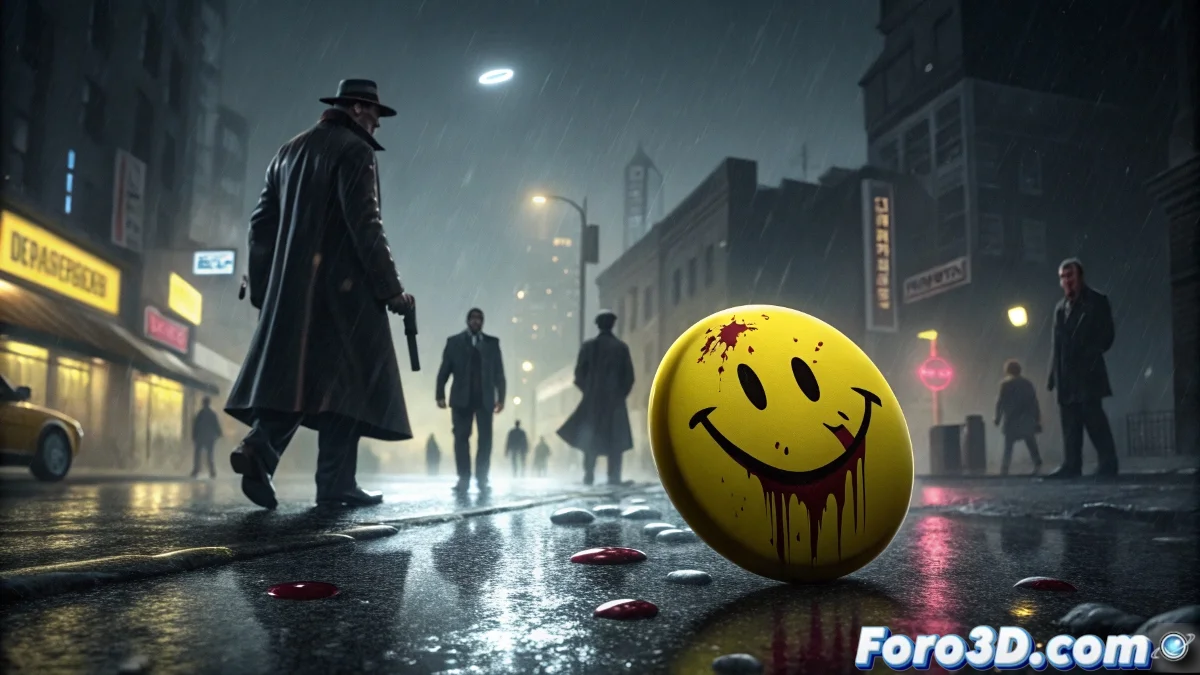
When Superheroes Stopped Being Perfect to Become Interesting
Watchmen is not just a comic; it is the earthquake that shook the foundations of what it means to be a superhero in popular culture. Alan Moore and Dave Gibbons created a work that demolished the innocence of the genre to rebuild it with moral complexity, psychological depth, and a rawness that still surprises today. 🎭 Set in an alternate 1985 world where masked vigilantes are real and have altered the course of history, the work presents a reality where the United States won Vietnam, Nixon rules perpetually, and the nuclear threat hangs like a sword of Damocles over humanity. It is the comic that grew up and forced us to grow with it.
The World That Could Have Been: When History Twists
The construction of Watchmen's alternate universe is a masterclass in worldbuilding. Moore does not limit himself to changing superficial details; he completely redefines the 20th-century geopolitical landscape based on a simple premise: what if beings with real superpowers existed? 🌍 The presence of Dr. Manhattan ensures American supremacy, avoiding nuclear conflicts but creating unbearable international tension. This setting is not just scenery; it is another character that shapes the decisions and morality of each vigilante, demonstrating how absolute power corrupts absolutely, even when used for "the greater good."
Characters that Redefined the Heroic Archetype:- Rorschach: the uncompromising vigilante in a gray world
- Dr. Manhattan: the god who loses his humanity
- Ozymandias: the smartest man with the worst solutions
- The Comedian: the cynic who sees the truth behind the facade
Dave Gibbons: the Visual Architect of Chaos
While Moore weaves the narrative, Gibbons builds a visual universe that is as meticulous as it is revealing. Every panel, every composition, every framing choice is carefully calculated to serve the story. 🎨 The obsessive symmetry, the use of color (especially in the recolored Absolute edition), and the attention to environmental detail create a reading experience that rewards constant revisiting. The character designs, from Rorschach's ever-changing mask to Dr. Manhattan's blue nudity, have become visual icons that transcend the comic medium.
Narrative Structure: the Clock that Never Stops
The genius of Watchmen lies in how it structures its narrative like a perfect clockwork mechanism. The main story intertwines with excerpts from memoirs, newspaper articles, and the meta-comic Tales of the Black Freighter, creating a rich texture that explores themes of time, destiny, and free will. ⏰ The pacing mimics the ticking of a clock approaching nuclear midnight, with each chapter inexorably advancing toward a climax that challenges conventional notions of heroism and sacrifice. It is a work that demands active reading, where the reader must connect the dots between multiple timelines and perspectives.
Revolutionary Formal Innovations:- Use of a 12-chapter clockwork structure
- Integration of apocryphal material that enriches the world
- Visual and thematic symmetry throughout the work
- Non-linear narrative that reveals information strategically
The Absolute Edition: the Definitive Version
For those seeking the Watchmen experience in its fullest expression, the Absolute Edition represents the culmination of Moore and Gibbons' original vision. The pages recolored by John Higgins under the creators' supervision restore the original chromatic palette while leveraging the advantages of modern digital techniques. 📖 The oversized format allows appreciation of every detail in Gibbons' art, from the most intricate backgrounds to the subtlest facial expressions. It is the edition that purists and newcomers should seek, offering the version most faithful to the original creative intent.
Not for Everyone: When Complexity Scares
Watchmen demands an intellectual commitment that not all readers are willing to give. The thematic density, unconventional structure, and moral ambiguity can be overwhelming for those seeking light entertainment. 📚 The graphic violence, adult themes, and underlying pessimism make it clearly inappropriate for young or sensitive readers. It is a work that, like its characters, rejects simplifications and forces the reader to confront uncomfortable questions about ethics, politics, and human nature without offering easy answers.
Watchmen does not ask if superheroes would be good or bad, but whether humanity deserves to be saved from itself
Conclusion: the Comic that Changed Everything Forever
Three decades after its publication, Watchmen retains its power to challenge, disturb, and fascinate. Its influence extends beyond comics into film, television, and popular culture in general, establishing a new standard for what serialized narrative can achieve. 🌟 The HBO series demonstrated that its universe still has stories to tell, but the original work remains as an intact monument to creative ambition and artistic integrity. In an increasingly complex world, Watchmen's central question—who watches the watchmen?—remains as relevant as the day of its publication. And that, perhaps, is the most valuable legacy of this masterpiece. 😄