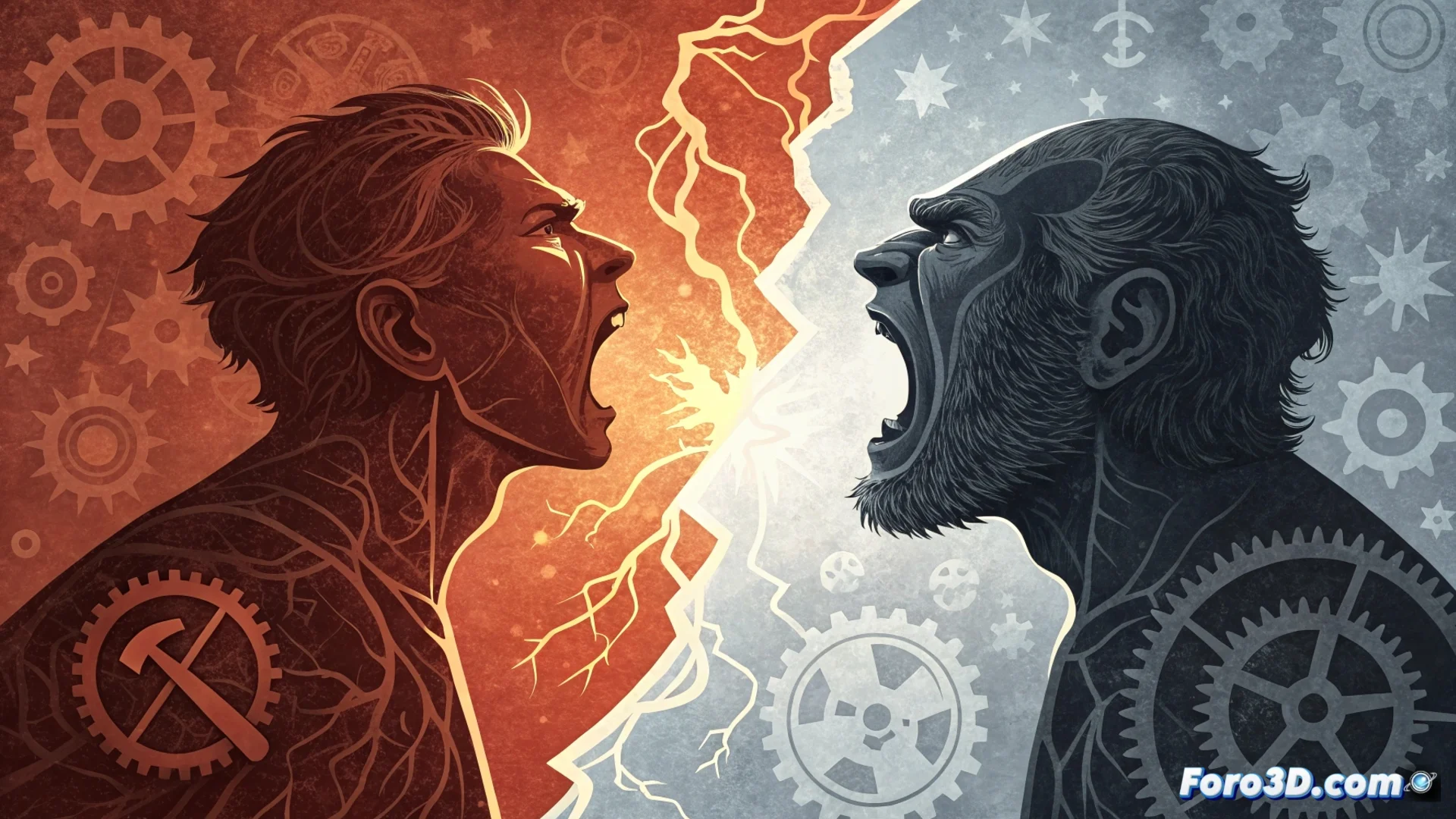
War: Human Impulse or Social Construct?
After observing the devastation of World War I, philosophical thought divides in attempting to explain why humans engage in large-scale armed conflicts. 🧠 This fundamental debate pits the idea of an internal instinct against the notion that it is external forces that generate war.
The View of Innate Aggressive Instinct
Various schools of thought, including some branches of psychology, argue that aggressiveness is part of human nature. This perspective, sometimes associated with figures like Sigmund Freud or certain readings of Darwin's theories, proposes that war is the collective manifestation of an individual fight impulse. From this angle, military conflicts would be an almost natural consequence of our psychology and biology, acting as a valve to release accumulated tensions. 💥
Central arguments of this stance:- Aggression as an inherent biological and psychological component.
- War as a large-scale expression of individual instincts for domination and defense.
- The inevitability of conflict if considered part of the essential human condition.
"Perhaps the true irrepressible impulse is the one to eternally debate the origin of war, while we continue to organize it with remarkable efficiency."
The Perspective of War as a Constructed Phenomenon
Opposing the instinct idea, another school of thought asserts that war is not innate, but is socially constructed. This view holds that massive confrontations arise from concrete material conditions, such as competition for scarce resources, power structures seeking to expand, or ideologies that promote division. In this framework, war is the result of decisions made by human groups within specific historical contexts, and therefore, it could be prevented if those circumstances are modified. 🏛️
Factors that, according to this view, generate war:- Competition for limited resources (water, land, energy).
- Political and economic structures that incentivize expansion and control.
- Ideological, nationalist, or religious narratives that create an 'us' versus 'them'.
An Endless Debate
The discussion on whether war stems from an internal impulse or is the product of social forces remains relevant. Understanding this dilemma is not just an academic exercise, but crucial for addressing whether it is possible to eradicate armed conflicts or if, on the contrary, we must manage an inevitable component of humanity. The chosen answer defines our vision of the future and of our own nature. 🤔