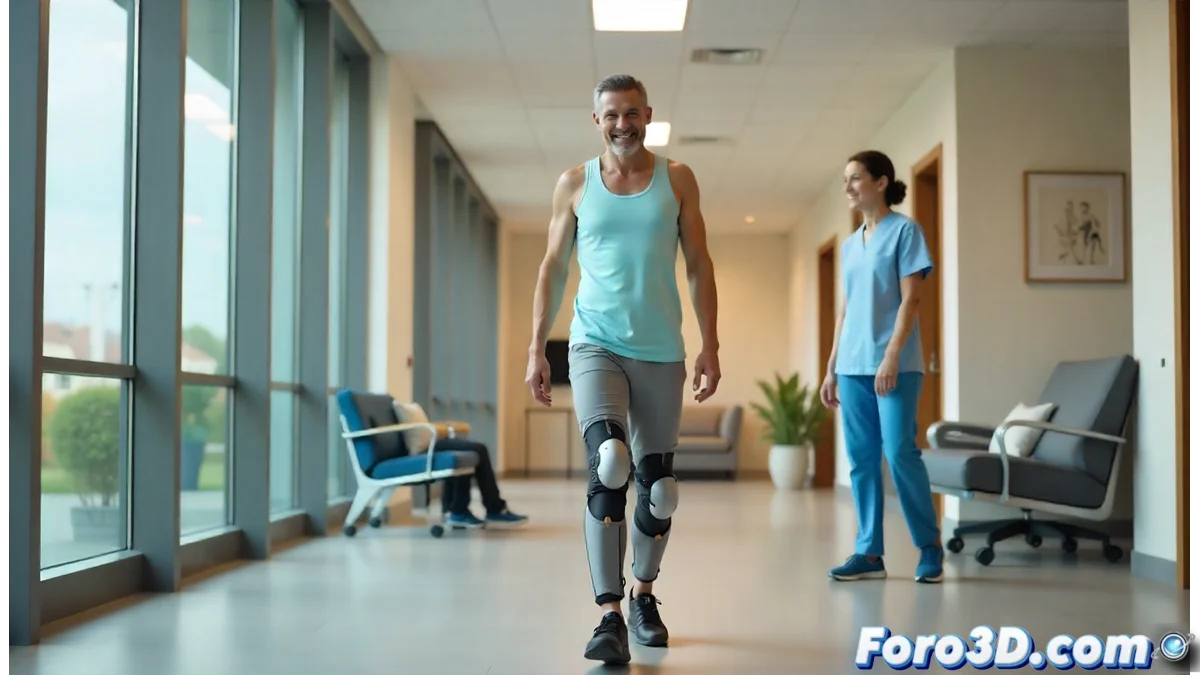
WalkON Suit F1: The Exoskeleton That Restores Mobility to People with Spinal Cord Paralysis
Developed by the Korea Advanced Institute of Science and Technology (KAIST), the WalkON Suit F1 represents a revolutionary milestone in motor assistance technology. This advanced exoskeleton is specifically designed to enable individuals with spinal cord paralysis to regain the ability to walk, integrating intelligent systems that adapt to the user and transform their quality of life. 🤖
Innovative Technical Features
The device incorporates motorized joints that precisely replicate the natural movements of the legs, responding to residual body impulses or external commands. Made with aluminum alloys and carbon fiber composites, it ensures lightness and durability, while its long-autonomy batteries allow continuous use for hours. Additionally, the customizable software adjusts to individual needs, optimizing each rehabilitation session.
Key Components of the Exoskeleton:- Motion sensors that detect the user's intention to activate the joints
- High-efficiency motors that provide real-time assistance during walking
- Ultralight structure that minimizes fatigue and maximizes comfort during prolonged use
The integration of biomechanical systems in the WalkON Suit F1 not only replicates human walking but redefines the limits of modern rehabilitation.
Applications and Benefits in Everyday Life
Beyond physical improvement, this exoskeleton has a profound psychological and social impact, restoring users' autonomy and confidence. In rehabilitation centers, it facilitates intensive therapies that strengthen muscles and improve circulation, preventing complications from immobility. In home settings, it enables basic activities such as standing up from a chair, walking short distances, or climbing stairs, resulting in a radical transformation of personal independence.
Main Advantages in Daily Life:- Restoration of mobility for everyday tasks, reducing dependence on caregivers
- Stimulation of blood circulation and prevention of pressure ulcers
- Progressive training that adapts intensity according to each user's progress
Final Reflections on the Future of Assistive Technology
The WalkON Suit F1 embodies the promising future of robotic devices applied to health, combining technical innovation with a human-centered approach. Its ability to restore mobility to those who have lost it underscores the potential of biomechanical technology in creating accessible and effective solutions. It is clear that, although it doesn't yet help us get off the couch on Sundays, its development brings us closer to a tomorrow with greater possibilities for everyone. 💪