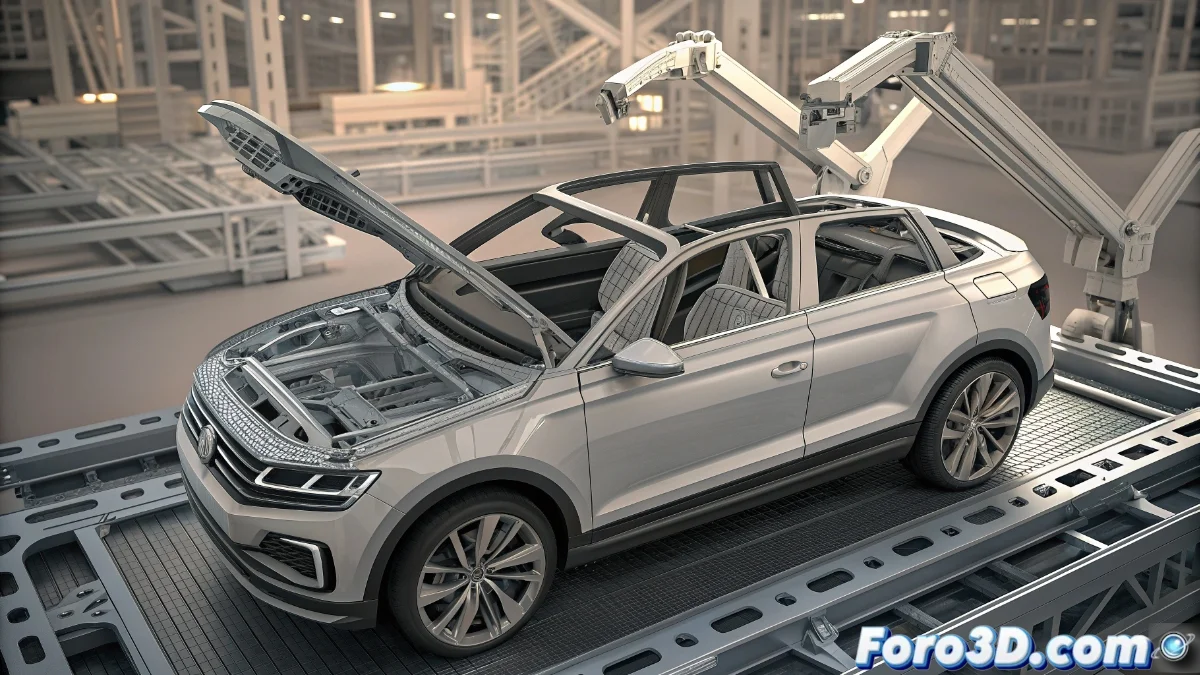
Volkswagen Integrates 3D-Printed Metal Parts into the T-Roc Cabriolet
The automotive industry is undergoing a radical transformation with the implementation of structural components manufactured using 3D printing technology in mass-produced vehicles. Volkswagen is leading this innovation by incorporating 3D-printed metal A-pillars into its T-Roc Cabriolet model, demonstrating that additive manufacturing can meet the stringent vehicle safety requirements 🚗.
Technological Revolution in Structural Components
The binder jetting technique represents a fundamental advancement in the production of automotive parts. This innovative process builds components layer by layer by bonding metal powder particles with a specialized liquid binder. Subsequently, the parts undergo a industrial sintering process in furnaces that gives them the mechanical strength and durability necessary for critical structural applications.
Key advantages of binder jetting:- Ability to create complex internal geometries impossible to achieve with traditional methods
- Significant reduction in structural weight without compromising mechanical integrity
- Optimization of stress flow through advanced topological designs
Structural additive manufacturing marks the beginning of a new era in automotive design, where geometric freedom is combined with rigorous safety requirements
Impact on the Automotive Industry
The implementation of 3D-printed components in production vehicles like the T-Roc Cabriolet allows for the redefinition of design paradigms established for decades. The A-pillars manufactured with this technology maintain identical mechanical properties to their conventional counterparts, but incorporate additional advantages in customization, material efficiency, and development time reduction 🔧.
Strategic benefits:- Acceleration of the development cycle for new structural components
- Possibility of integrating multiple functionalities into a single printed part
- Reduction of costly tooling and simplification of the supply chain
Future of Automotive Manufacturing
This technological milestone demonstrates that conventional production methods are being complemented—and in some cases replaced—by digital manufacturing approaches. Traditionalists will have to accept that critical components like A-pillars now emerge from industrial 3D printers instead of hydraulic presses, while continuing to fulfill the primary protection function with identical effectiveness 🛡️.