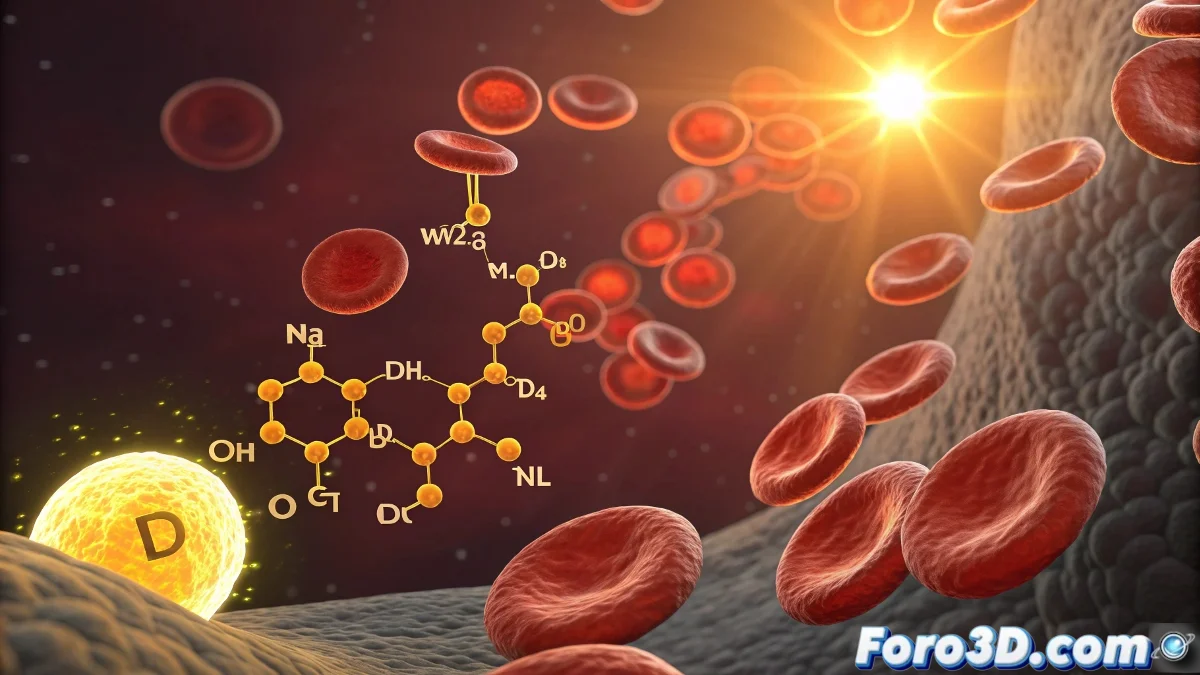
The Delicate Balance of Vitamin D in the Body
A recent study has revealed that vitamin D supplementation presents a fascinating paradox: while it increases levels of the main circulating form (25-hydroxyvitamin D), it may decrease the active form (1,25-dihydroxyvitamin D) 🔬. This balance is crucial for maintaining bone health, immune function, and overall well-being, as both forms work together in the body. Researchers explain that the body regulates these molecules differently, and external intervention through supplements can alter this natural balance. A demonstration that in nutrition, more does not always mean better 💊.
Visual Representation of the Process in 3ds Max
3ds Max offers the perfect tools to create scientific visualizations that explain this complex biochemical process. Through precise molecular modeling, dynamic animations, and advanced lighting techniques, it is possible to illustrate how supplementation affects the different forms of vitamin D. This visual approach is invaluable in educational and medical contexts, where understanding abstract relationships can be challenging for students and patients. The ability to literally see what happens at the molecular level transforms complex concepts into comprehensible visual experiences 🎓.
With programs like Blender or 3ds Max, a visual representation of the impact of supplementation on vitamin D pathways can be created.
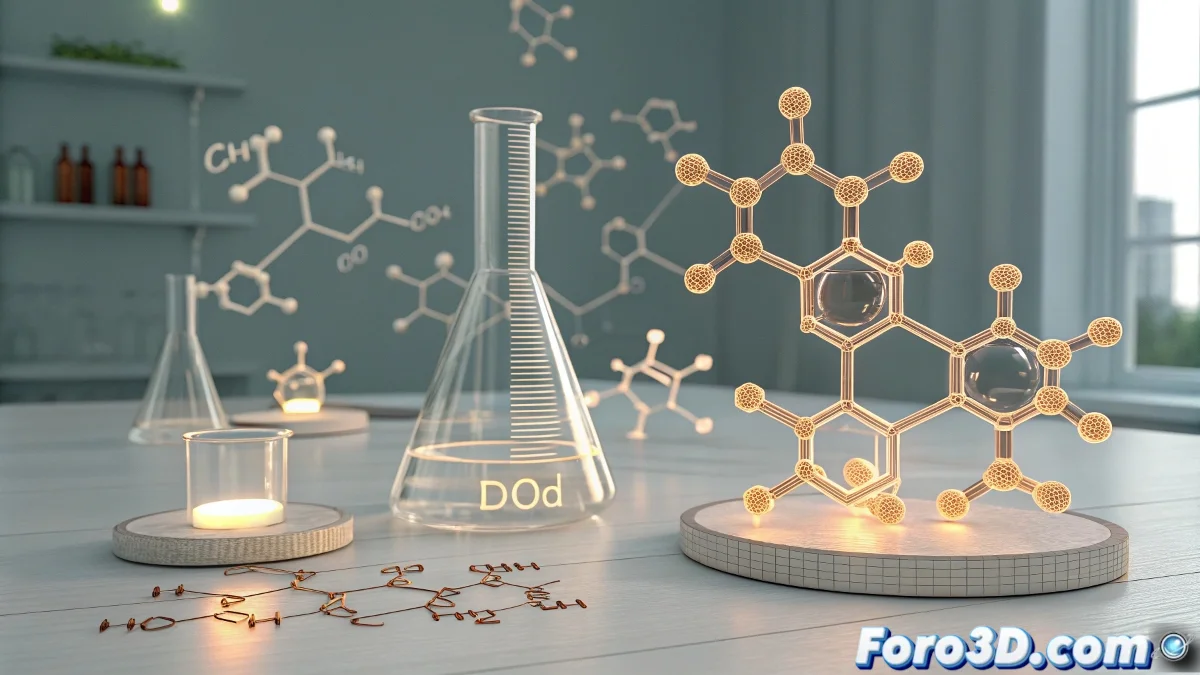
Project Setup and Molecular Modeling
Starting a new project in 3ds Max with the scale set to centimeters ensures the necessary precision for molecular modeling. Organization into layers—Molecules, Environment, Lighting—allows efficient management of the different scene elements. Molecules are modeled using geospheric spheres to represent individual atoms, connected by thin cylinders that simulate chemical bonds. Two differentiated structures are created: 25-hydroxyvitamin D (storage form) and 1,25-dihydroxyvitamin D (active form), placed on opposite sides to visualize the balance concept 🧪.
Animation and Key Visual Elements
The animation focuses on showing the dynamic relationship between both forms of vitamin D. An orbiting camera around the molecules provides a complete perspective, while a subtle rotation adds dynamism to the molecular structures. Subtle energy particles help visualize biochemical interactions. Lighting uses a soft key light complemented with rim light to highlight molecular contours, creating a scientific yet visually appealing aesthetic. Essential technical elements:
- Precise atomic modeling with spheres and cylinders for bonds.
- Transformation animation showing changes in proportions.
- Particle systems to represent biochemical interactions.
- Differentiated materials by chemical element (carbon, oxygen, hydrogen).
Materials, Rendering, and Post-Production
The assigned materials follow scientific conventions: carbon in gray, oxygen in red, hydrogen in white, with slightly reflective finishes for visual clarity. The background uses a light gradient that evokes a laboratory environment, keeping the focus on the molecules. Rendering is done with engines like Arnold or V-Ray, using high sampling to capture fine details of the molecular structures. In post-production, contrast levels are adjusted, a subtle glow is added around the active form to highlight its importance, and light vignetting is applied to direct attention to the center of the action 🌡️.
The Irony of Nutritional Supplementation
It turns out that taking pills to improve your vitamin D levels might be reducing the form your bones really need... because apparently, even vitamins enjoy a good biochemical plot twist 😅.