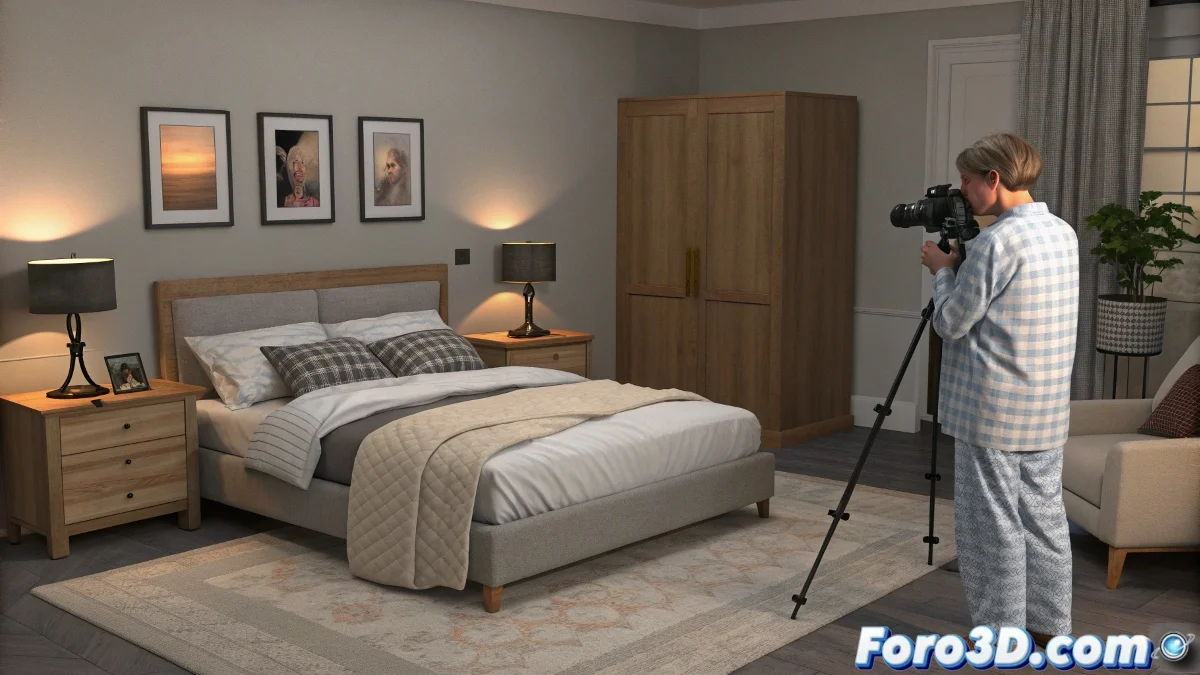
Representing Sleep Evolution in Poser 💤
A recent study has found evidence that certain humans may have evolved to function normally with just four hours of sleep, challenging the traditional idea of needing seven-to-eight hours of rest. This finding raises fascinating questions about genetics, adaptation, and circadian rhythms. Poser presents itself as the ideal tool for visualizing this concept, allowing the creation of characters and scenes that depict the daily life of individuals with reduced but functional sleep patterns.
Creating Characters with Specific Expressions
Using Poser's human figure libraries, base characters are generated and then adjusted through Morph Targets to represent particular states of wakefulness. Facial expressions are configured to show concentration and energy rather than fatigue—alert eyes, upright posture, active gestures. Pose Controls allow fine-tuning the anatomy to avoid the typical slouched posture associated with tiredness. For greater realism, Skin Textures with healthy tones and bright eyes are applied, avoiding dark circles or pallor. 👨💻
Realistic Clothing and Domestic Environments
The characters are dressed in everyday clothing using Clothing Simulation, which allows fabrics to fall naturally over the bodies during different poses. Verisimilar domestic scenes are created:
- Bedrooms with unmade or perfectly made beds
- Home Offices with computers and books
- Leisure Spaces with musical instruments or exercise equipment
- Kitchens with coffee makers and breakfast utensils
These environments contextualize the activities performed during extended hours of wakefulness.
Visualizing efficient sleep is about showing not less rest, but better rest.
Lighting and Atmosphere to Narrate the Circadian Rhythm
Lighting plays a crucial role in conveying the concept:
- Natural Lights simulating sunrise through windows
- Point Lights in desk lamps for nighttime hours
- Soft Shadows with Ambient Occlusion for environmental depth
- Color Temperature Variation according to the time of day represented
These elements help establish visual timelines without the need for explanatory text.
Animation and Visual Storytelling
Animated sequences are created that show compressed daily cycles:
- Characters Performing Tasks productively in early hours
- Time Transitions accelerated through lighting changes
- Visual Comparisons with "normal" characters still sleeping
- Nightly Activities like reading or studying with maintained energy
The camera moves smoothly between shots to show first-person and third-person perspectives.
Rendering and Final Details
Poser's rendering engine allows high-quality output with:
- FireFly Render for realistic lighting and shadows
- Advanced Materials for surfaces like wood, fabric, and skin
- Integrated Post-Production to adjust brightness and contrast
- Video Export for animated sequences
These combined elements create a persuasive visual narrative about evolutionary adaptation.
While science debates how some humans survive on four hours of sleep, we debate how to make our renders not look like digital sleepwalkers. In the end, the real superpower isn't sleeping little, it's rendering fast. 😅