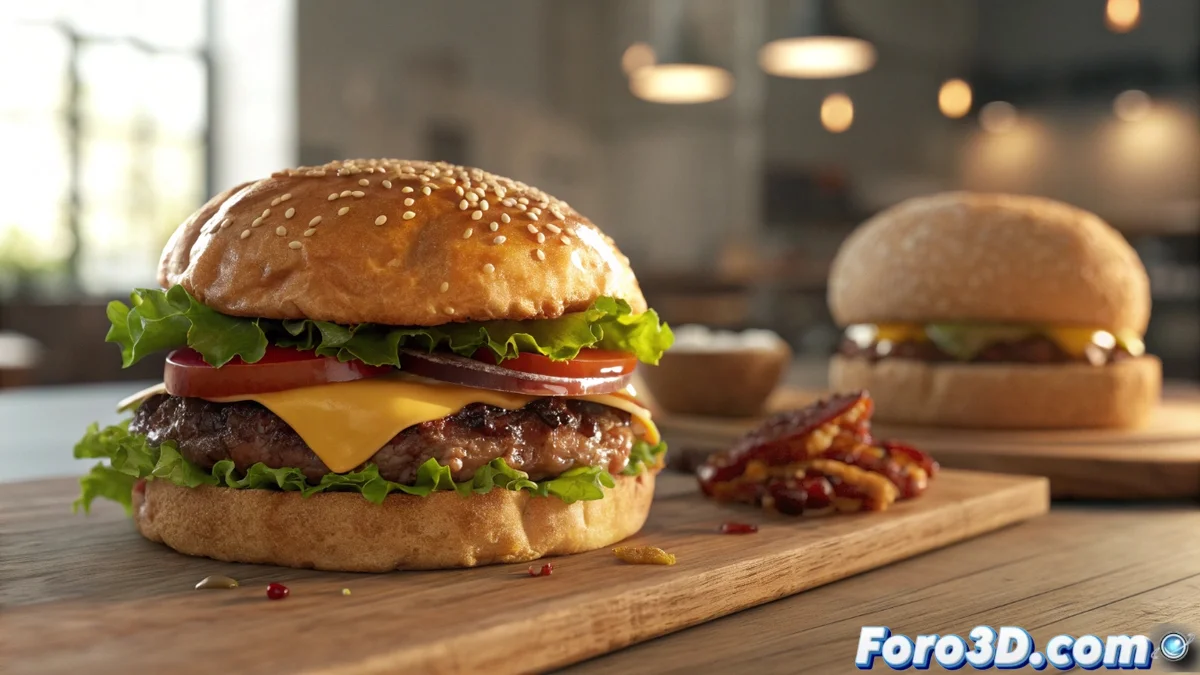
Visual Deception in Fast Food: Food Styling Techniques
When contemplating the advertising menus of fast food establishments, we observe images that present burgers perfectly structured with ingredients that appear freshly prepared. However, the real experience reveals products notably different in size, texture, and visual presentation. This divergence constitutes a deliberate strategy of visual manipulation through specialized gastronomic styling techniques. 🍔
Mechanisms of Photographic Idealization
Food styling professionals employ numerous strategies to transform ordinary products into visually perfect compositions. They use substances like vegetable glycerin to simulate juiciness in meats, insert internal supports in buns to increase their apparent volume, and meticulously arrange each ingredient following principles of visual composition. Professional lighting and studied camera angles accentuate textures and colors, creating an idealized version that rarely matches the reality of the served product.
Most common visual manipulation techniques:- Application of lubricants and oils to create a freshness and juiciness effect
- Use of hidden structural elements to maintain shape and volume
- Strategic selection of visually perfect ingredients for photography
Professional gastronomic photography transforms the everyday into the exceptional through an elaborate stylization process that is rarely replicated in usual preparation.
Consequences on Consumer Perception
This visual discrepancy generates a psychological gap between expectation and reality that directly impacts customer satisfaction. Consumers frequently experience disappointment upon receiving products that appear compressed, with disorganized ingredients and reduced proportions. Although companies defend these practices as illustrative representations, customers expect coherence between advertising and the final product.
Effects on consumer behavior:- Loss of trust in the brand and its advertising communications
- Spread of critical comparisons on social media and digital platforms
- Dissatisfaction that can influence future purchasing decisions
Regulation and Consumer Awareness
Some jurisdictions have implemented advertising regulations that require accurate representations of food products, although their application shows significant variations. Meanwhile, consumers develop greater critical awareness about these practices, sharing comparative evidence that exposes the differences between promotion and reality. The next time you contemplate an apparently perfect burger on a menu, remember that you will probably receive a considerably more modest version, demonstrating how gastronomic makeup can perceptually transform the ordinary. 📸