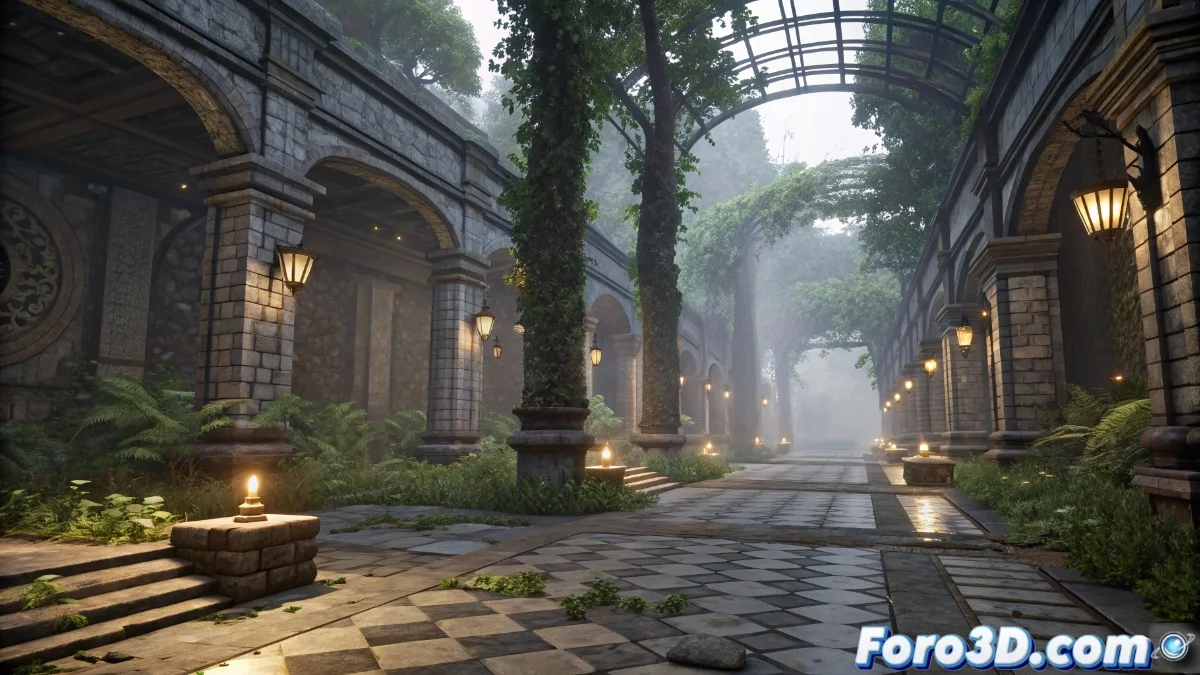
Virtual Texturing in Unreal Engine 5 and Its Evolution Toward UE6
The virtual texturing technology represents a radical transformation in how graphics engines handle visual assets for massive virtual worlds. This approach allows the use of textures with extraordinary resolutions that would traditionally exceed GPU memory capacity, thanks to an adaptive streaming system that operates in real time 🚀.
Architecture Behind Virtual Texturing
The core of the system lies in dividing monumental textures into manageable tiles or pages that are stored on the hard drive. An intelligent virtual mapping continuously detects which portions are visible in each frame and transfers them on demand to VRAM. This mechanism operates completely transparently for artists, who can design with textures up to 32K without facing conventional technical restrictions.
Key Components of the System:- Division of textures into tiles optimized for dynamic loading
- Virtual mapping mechanism that tracks visibility in real time
- Automatic cache management based on proximity and camera angle
The runtime autonomously manages the loading, unloading, and caching of tiles according to the player's movement and perspective
Impact on Development Pipelines
Creative teams can produce ultra-high-fidelity materials once for the entire project, eliminating the redundancy of generating multiple versions for different viewing distances. This not only accelerates production times but also reduces the final size of executables. The system effectively mitigates issues like texture pop-in and streaming inconsistencies in open worlds, ensuring a smooth visual experience even during rapid traversals through vast scenarios 🌍.
Production Benefits:- Significant reduction in time and resources for asset creation
- Minimization of visual artifacts during environment exploration
- Maintained visual consistency during high-speed navigation
Practical Considerations for Artists
Although the technology can handle colossal textures, there is that creative tendency where senior artists insist on even higher resolutions for details that will likely go unnoticed at long distances. This balance between technical perfection and visual pragmatism remains a fundamental aspect in developing projects with virtual texturing 😅.