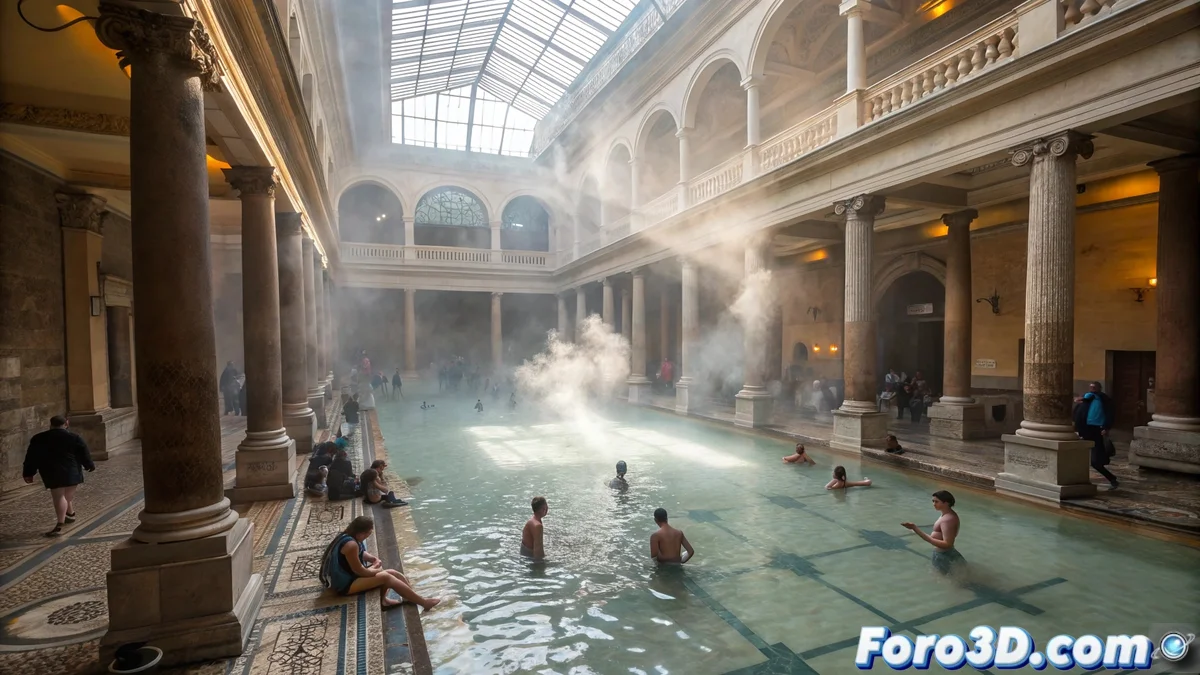
Reviving the Thermal Grandeur of Ancient Rome
Trajan's Baths, the iconic thermal complex of the Roman Empire, are resurrected digitally through the power of Blender. This historical reconstruction project not only seeks to recreate the physical architecture but also to capture the social and cultural essence of these spaces that were the heart of Roman public life. A journey through time that combines historical rigor with contemporary 3D technology.
Planning the Historical Reconstruction
The process begins with meticulous research of archaeological references and historical documentation to ensure architectural accuracy. Establishing the correct scale is fundamental, as Roman baths were colossal structures that combined intimate spaces with monumental areas. The initial setup in metric units allows maintaining the proper proportion between the different elements of the complex.
Modular Architecture of the Thermal Complex
- Modeling of characteristic vaults and domes
- Recreation of colonnades and architectural orders
- Design of pools and hydraulic systems
- Inclusion of palaestras and sports areas
The Challenge of Historical Materials
Recreating the marble opulence and elaborate mosaics requires meticulous work with PBR textures. Carrara marble, Egyptian porphyry, and tesserae mosaics must be reproduced with attention to their characteristic reflectivity and roughness properties. Material authenticity is what truly transports the viewer to the sensory experience of the original baths.
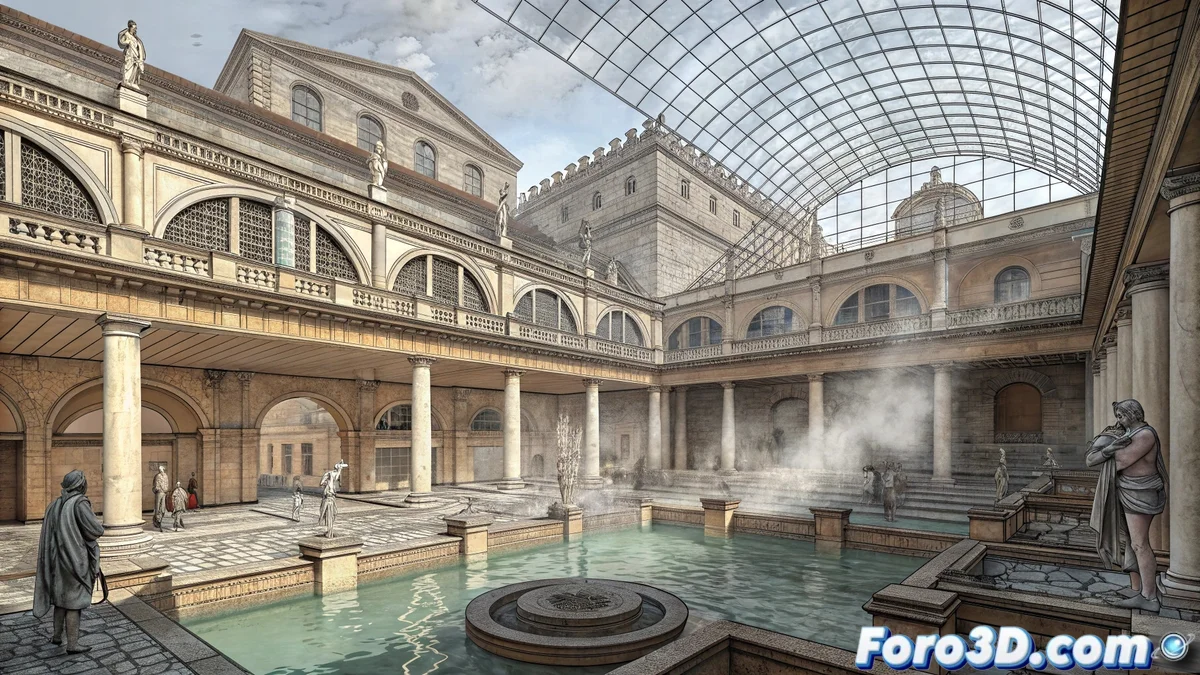
Atmospheric Setting Techniques
- Volumetric lighting to simulate steam and ambiance
- Particle systems for water effects
- Light setup for different times of day
- Composition of shots for visual narrative
A project that demonstrates how 3D technology can serve as a bridge between archaeological past and contemporary understanding, making lost historical spaces accessible.
For 3D artists and history enthusiasts, this reconstruction represents a unique opportunity to understand Roman engineering and its sophisticated handling of public spaces. The ability to virtually explore these baths allows appreciating dimensions that two-dimensional plans could never effectively communicate 🏛️.
And now we can virtually stroll through these imperial baths without getting our feet wet... although the original Romans probably never imagined their engineering would be recreated with pixels instead of stone and mortar 😅.