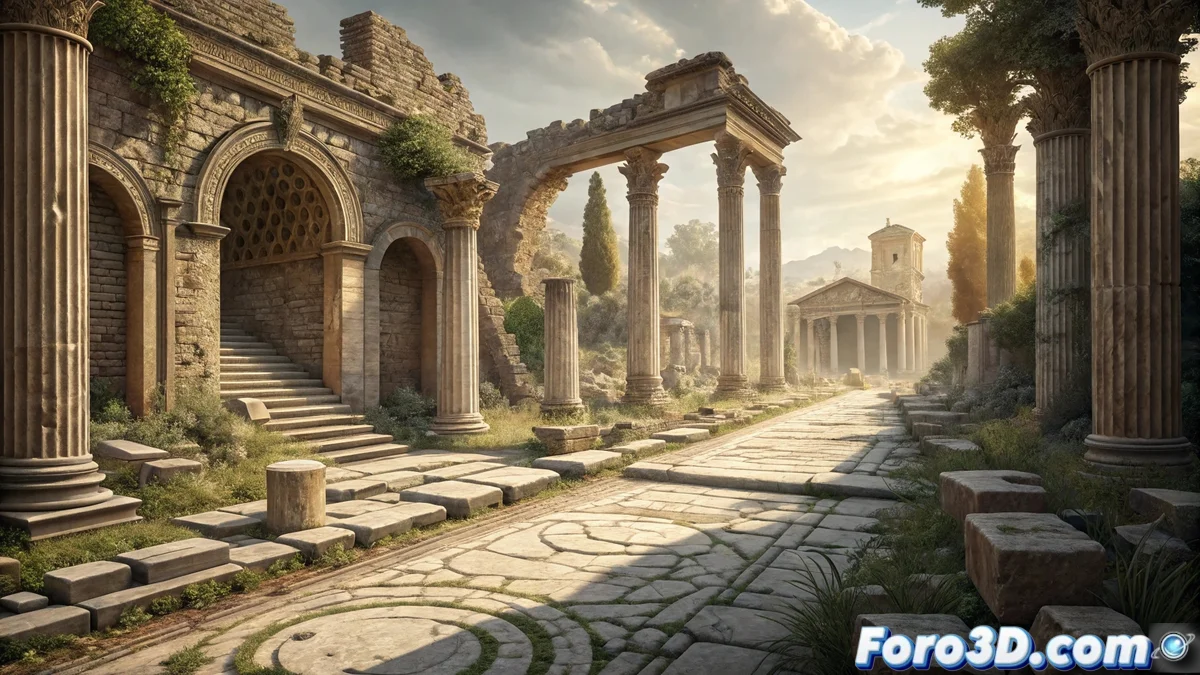
Virtual Reconstruction of Historical Heritage through 3D Modeling
Digital archaeology represents a methodological revolution that employs advanced three-dimensional modeling technologies to visually rescue monuments and historical objects that have suffered deterioration or disappeared completely. This discipline fuses archaeological data, historical records, and architectural documentation to produce meticulously precise virtual recreations, allowing both specialists and the general public to take immersive journeys to the past 🏛️.
Innovative Documentation and Processing Techniques
The scientific procedure begins with data capture using non-invasive methods such as terrestrial laser scanning, capable of registering millions of reference points in archaeological sites, complemented by digital photogrammetry that transforms overlapping photographs into high-fidelity three-dimensional models. The collected information is refined through specialized software that corrects imperfections and reconstructs missing sectors by applying algorithms based on documented historical patterns.
Fundamental Methodologies in Digital Archaeology:- High-precision laser scanning for millimeter documentation of structures
- Aerial and terrestrial photogrammetry to generate detailed polygonal meshes
- Integration of primary sources such as manuscripts and historical plans
The human obsession with perpetuating its legacy has evolved from stone carving to digital reconstruction through pixels and algorithms, demonstrating that the format changes but the essence endures
Multidisciplinary Applications in Conservation and Education
Three-dimensional reconstructions find application both in academic research and cultural outreach. Archaeologists can perform virtual simulations on natural lighting, acoustic properties, or circulation flows in historical buildings, while museum institutions implement these recreations in immersive experiences through virtual and augmented reality.
Notable Implementations:- Interactive digital platforms to explore complete ancient cities
- Structural simulations and spatial distribution analysis in historical enclosures
- Museographic exhibitions with virtual tours of disappeared settlements
Impact on the Preservation of World Cultural Heritage
This technological revolution facilitates universal access to cultural heritage while generating digital archives that protect historical memory against potential natural threats or armed conflicts. The ability to digitally preserve fragile archaeological sites ensures that future generations can study and experience past civilizations, even when the original physical ones face risks of disappearance 🌍.