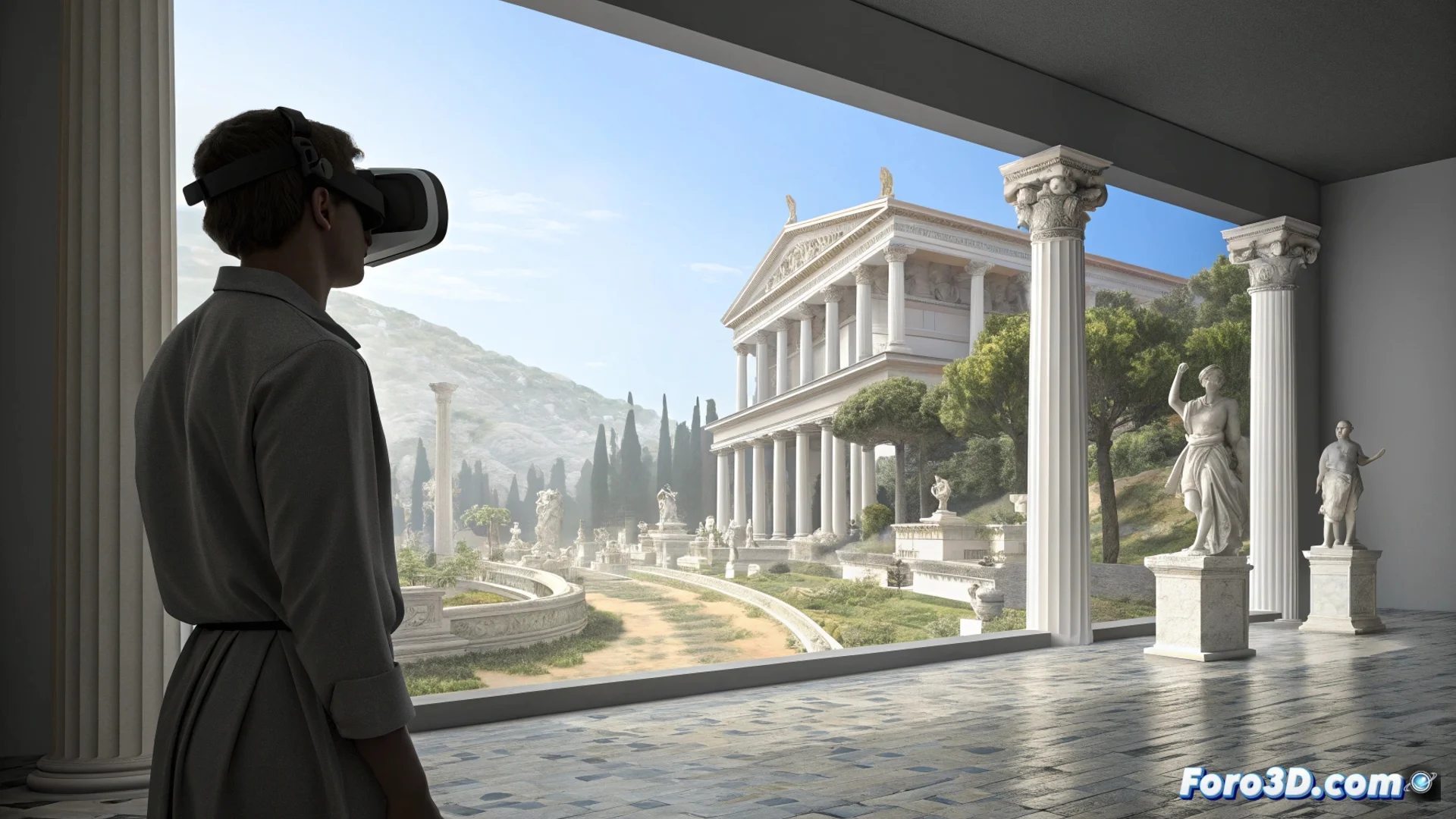
A Virtual Reconstruction of Ephesus Allows Exploring Its Streets in 3D
The Spanish company Gammera Nest, together with the Turkish Ministry of Culture and Tourism, has created a complete digital recreation of the ancient city of Ephesus. Developed with Unreal Engine 5, this immersive environment allows exploring the archaeological site with unprecedented detail, seeking new ways to bring heritage closer and test sustainable economic models for culture 🏛️.
Historical Accuracy Powered by Cutting-Edge Technology
To achieve extreme historical fidelity, the team used photogrammetry and laser scanning to capture the current remains. Archaeologists and researchers supervised every stage to model buildings and public spaces according to available evidence. The result is not just simple ruins, but a living city where one can walk and observe the Library of Celsus, the Great Theater, or the Temple of Hadrian in their maximum splendor.
Methodology and Key Techniques:- Data capture using 3D laser scanning and high-resolution photogrammetry.
- Modeling and texturing supervised by experts in archaeology and history.
- Integration and real-time rendering using the Unreal Engine 5 engine.
This project redefines how we can perceive and learn from the past, transforming data into immersive experiences.
A Dual Tool: Educate and Manage
The application has a clear educational purpose, as it helps understand the scale and function of ancient spaces intuitively. At the same time, it is proposed as an instrument for managing tourism at the physical site, allowing to plan visit routes or show areas inaccessible to the public. The economic model explores including microtransactions, where users could acquire digital accessories to fund project maintenance.
Main Applications of the Virtual Model:- Education: Facilitate understanding of ancient architecture and life.
- Tourism Management: Plan visitor flows and show restricted areas.
- Sustainability: Test a business model based on cultural microtransactions.
Explore the Past from the Present
Now it is possible to stroll through the Roman agora or the main street without the physical limitations of the real archaeological site. This virtual reconstruction not only digitally preserves the heritage but also opens doors to new ways of interacting with history, making Ephesus' legacy accessible to a global audience in a direct and engaging way 🌍.