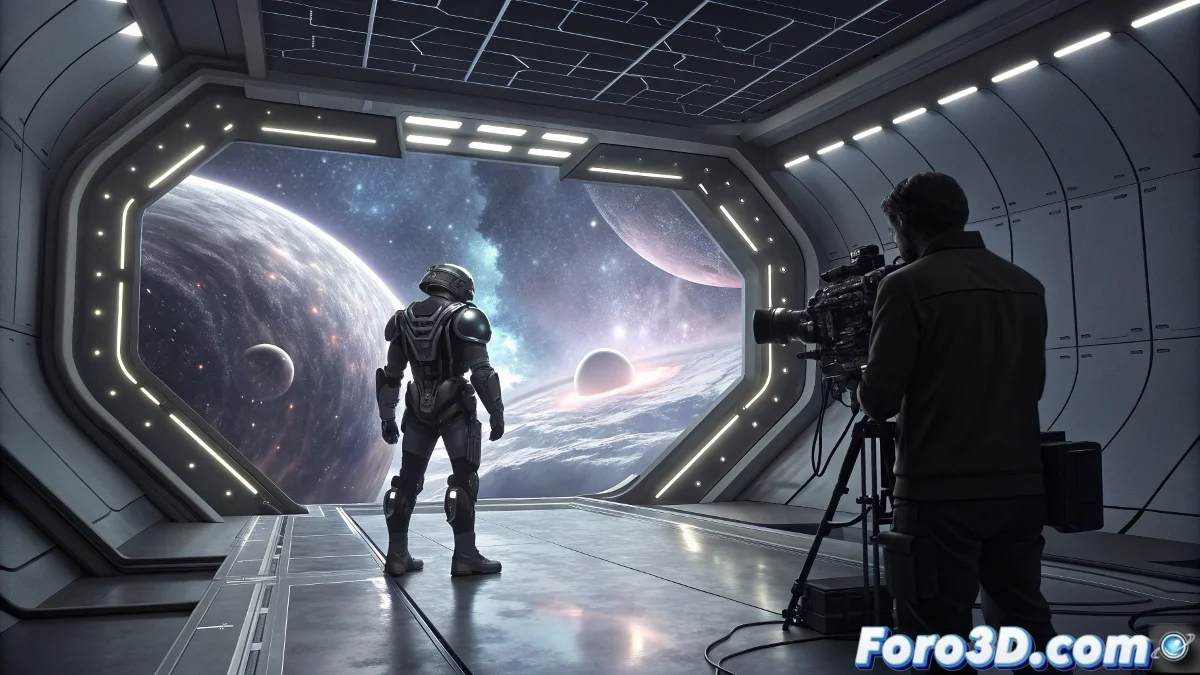
Virtual Production: When the Set Becomes an Infinite World
Virtual Production (VP) is transitioning from an experimental technology to the standard in the film and television industry, thanks to radical advances in real-time rendering. Studios can now create fully photorealistic environments displayed directly on set during filming, allowing actors and directors to interact with digital worlds as if they were physical. This approach, known as In-Camera Visual Effects (ICVFX), is eliminating the traditional separation between filming and post-production, creating a more organic and immersive cinematic experience. 🎬
The Smart Set: Where Physical and Digital Merge
What makes virtual production revolutionary is not just replacing green screens with LED screens, but how it integrates the entire creative pipeline into a continuous flow. In an LED volume—the heart of any VP setup—the screens display real-time rendered environments that respond to camera movement, creating perfect parallax and realistic reflections directly in camera. Actors can see and react to their real environment, directors can make creative decisions with immediate feedback, and filmmakers capture final shots that previously required months of post-production.
Key Technologies Driving the VP Revolution
Virtual production represents the convergence of multiple technologies that have matured simultaneously, from game engines to cutting-edge display hardware.
Real-Time Rendering Engines
Unreal Engine and Unity have become the software pillars of VP, offering cinematic quality in real-time with technologies like dynamic global illumination (Lumen in UE5) and virtualized geometry (Nanite). These engines allow loading complex scenes with millions of polygons and adjusting lighting, materials, and atmosphere during filming. Real-time camera tracking ensures the digital environment's perspective perfectly matches the physical camera's movement, creating a seamless illusion.
Essential Technical Components:- game engines with cinematic quality
- high-resolution and high-brightness LED volumes
- precise camera tracking systems
- integrated color management workflows
Workflows and Content Preparation
VP requires a fundamental shift in pre-production, where digital environments must be ready before filming rather than after. Art teams develop complete worlds using game development techniques, creating performance-optimized assets while maintaining visual quality. Virtual scouting allows directors and directors of photography to explore digital sets in advance, plan shots, and make creative decisions that traditionally required physical sets or real locations.
In virtual production, post-production begins in pre-production, and the magic happens during filming.
Economic and Creative Advantages
While the initial investment in VP technology is significant, the long-term savings are substantial. It eliminates the need for travel to remote locations, construction of complex physical sets, and extensive compositing work in post-production. Creatively, it offers unprecedented flexibility: the same LED volume can be an enchanted forest in the morning, a futuristic city in the afternoon, and a spaceship at night. Changes in lighting, weather, or even seasons are made in seconds rather than days.
VP Benefits:- significant reduction in location costs
- instant creative flexibility
- better acting performance with real environments
- total control over environmental conditions
Impact on Professional Roles and Skills
VP is creating new hybrid professions like LED volume technicians, real-time artists, and VP supervisors who understand both cinematography and digital technology. DOPs now need familiarity with virtual lighting, directors must understand the possibilities and limitations of digital environments, and 3D artists work directly on set rather than in isolated post-production studios. This convergence is generating more integrated and multidisciplinary teams. 💡
New Professional Roles:- virtual production supervisor
- LED volume technician
- real-time artist on set
- VP integration specialist
In the end, virtual production is not about replacing the physical with the digital, but creating a symbiosis where both enhance each other, although it will probably make actors miss trips to exotic locations. 🌍