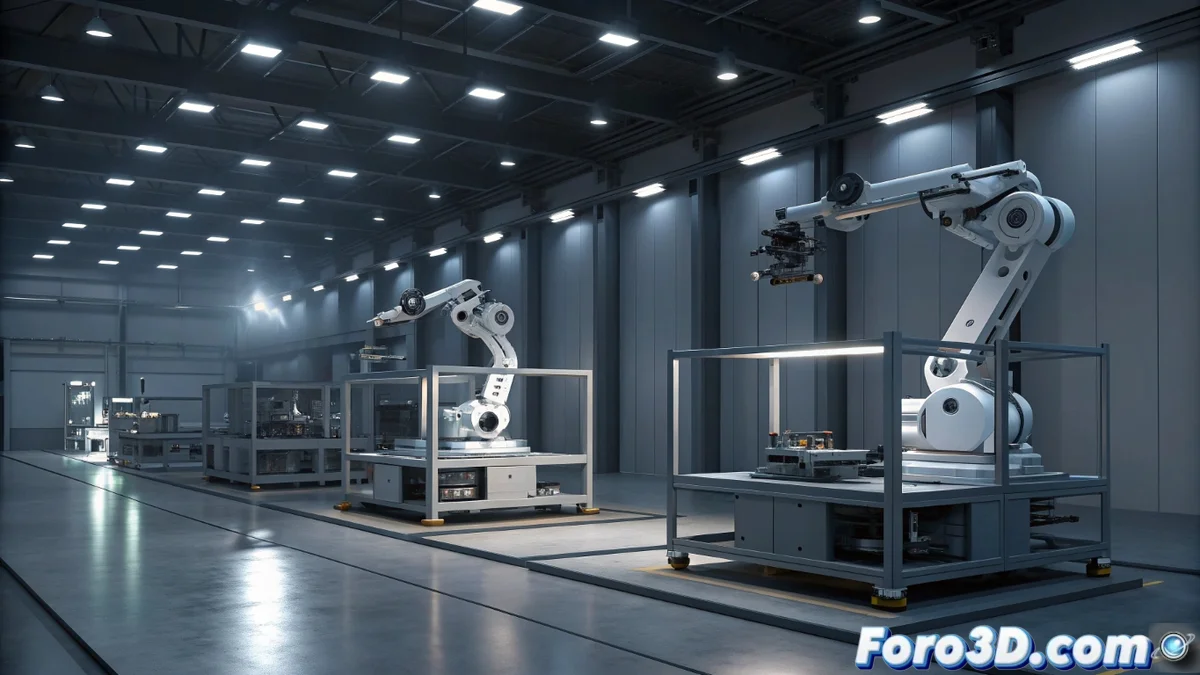
Virginia Tech Receives Grant for Research on Multidirectional Robotic 3D Printing
The Virginia Tech university has been the beneficiary of a significant federal grant aimed at revolutionizing manufacturing processes. The National Science Foundation (NSF) has allocated 3.5 million dollars to fund a pioneering project in multidirectional robotic 3D printing. This technology allows robots to build objects from various orientations, overcoming the barriers of conventional layer-by-layer systems. 🚀
Research Project Focus
The Virginia Tech team is not only focused on robotic hardware, but also on the development of intelligent control algorithms. The integration of advanced sensors and specialized software is key to achieving the precision necessary for producing complex geometries. The goal is to create an ecosystem where the machine can decide the optimal printing path in real time.
Key Development Components:- Design of path planning algorithms for robotic movements on multiple axes.
- Integration of feedback sensors that correct deviations during the manufacturing process.
- Creation of software interfaces that unify CAD design with robotic printing instructions.
This initiative represents a qualitative leap in additive manufacturing, where the robot's freedom of movement becomes freedom of design for the engineer.
Applications and Benefited Sectors
The impact of this multidirectional technology transcends the laboratory. Sectors with high performance and customization requirements, such as aerospace and healthcare, will be directly transformed. The ability to print stronger structural components and custom medical devices will accelerate innovation cycles. 🛩️⚕️
Industries with Greatest Potential:- Advanced Manufacturing: Production of tools, molds, and prototypes with complex internal geometries.
- Aerospace Engineering: Manufacturing of lightweight and structural components for aircraft and satellites.
- Biotechnology and Healthcare: Creation of customized implants and cellular scaffolds with specific microstructures.
The Future of Automation in Manufacturing
This advancement brings closer the reality of fully autonomous factories. Although the idea of robots needing a break is metaphorical, the project underscores the growing complexity and intelligence of automated manufacturing systems. Multidirectional robotic 3D printing is not just another step in automation; it is the foundation for a new paradigm in the design and production of goods, where geometric limitations disappear. 🤖