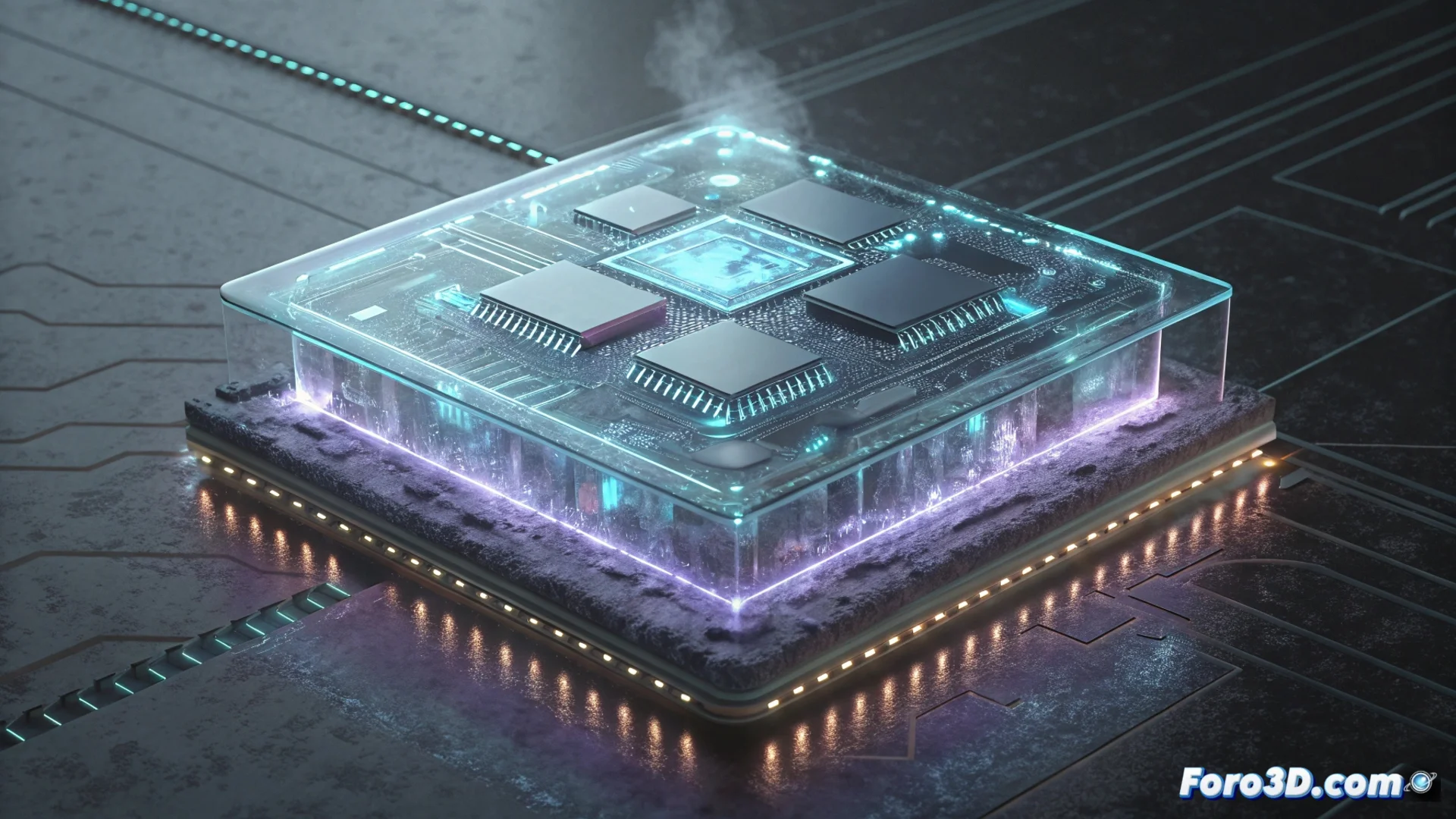
Vertical 3D Chips Seek to Overcome the Von Neumann Bottleneck
AI progress hits a physical limit in computer design: the Von Neumann architecture. This model separates the processing unit from the data storage unit, creating a bottleneck that slows down the entire system. For AI to advance, we need hardware that thinks differently. 🧠
Stacking Instead of Spreading: The 3D Revolution
The most promising solution abandons the traditional flat design. Instead of placing transistors in a single layer, the new 3D chips organize them in vertical stacks. This physically brings memory closer to the processor, drastically shortening the path data travels. The result is faster information transfer, less energy use, and less heat generation, a fundamental change for processing complex AI models.
Key Advantages of Vertical Integration:- Reduced Latency: Data travels microscopic distances between layers, speeding up operations.
- Energy Efficiency: Requiring less power to move data optimizes consumption.
- Higher Density: More processing and storage capacity can be included in a smaller physical space.
The future of AI is not only written in code, but in silicon stacked upwards.
The Obstacles to Building Upwards
Manufacturing these three-dimensional structures is not straightforward. It requires extremely precise lithography and assembly techniques. Additionally, heat becomes a greater enemy: by compacting components, the heat they generate gets trapped in the internal layers, which can degrade their performance or damage them.
Engineering Challenges to Overcome:- Thermal Design: It is crucial to develop internal cooling systems, such as microchannels for fluids or new materials that dissipate heat.
- Manufacturing Complexity: Aligning and connecting billions of transistors across multiple levels demands novel and costly production processes.
- Reliability: Ensuring the entire stack of layers functions stably for years is an engineering challenge.
A New Dimension for Computing
Overcoming the Von Neumann bottleneck is essential for the next generation of AI applications. Vertical 3D chips represent an architectural leap as significant as the transistor was in its day. Although the path is technically and economically challenging, the potential to accelerate machine learning and massive data analysis justifies the investment. The processing of the future literally gains a new dimension. ⚡