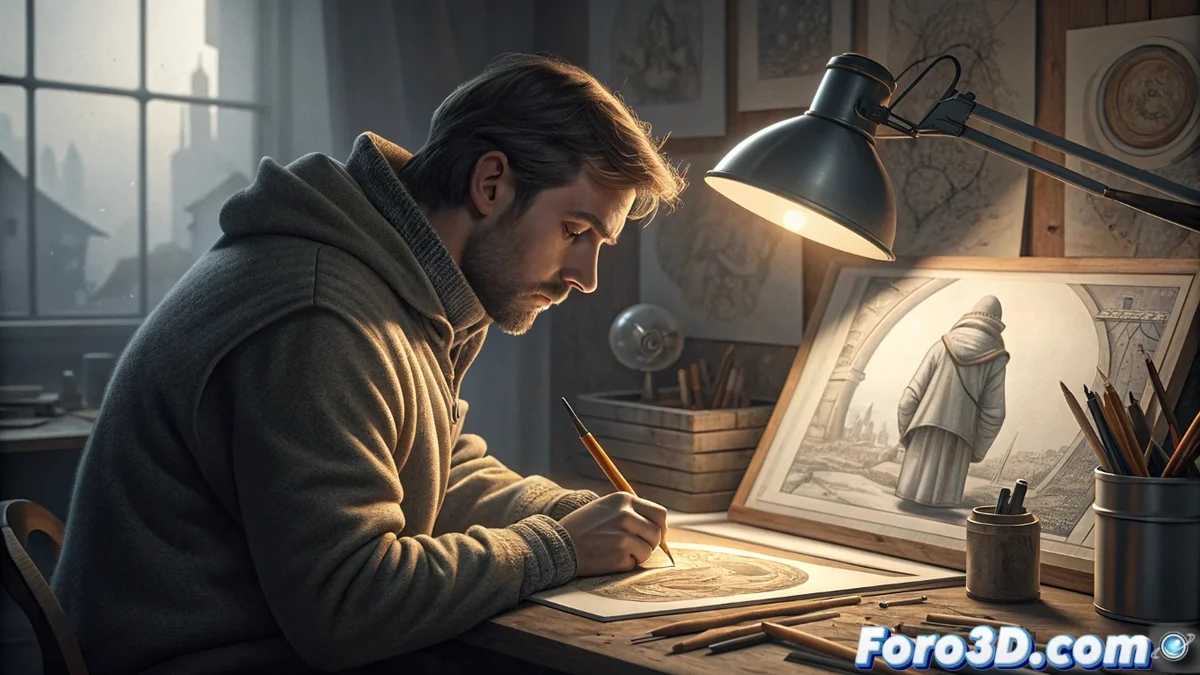
Verbal Description as a Creative Technique in 2D Illustration
This method consists of a collaborative exercise where the source of inspiration is not visual, but auditory. A partner describes an object, person, or scene using only adjectives and references to its shape, texture, or position in space, avoiding revealing its direct identity. 🎨
Advantages of Applying This Method
Regular practice of this verbal description technique develops fundamental skills. It improves the ability to visualize abstract concepts and turn them into concrete graphic elements. It is valuable training for character design projects or environment creation, where working from ideas or narrative scripts is required.
Key Benefits:- Strengthens the interpretation of non-visual and ambiguous information.
- Trains composition and spatial structure within the illustration.
- Streamlines the visual communication process, essential for teamwork.
A verbal misunderstanding can turn into an accidental masterpiece, demonstrating the unpredictable nature of imagination.
Step-by-Step Implementation
To execute the technique, a structured process is required. Choosing a descriptive partner is the first step, followed by a drawing session based exclusively on the received narrative. The comparison phase with the original reference is crucial for learning. 🔄
Recommended Process:- Select a collaborator and ask them to describe a theme in detail but indirectly.
- Create your 2D illustration using only the provided verbal information.
- Compare your final result with the original image or object to analyze divergences and successes.
Impact on the Creative Process
This practice fosters a deeper connection between language and image. Faced with descriptions like "round and soft", the artist can create anything from a planet to a balloon, exploring unexpected creative variations. It is an exercise that demonstrates how informational restriction can unleash imagination and refine the artistic approach in every session.