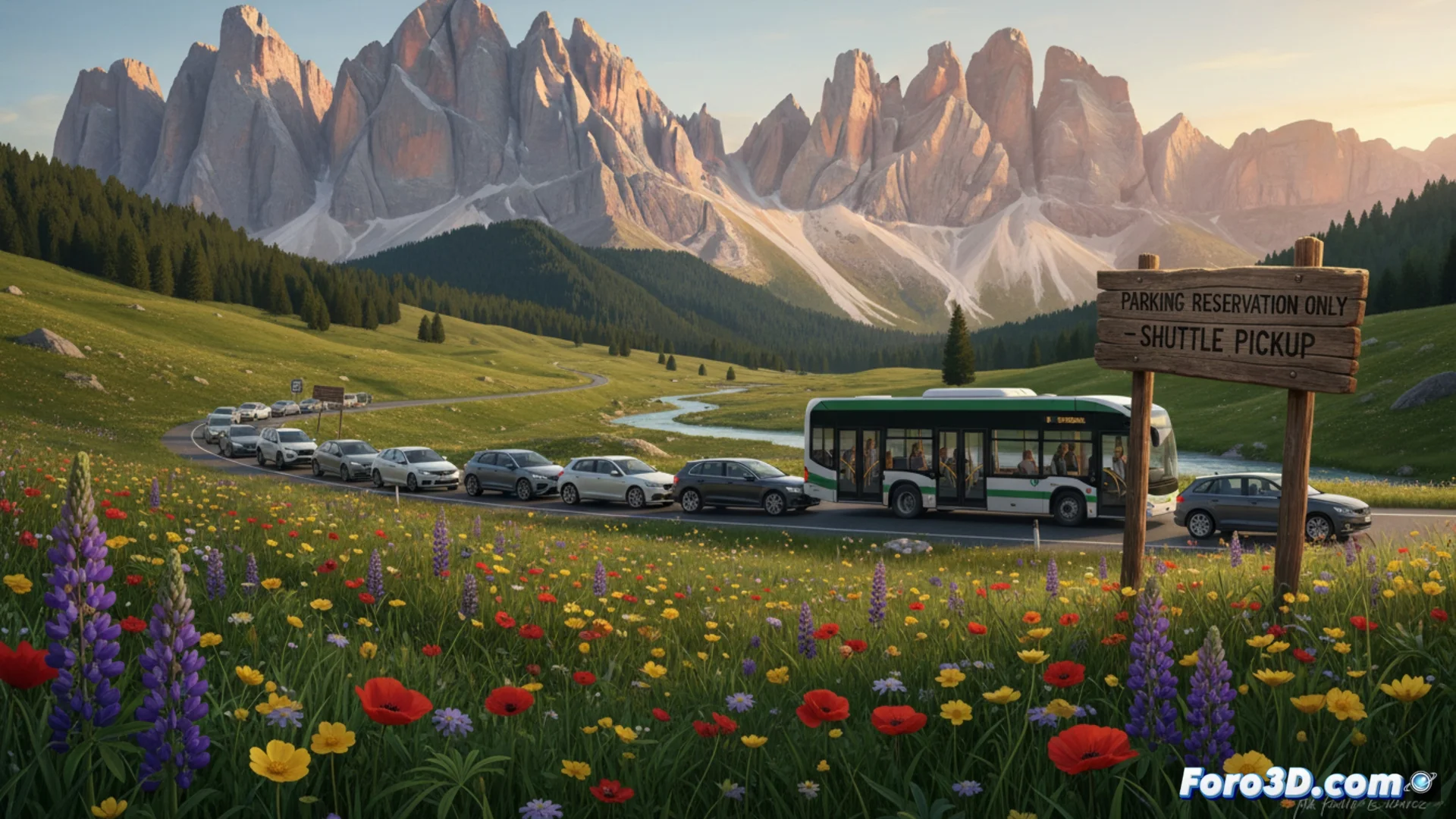
Val di Funes Regulates Mass Tourism to Protect the Dolomites
The locality of Val di Funes, nestled in the Italian Dolomites, has decided to take action to defend its natural environment. The incredible landscape, which seems taken from a postcard, attracts a huge number of people whose main goal is to capture a quick image. This phenomenon generates negative consequences such as traffic jams, abandoned litter, and a progressive deterioration of the territory. The municipal authorities have implemented a plan to organize how visitors arrive, in order to safeguard the peace of those who live there and the beauty of the place. 🏔️
A System That Organizes How Cars Arrive
The central action of the plan consists of controlling the number of automobiles that can circulate through the valley. People who wish to access with their private car must reserve in advance a specific time slot. Those who do not manage this reservation have the option to use a special bus that departs from a parking area located outside the main zone. The purpose is to minimize traffic jams on county roads and congestion at viewpoints and the most famous sites. This protocol is activated mainly on Saturdays, Sundays, and during the peak summer months.
Key Details of the New Regulation:- It is mandatory to reserve a time slot to enter with a private vehicle.
- A collective transport service is offered as an alternative from a peripheral parking lot.
- The measure is temporary and applies during periods of maximum tourist pressure.
We don't want to prohibit people from visiting us, but rather to organize how they do it so that it is compatible with our daily life.
The Goal: Find a Lasting Balance
The town hall does not seek to eliminate tourism, but to channel it so that it can coexist with the local community. Its representatives point out that the current model of express visits, focused almost exclusively on taking selfies, does not provide significant economic benefits to the valley. The bet is on promoting a type of visitor who enjoys more calmly and is aware of the value of the environment. Other populations in the Alps are watching this initiative closely, as it could serve as a reference for managing similar saturation situations in their own regions. 🤔
Impacts Expected to Be Mitigated:- Reduce traffic congestion on local roads and iconic points.
- Decrease the amount of poorly managed waste in the natural environment.
- Preserve the quality of life of permanent residents.
A New Requirement for the Perfect Photo
Meanwhile, some tourists are surprised to discover that getting the idyllic photograph of the Dolomites is no longer a matter of a simple click. Now, capturing that snapshot requires planning in advance and, in many cases, opting for collective transport. This measure underscores a growing trend: enjoying natural paradises implies assuming a shared responsibility so that they continue to exist. The message is clear: preservation requires an extra effort from everyone. 📸