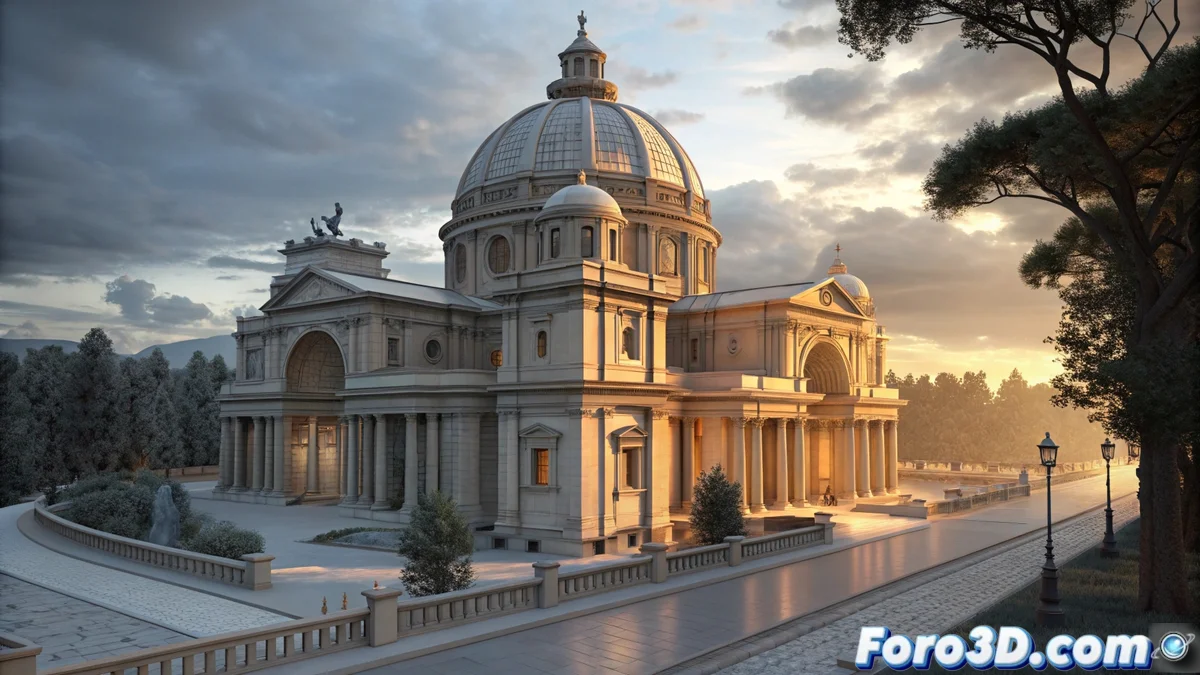
V-Ray and Chaos Vantage: Two Approaches to Lighting in 3ds Max
In the 3ds Max ecosystem, two Chaos Group tools address lighting from complementary perspectives. While one focuses on achieving photographic fidelity for the final delivery, the other prioritizes immediacy in decision-making. Understanding their roles is key to optimizing any professional workflow. 🎯
V-Ray: Precision and Control for the Definitive Render
V-Ray acts as a physically based rendering engine. It operates by processing light through algorithms like path tracing or irradiance map, giving the artist meticulous control over every variable. The process involves carefully adjusting lights, configuring materials, and defining render parameters to achieve a final result of the highest quality. This methodology requires computation time, but in return offers an unmatched level of precision and detail, positioning it as the standard solution for producing professional-grade final images and animations. 🏆
Main Features of V-Ray:- Functions as a traditional rendering engine within 3ds Max.
- Processes lighting with methods like path tracing, allowing extreme control.
- Specifically designed to generate the final production image with maximum quality.
V-Ray requires a pause to process, delivering absolute control and precision in return.
Chaos Vantage: Instant Interactivity with Ray Tracing
Chaos Vantage adopts a different paradigm, specializing in the real-time visualization of complex scenes. It leverages the power of GPU ray tracing to calculate lighting instantly. This allows free navigation through the scene, changing camera angles, and seeing modifications to lights or materials without wait times. Its purpose is not to render the final delivery, but to serve as a powerful tool for previewing, conducting interactive presentations, and making creative decisions with agility. ✨
Key Strengths of Chaos Vantage:- Uses real-time ray tracing technology powered by the GPU.
- Allows exploring and reviewing scenes in a fully interactive way.
- Ideal for presenting designs to clients or experimenting with lighting on the fly.
How to Choose Between V-Ray and Vantage?
The decision depends entirely on the objective in each project phase. V-Ray is chosen when maximum control and definitive final quality are needed to deliver a project. Chaos Vantage is preferred for reviewing designs, interactively validating lighting, or presenting a model in a dynamic environment. Many studios integrate both in their workflow: they model and set up the scene in 3ds Max with V-Ray, then import it into Vantage to validate the lighting and navigate it in real time before executing the final render. This synergy combines computational power with visual immediacy. 🔄