Introduction
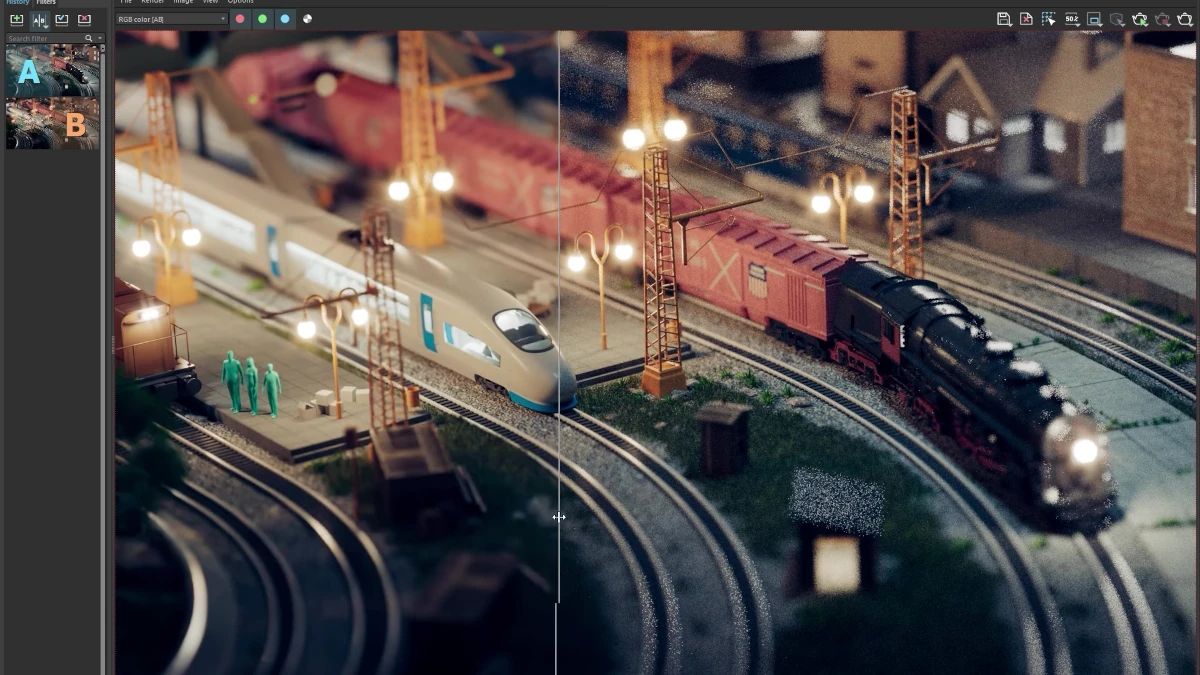
Chaos has released V-Ray 7 for Maya, a new version of its rendering engine for visual effects and animation. This update incorporates support for 3D Gaussian Splats, compatibility with the OpenPBR standard, improvements in integration with USD, and optimizations in V-Ray GPU, the V-Ray Frame Buffer, and Chaos Scatter.
With this version, Maya joins other DCC applications such as 3ds Max, SketchUp, and Cinema 4D in receiving V-Ray 7 integration.
Compatibility with 3D Gaussian Splats
V-Ray 7 for Maya introduces native support for 3D Gaussian Splats, an innovative 3D scanning technique that allows detailed reconstructions of objects and environments from photographs or videos.
Although there are free add-ons to render 3DGS data in Blender, Unity, and Unreal Engine, V-Ray is one of the first applications to integrate this technology natively. Chaos expects this functionality to be especially useful in architectural visualization and visual effects studios, as it facilitates the creation of detailed background environments.
Improvements in Lighting and Rendering
- Support for shadows within Light Path Expressions, allowing shadows to be isolated in renders for more precise control in compositing.
- Update to the V-Ray Sun and Sky system with compatibility for Corona's PRG Clear Sky model, generating more realistic lighting in sunrises, sunsets, and high-altitude shots.
- Optimization of the bright artifact removal algorithm and compatibility with a prefiltering pass in Open Image Denoise.
Improvements in V-Ray GPU
V-Ray GPU, the hybrid CPU and GPU rendering engine, now includes initial support for caustics, approaching feature parity with the main CPU-based renderer.
Other GPU Improvements
- Use of system memory for textures, allowing larger scenes to be rendered without exhausting GPU memory.
- Optimization of bitmap cache storage between frames in animations, speeding up image sequence rendering by up to 50% in certain cases.
- Compatibility with Apple's Metal API, improving performance by up to three times on MacBooks with M4 processors.
New Features in the V-Ray Frame Buffer
- New vignette layer to apply darkening effects to the edges of the image.
- Support for region rendering in freeform mode, allowing arbitrary areas to be defined and accelerating the rendering of key parts of the image.
- New filters tab with predefined color correction settings.
Improvements in Chaos Scatter
- Look At function, which allows scattered objects to be oriented toward the camera.
- Attenuation curve to control the variation of scattered vegetation based on altitude.
Compatibility with OpenPBR
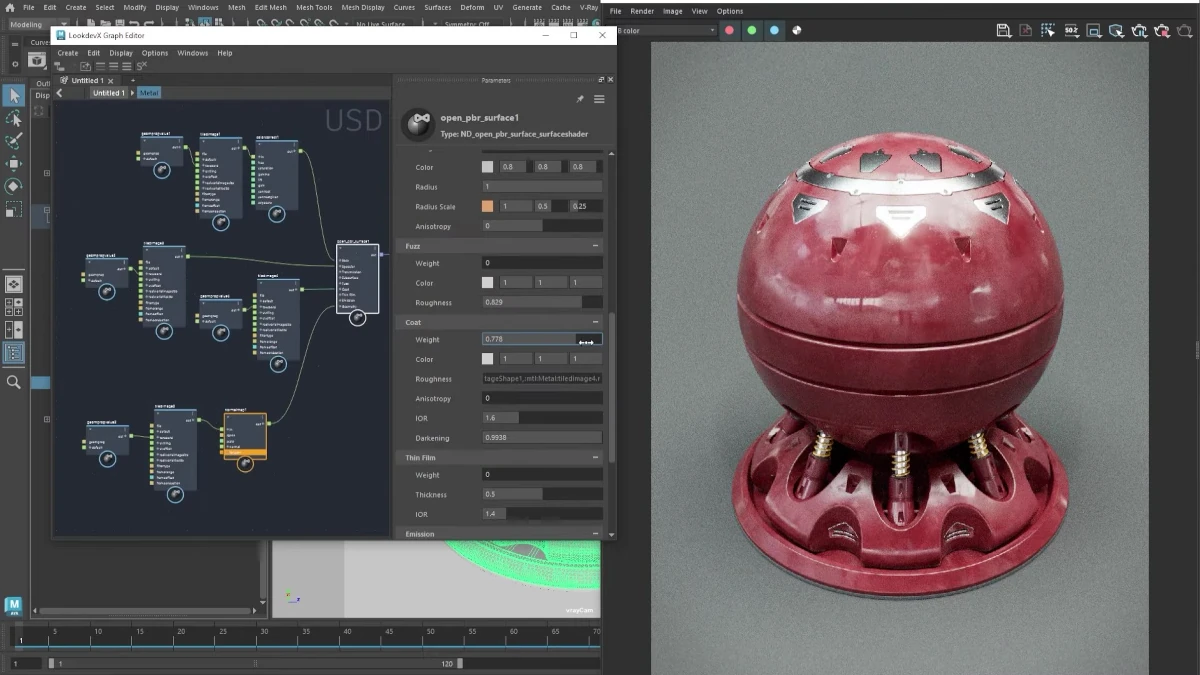
V-Ray 7 for Maya incorporates support for OpenPBR, the new material standard developed by the Academy Software Foundation, aimed at facilitating interoperability between VFX applications.
V-Ray's base material now features an OpenPBR mode, offering greater control over glow effects and simplifying the creation of layered materials. Additionally, V-Ray is compatible with the new OpenPBR Surface implementation introduced in Maya 2025.3.
Improvements in USD Integration
Among the Maya-specific improvements, V-Ray 7 expands its USD compatibility, including support for the USD for Maya 0.30 version.
Additionally, V-Ray Clipper is now compatible with USD workflows, enabling the creation of renders with geometric cutouts in this format.
New Features in Chaos Cosmos
- Introduction of asset variants, allowing the appearance of an object to be changed without needing to re-import it.
- Multiple asset selection functionality within the Chaos Cosmos library.
Increase in Subscription Prices
Chaos has increased subscription prices compared to the previous version:
- V-Ray Solo: 79 €/month or 480 €/year.
- V-Ray Premium: 112 €/month or 670 €/year.
- V-Ray Enterprise maintains its price unchanged.
Conclusion
V-Ray 7 for Maya introduces significant improvements in performance, integration, and visual quality. Compatibility with 3D Gaussian Splats, OpenPBR, and USD, along with optimizations in GPU and Chaos Scatter, make it an essential update for VFX and animation artists.