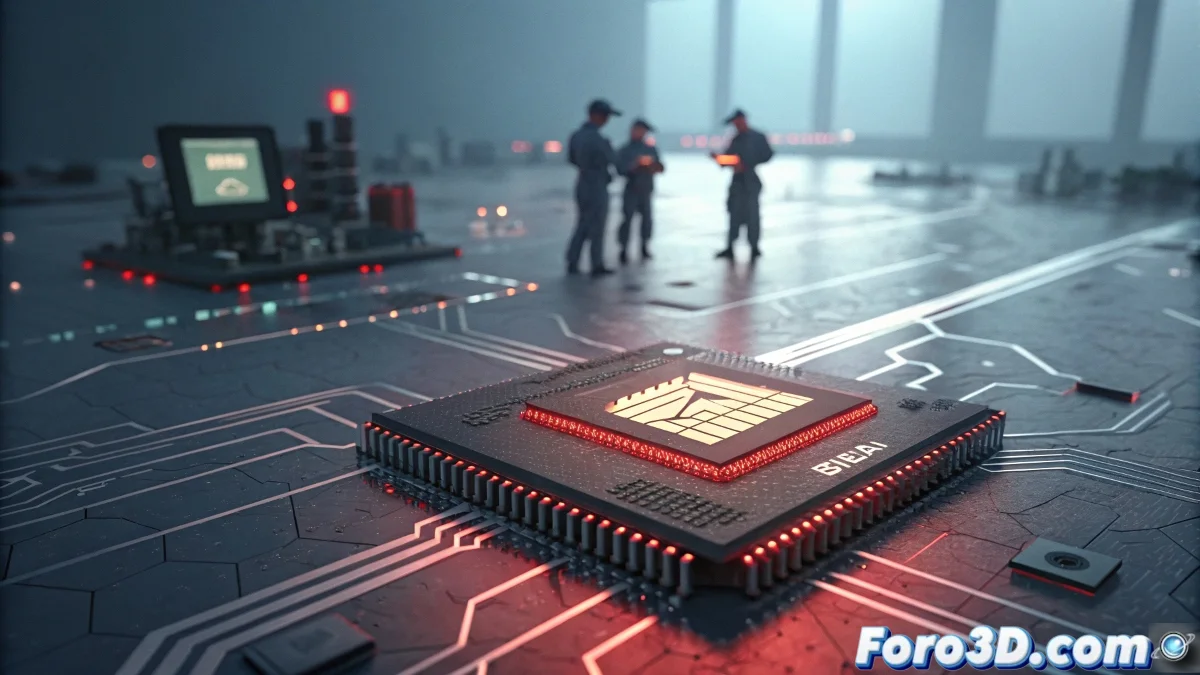
When the Chip War Becomes a Race Against Time
Yangtze Memory Technologies Co. (YMTC), the pride of China's semiconductor industry, is fighting an existential battle against U.S. sanctions that threaten to leave it out of the global race for the most advanced memory. What began as a technological success story has become a case study on the limits of innovation when access to essential tools is cut off. 💽 Founded in 2016, YMTC had achieved the impossible: developing competitive NAND technology and patenting Xtacking, an architecture that promised to challenge the dominance of Samsung and Micron. But now, U.S. restrictions have jeopardized its ability to maintain that innovative pace.
The Xtacking Paradox: Captive Innovation
YMTC's Xtacking technology is precisely the kind of innovation that should secure it a seat at the big table. It enables the production of memories with higher density and speed by building peripheral circuits and memory cells separately before joining them. 🔧 However, this technological advantage critically depends on manufacturing machinery that YMTC cannot produce internally. The advanced lithography tools, etching equipment, and testing systems they need are exactly what U.S. sanctions block. It's like having the recipe for the world's best cake but being prohibited from buying the oven to bake it.
Critical areas affected by sanctions:- EUV lithography necessary for advanced nodes
- High-precision deposition and etching equipment
- Advanced metrology and testing tools
- Specialized design and simulation software
The Domino Effect on China's Tech Industry
The impact of the restrictions on YMTC goes far beyond a single company. China accounts for approximately 25% of global chip consumption but produces significantly less. 📊 YMTC's inability to scale its advanced NAND memory production affects smartphone, server, and storage device manufacturers that rely on local components to avoid their own geopolitical vulnerabilities. Every delay in YMTC's roadmap adds more pressure to the already strained global semiconductor supply chain.
The Race for Self-Sufficiency: Dream or Reality
The sanctions have brutally accelerated Chinese efforts to develop a fully independent semiconductor industry. The government has injected billions into initiatives like the "National Semiconductor Fund," but the consensus among experts is that it will take years, perhaps decades, to achieve technological parity. ⏳ While companies like SMIC attempt to develop domestic advanced lithography, YMTC finds itself in the uncomfortable position of having to wait for solutions that may arrive too late to remain competitive in the global market.
Chinese strategies to circumvent restrictions:- Massive investment in domestic manufacturing equipment R&D
- Technology acquisition through non-aligned third countries
- Focus on mature nodes with lower dependency
- Enhanced collaboration between state-owned and private companies
The Competitive Landscape: When the Train Pulls Away
While YMTC struggles against restrictions, its global competitors have not stood still. Samsung, SK Hynix, and Micron continue advancing toward smaller nodes and higher densities, leveraging unrestricted access to the most advanced technology. 🚀 The technological gap, which YMTC had significantly narrowed, threatens to widen again. In the semiconductor world, where each product generation becomes obsolete in 18-24 months, falling even slightly behind can mean losing the race permanently.
The Financial Dilemma: Innovating with Hands Tied
Developing domestic alternatives to advanced manufacturing equipment is not just a technical challenge, but also a financial one. It is estimated that creating a competitive foundry with fully Chinese technology would require investments exceeding $100 billion. 💸 YMTC is in the position of having to spend huge sums on R&D for tools that its competitors can simply purchase from specialized suppliers, diverting resources that would otherwise go toward improving its main products. It is a structural competitive disadvantage that is hard to overcome.
In the technological war between superpowers, even the brightest innovators can be paralyzed by lack of access to the basic tools of their trade
Conclusion: Temporary Lesson or Permanent Change?
YMTC's situation represents a turning point not only for China but for the global semiconductor industry. It demonstrates the limits of technological globalization in an era of intensified geopolitical competition. 🌍 In the short term, sanctions will likely significantly slow Chinese technological advancement in advanced memories. In the long term, they could accelerate the emergence of a parallel technological ecosystem that eventually challenges Western hegemony. For YMTC, the immediate challenge is to survive long enough to see if that future materializes. After all, in the geopolitical chess game of chips, sometimes the best move is simply to stay on the board. 😄