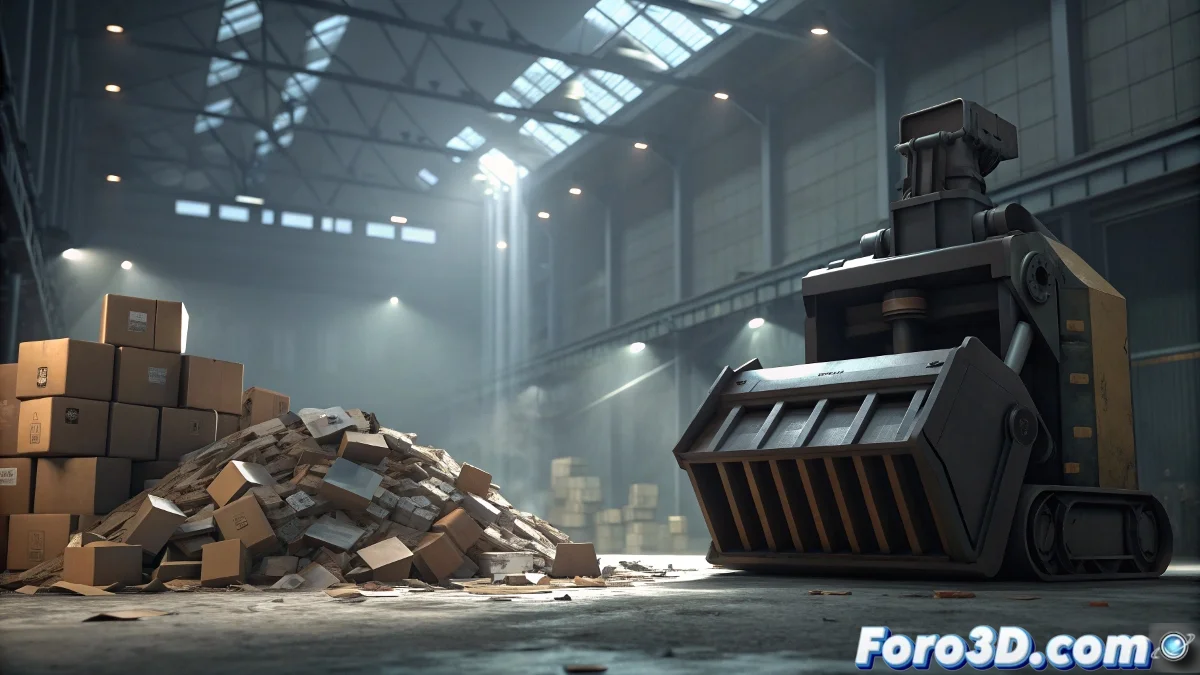
When International Logistics Turns into a Nightmare
UPS faces serious accusations after numerous reports indicated that the company would be destroying international packages due to confusions in customs documentation. Customers from different countries have reported that their shipments, valued at hundreds and even thousands of dollars, have been shredded or incinerated without prior notice under the justification of customs clearance issues. The situation has generated outrage among small businesses and individuals who rely on the courier service for international operations.
The most concerning aspect, according to the complaints, is that UPS does not properly notify senders about documentation problems, proceeding directly to destroy the packages after a holding period. Many customers only discover the fate of their shipments when they repeatedly contact customer service after weeks without tracking updates. The company's policy on this matter appears to be inconsistent and opaque, varying by destination country and type of merchandise.
Your international package could be one missing document away from becoming corporate confetti
Canvas Setup and Initial Composition
To illustrate this news in Krita, we start by creating a 4000x3000 pixel canvas at 300 DPI, ideal for editorial illustration. We establish a color palette based on UPS's corporate colors—brown and gold—but desaturated to convey the somber nature of the news. The composition is organized around a central conveyor belt that guides the viewer's gaze through the destruction process.
We use adjustment layers from the start to control global contrast and saturation, and create organized layer groups for background, main elements, and effects. The two-point perspective creates depth and emphasizes the industrial character of the scene, while the conveyor belt lines direct attention to the focal points of the illustration.
- 4000x3000 px canvas at 300 DPI
- Desaturated UPS palette for a serious tone
- Composition with conveyor belt as the guiding element
- Organized layer groups for efficient workflow
Creation of the Industrial Environment
The illustration background represents a held packages warehouse with metal shelves full of characteristic UPS boxes. We use metal texture brushes to create industrial surfaces, applying atmospheric blur to distant areas to generate depth. Shipping labels and customs documents are scattered on the floor, some with "HELD" and "INCOMPLETE DOCUMENTATION" stamps in intense red.
On the warehouse walls, we add customs procedure posters with intentionally illegible text to suggest confusing bureaucracy. The lighting comes from industrial fluorescent lights that create pools of light and harsh shadows, reinforcing the cold and impersonal atmosphere of the destruction process. We use Krita's perspective tool to maintain spatial coherence throughout the environment.
In the world of logistics, sometimes paper is worth more than the package contents
- Metallic textures for industrial atmosphere
- Scattered documents with rejection stamps
- Fluorescent lighting for cold tone
- Perspective tool for spatial coherence
Design of UPS Packages in Destruction Process
The UPS packages are illustrated with the iconic brown and gold design, but showing different states of destruction. Some appear violently opened with visible contents—electronics, clothing, documents—while others are partially shredded on the conveyor belt. We use custom tear brushes to create the ragged edges of the boxes, applying intense shadows in the broken areas to maximize visual impact.
The package contents are illustrated with enough detail to be recognizable but without distracting from the main message. Personal objects like family photos, books, and electronic devices emerge from the destroyed packages, adding an emotional charge to the scene. The shipping labels show addresses from different countries, emphasizing the international nature of the problem.
Customs Symbols and Confusing Documentation
The customs elements are represented by universal prohibition symbols, giant question marks, and official stamps with incomprehensible text. We use Krita's text tool to create documents with bureaucratic jargon and forms with red-marked fields as "INCOMPLETE" or "DOES NOT MEET REQUIREMENTS". These elements float around the main scene like paper ghosts haunting the doomed packages.
Directional arrows from traffic and logistics appear twisted in contradictory directions, symbolizing the confusion in the process. A wall clock shows different time zones simultaneously, reinforcing the disorienting nature of international customs procedures. These elements are painted with more saturated colors to contrast with the general palette and act as secondary points of interest.
- Prohibition symbols and question marks
- Documents with bureaucratic jargon illegible
- Contradictory arrows to symbolize confusion
- Multi-time-zone clock for disorientation
Lighting and Atmosphere Techniques
The lighting is handled using Overlay mode layers and low opacity airbrushes. We create a main light source from above that illuminates the conveyor belt, while the side areas remain in strategic penumbra. Specular reflections on metallic surfaces are added with brushes in Color Dodge (Luminosity) mode to create controlled highlights.
For the overall atmosphere, we use a Hue/Saturation adjustment layer to slightly cool the colors, creating that cold institutional tone characteristic of warehouses and bureaucratic spaces. Suspended smoke or dust is painted with texture brushes in Overlay mode with low opacity, adding depth and a sense of abandonment and negligence.
Bureaucracy doesn't destroy with fire, but with paper and indifference
Narrative Details and Emotional Elements
We include elements that tell mini-stories within the main illustration: a handwritten letter half-destroyed with visible words like "grandpa" and "medication", a broken medical device emerging from a package, torn family photos. These details humanize the bureaucratic tragedy and transform the illustration from a simple logistics critique into a commentary on the human impact of impersonal systems.
The cast shadows are carefully calculated to maintain coherence with the main light, and are slightly exaggerated on emotionally significant elements to direct the viewer's attention. We use the free transform tool to distort some shadows, suggesting the distorted nature of the process the illustration represents.
Final Finishing and Post-Processing
For the final finish, we apply a film grain texture layer in Overlay mode at 15% opacity to unify all elements. We adjust the global levels to slightly increase contrast in focal areas, and use clipping masks to apply selective adjustments to specific elements without affecting the entire composition.
The context text is added in non-intrusive areas using a typography that evokes official documents, with phrases like "Section 4B not complied with" and "Missing certificate of origin". Finally, we export in PNG format with transparent background for maximum flexibility in editorial uses, keeping the original KRA file with all layers for possible future modifications.
- Grain texture for visual unification
- Selective adjustments via clipping masks
- Contextual text with bureaucratic typography
- PNG export with transparency
The Message Beyond the Image
This illustration created in Krita not only documents a logistics problem, but visually explores the human consequences of systems that prioritize procedures over people. The destruction of packages becomes a metaphor for how excessive bureaucracy can shred not only objects, but also human connections, business opportunities, and hopes contained in those international shipments.
By using Krita—a free and accessible tool—to create this illustration, we also make a statement about how art can democratize social critique and make visible problems that would otherwise remain hidden in the opacity of corporate procedures.
It seems that in the world of international shipping, the only package that arrives safely at its destination is the one containing the invoice for unrendered services 📦