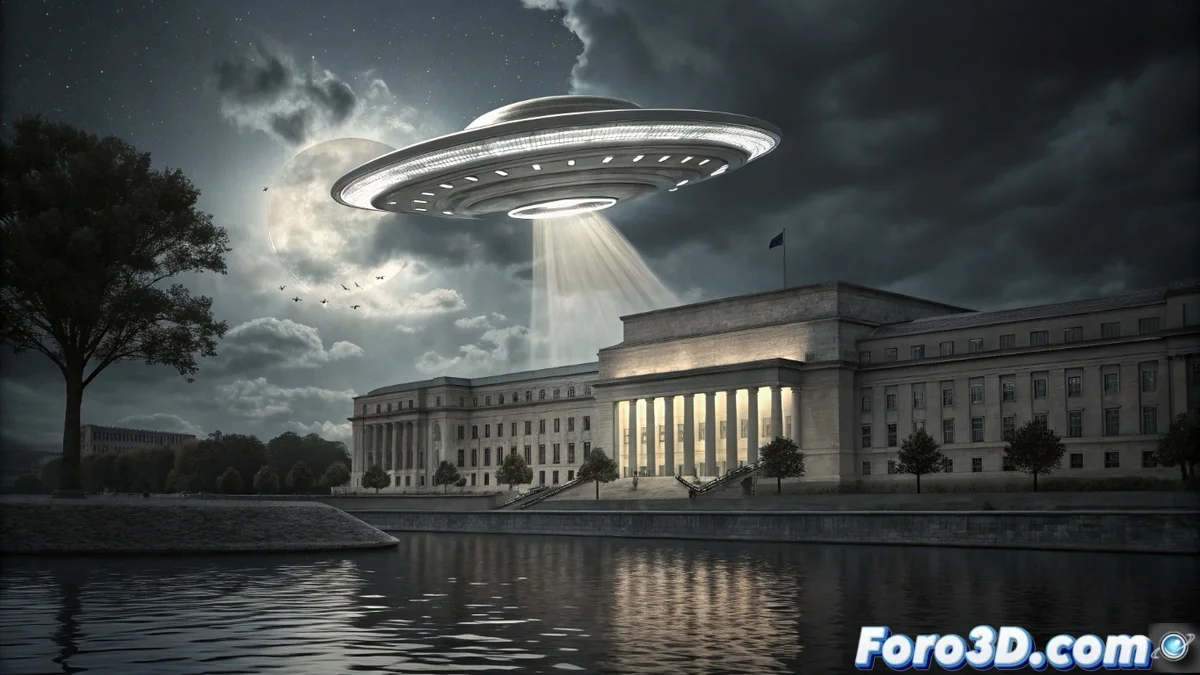
Unveiling the UFO Cover-up in UFOs and the National Security State
The work of Richard M. Dolan, UFOs and the National Security State, stands as a meticulous investigation that traces a hidden timeline. Spanning from 1941 to 1973, the author unravels how power structures in the United States have managed the UFO phenomenon under an institutional veil of silence, denying access to crucial data for public understanding. 🛸
The Temporal Architecture of Secrecy
Dolan structures his analysis in a revealing chronological sequence, exposing concealment methodologies that began with sightings during World War II. This pattern of systematic cover-up evolved over decades, demonstrating that various government agencies prioritized absolute control of information over any attempt at honest disclosure, linking these historical events to secret operations that extend into our present day.
Key Phases of the Cover-up Identified by Dolan:- Initial Denial Phase (1940s): First military sightings are cataloged and removed from public scrutiny immediately.
- Secret Institutionalization Phase (1950s): Creation of protocols and classified committees to centralize and contain all related information.
- Consolidation and Expansion Phase (1960s-1970s): Incidents are connected to top-secret projects, perpetuating secrecy into the modern era.
True power does not lie in what is known, but in what is decided to be hidden. The UFO history is a testament to that principle.
Profound Impact on Security and Society
This clandestine management raises fundamental questions about the distribution of real power. Dolan posits that an elite with access to privileged information has shaped policies to maintain a status quo of disinformation. This not only affects the opacity of institutions but also distorts collective perception of possible threats or extraterrestrial realities, intertwining history with current discussions on mass surveillance and the limits of informational freedom.
Consequences Stemming from This Secrecy Policy:- Erosion of Democratic Transparency: Citizens are excluded from debates on matters that could redefine their understanding of the world.
- Fueling Institutional Distrust: The lack of official responses creates a breeding ground for disbelief toward the government.
- Polarization of Public Debate: The topic is divided between absolute skepticism and uncritical acceptance of theories, without a common factual ground.
Between Rigorous Analysis and Cultural Paradox
Although the book offers a solid academic examination, it underscores a palpable irony. While official archives remain under lock in forgotten bunkers, popular culture and media continue to exploit the mystery, generating an endless flow of speculations and conspiracy narratives. This phenomenon acts as a distorted substitute for the truth, as if the authentic X-Files were still awaiting discovery today by a bold and persistent investigation. 🔍