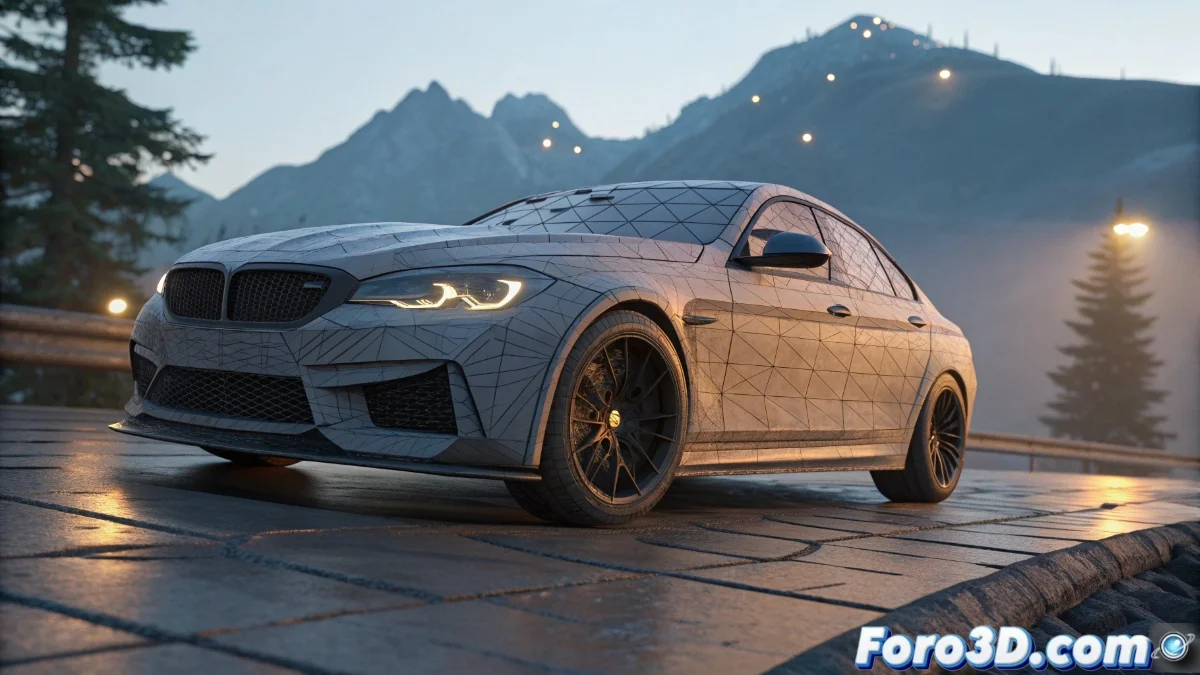
Mesh Subdivision System in Unreal Engine 5
The most advanced development engine now integrates an automatic tessellation system that revolutionizes how we handle geometric detail. This technology analyzes and subdivides meshes in real time, generating perfectly smoothed organic surfaces without manual resource consumption 🚀.
Intelligent Tessellation Configuration
Developers can access subdivision parameters through the mesh properties panel. By activating the corresponding function in materials, it defines how triangles are divided according to displacement maps. It is essential to use high-definition textures to guide the process and avoid visual distortions.
Essential Controls:- Subdivision Factor: Determines the density of polygons generated in each iteration
- Distance Limit: Controls up to what point from the camera the additional detail is applied
- Height Maps: Guide vertex displacement to create realistic micro-details
The magic happens when low-poly models acquire high-poly complexity at render time, maintaining efficiency in dense scenes
Advanced Performance Optimization
The engine applies an adaptive approach that balances visual quality and execution speed. It continuously analyzes the object's distance to the camera and available GPU resources, dynamically adjusting the level of detail. This intelligent management prevents bottlenecks on limited hardware.
Implementation Strategies:- Contextual Tests: Evaluate different configurations within the specific scene environment
- Integrated Profiling: Use Unreal's monitoring tools to measure GPU impact
- Combination with LOD: Implement automatic Level of Detail systems for efficient resource distribution
Practical Benefits and Considerations
This technology enables the creation of terrains and organic surfaces with unprecedented realism, eliminating the need for initially super-dense models. However, excessive use can compromise performance, especially on devices with moderate graphics capabilities. The key is finding the perfect balance between visual quality and experience fluidity 👁️.