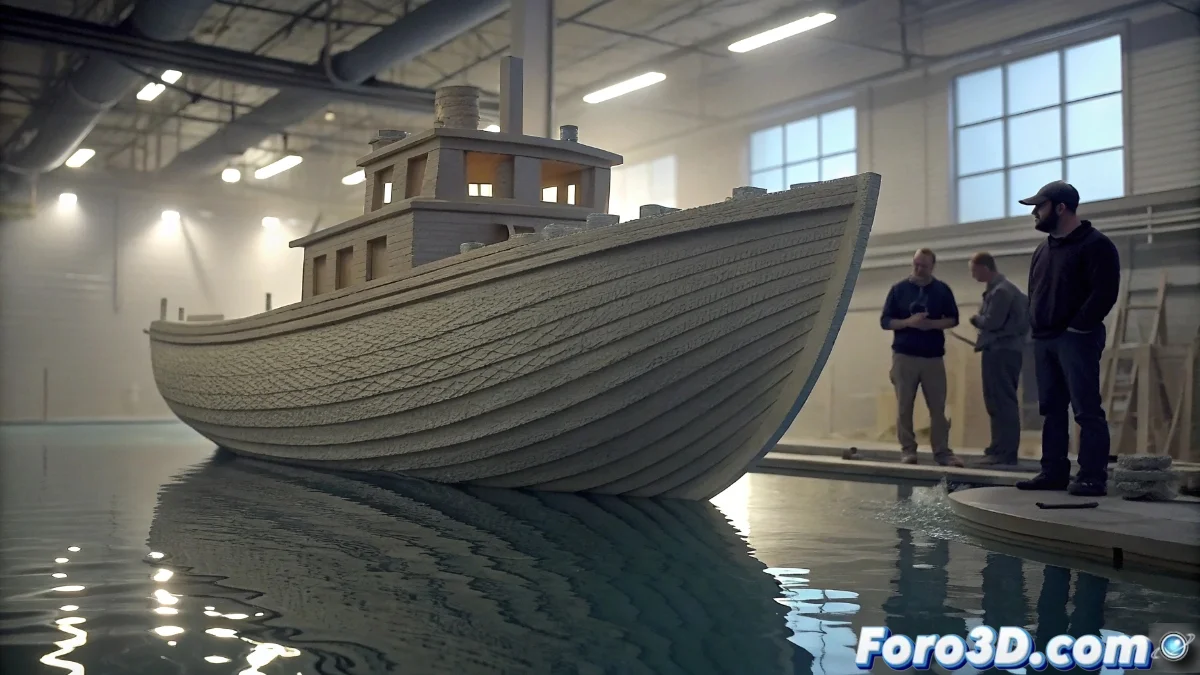
University of Maine Sets World Record with the World's Largest 3D Printed Boat
The University of Maine has achieved an unprecedented feat in the field of additive manufacturing by creating the impressive boat 3Dirigo, officially recognized by Guinness World Records as the world's largest 3D printed vessel 🚤. This monumental structure measures 7.6 meters in length and weighs 2.2 tons, standing out for its manufacture in a single continuous piece without the need for intermediate assemblies.
Revolutionary Technology Behind the Project
The development of 3Dirigo utilized a large-format 3D printer specialized in working with advanced composite materials specifically designed to withstand the harsh conditions of the marine environment. The manufacturing process involves controlled extrusions of reinforced polymers that are meticulously deposited layer by layer, forming a monolithic hull structure with the precision that ensures the complete structural integrity required for safe navigation.
Key Technical Features:- Printing in a single continuous piece without joints or assemblies
- Specialized composite materials resistant to marine corrosion
- Dimensional precision that ensures hydrodynamic stability
"This project demonstrates how industrial-scale 3D printing can radically transform traditional shipbuilding production methods" - University of Maine Research Team
Impact on the Shipbuilding Industry
This technological milestone sets a transformative precedent for modern shipbuilding, where large-scale additive manufacturing could completely redefine conventional methods. The ability to produce complete vessels in a single operation eliminates numerous traditional assembly stages and substantially reduces production times and costs.
Key Advantages of the Methodology:- Drastic reduction in manufacturing times compared to traditional methods
- Possibility of economically viable customized designs
- Specific hydrodynamic optimizations for different navigation conditions
Future of Shipbuilding
It is fascinating to imagine explaining to a traditional sailor that their next vessel could come out complete from a machine as if it were a modeled object, without requiring conventional shipyards or crews of workers for months of intensive labor ⚓. This technological revolution not only optimizes processes but also opens up new design possibilities previously considered economically unviable in the conventional nautical industry.