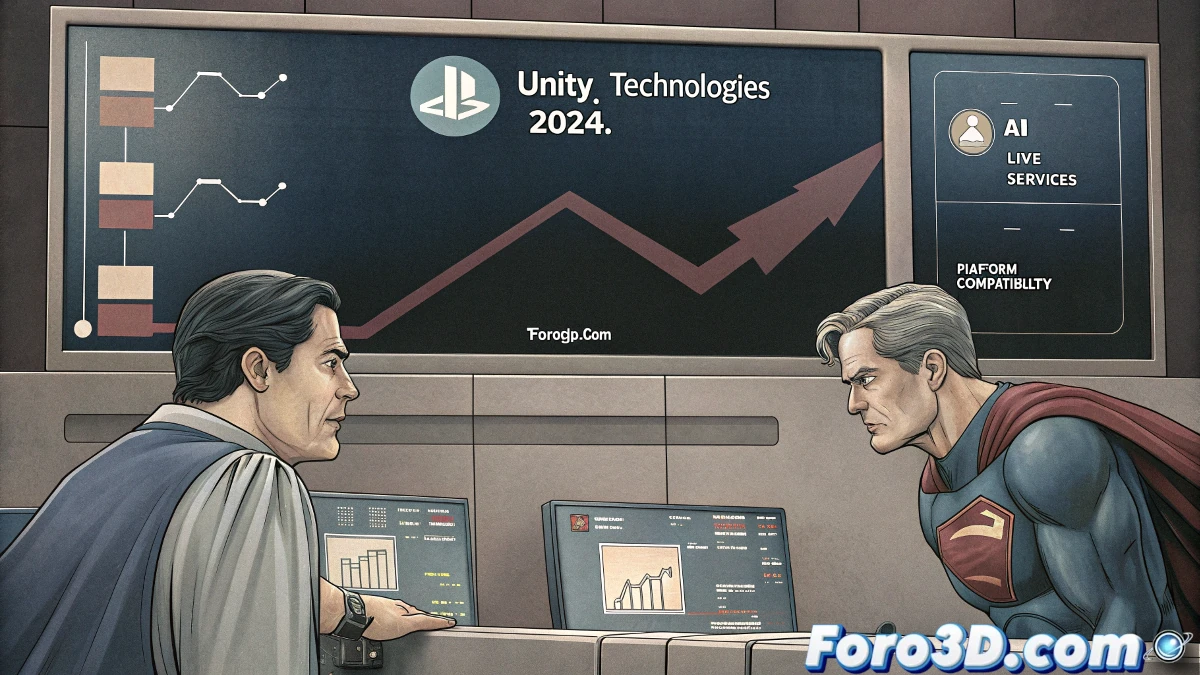
Unity Technologies, one of the most influential companies in video game development and interactive tools, is going through a period of adjustments and financial difficulties. With a decline in its revenues and several rounds of layoffs, the company seeks to redefine its strategy to adapt to a constantly evolving market.
A Revenue Decline That Worries the Industry
The latest financial reports have revealed a significant decrease in the company's revenues. Development solutions, which have been one of the pillars of its business, have experienced a notable drop, leading the company to rethink its next steps.
Factors That Have Affected Its Performance
Several elements have influenced Unity's current situation, including:
- Reduction in demand for development tools and licenses.
- End of strategic agreements that affected its revenues.
- Challenges in the advertising market, one of its main sources of income.
Layoffs and Internal Restructuring
In an attempt to reduce costs and improve its long-term sustainability, the company has carried out several rounds of layoffs in recent years. This restructuring has affected numerous employees and has generated uncertainty about the company's future and its direction.
Impact on the Workforce
Constant restructurings can affect employee morale and slow down the development of new solutions. Some of the direct consequences of these layoffs include:
- Reduction in operational capacity in key development areas.
- Loss of talent that could migrate to competing companies.
- Challenges in customer retention seeking stability in the tools they use.
"A company's success does not only depend on its technology, but on how it handles its crises and adaptations to change."
A New Approach for the Future
In light of this scenario, Unity has announced a renewed strategy that seeks to strengthen its presence in areas such as live services, artificial intelligence, and ad optimization. The company aims to focus on models that allow developers to expand their reach across multiple platforms without relying exclusively on graphical quality.
Key Elements of the New Strategy
- Development of tools for interactive experiences in various sectors.
- Optimization of cloud services for greater accessibility.
- Focus on sustainable monetization to attract more developers.
Conclusion: A Transition Phase for Unity
Unity finds itself at a turning point where it must redefine its business model to remain competitive in the sector. While it faces significant challenges, the implementation of new strategies could mark the beginning of a more stable phase adapted to the current market needs.