When the Miniaturized Gains Historical Grandeur
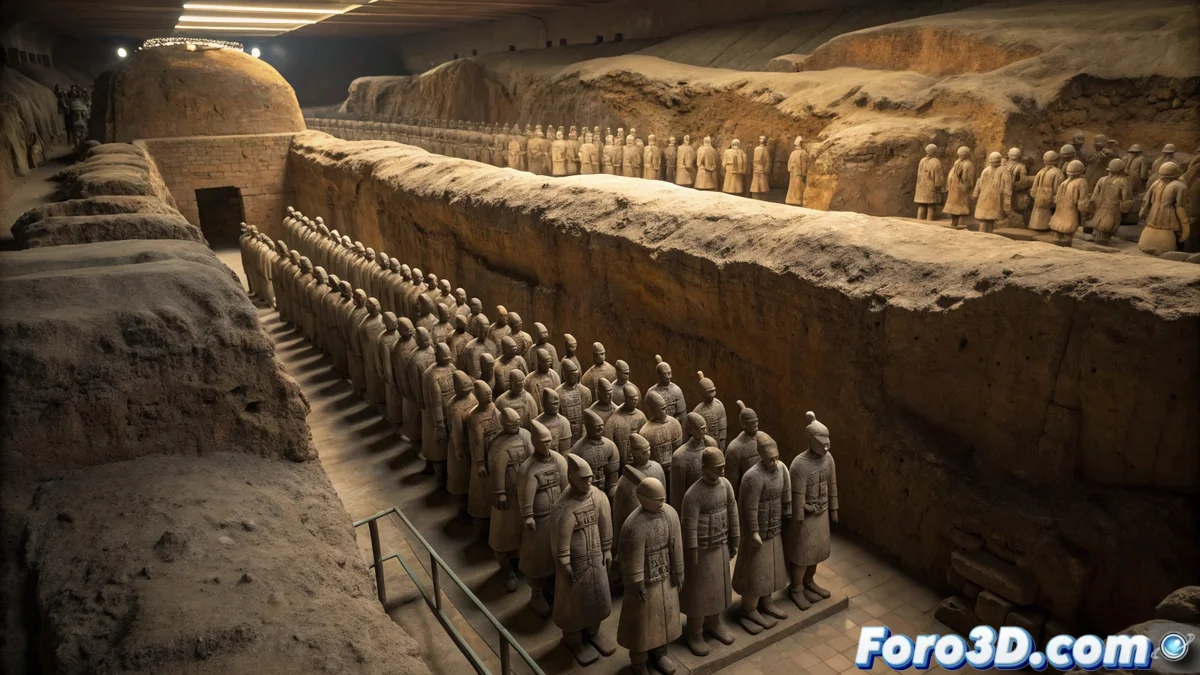
An extraordinary discovery has emerged in China: archaeologists have found a hidden chamber from the Qin Dynasty containing a miniature terracotta army. 🏺 Unlike the famous site with life-sized figures, these small statues measure just 30 centimeters tall, suggesting they could have been prototypes or offerings intended for a lower-ranking ruler. This unique find opens new interpretations of the era's funerary rituals and demonstrates the artistic sophistication of the Qin civilization.
For developers and digital artists, this discovery offers a fascinating opportunity to explore interactive Unity recreation techniques. 💻 The digital reconstruction of this hidden chamber allows not only visualizing the miniature army but also experiencing the ritual space in first person through virtual tours and immersive visualizations. The combination of precise 3D modeling, ambient lighting, and interaction systems can transport users directly to the heart of this archaeological find.
An immersive journey to the funerary rituals of ancient China on a reduced scale but with monumental impact.
Project Setup and Historical Modeling
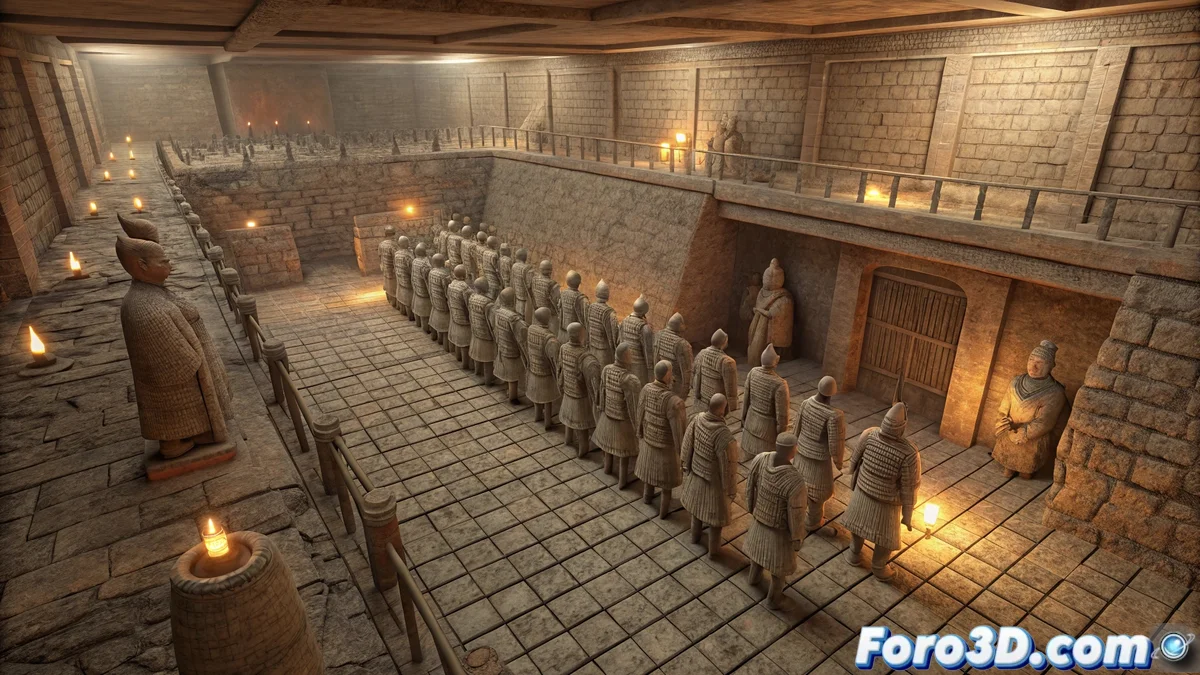
The Unity recreation begins with precise metric setup to maintain the historical proportions of the figures and the chamber. 📐 Importing base 3D models of terracotta warriors at 1:1 scale (30 cm) establishes the visual foundation, while hierarchical organization in layers—Chamber, Terracotta, Lighting, Floor—allows efficient management of the scene's multiple elements. The distribution of figures in organized rows and columns replicates the characteristic military pattern of Qin terracotta armies.
Essential elements for an authentic recreation include:
- Miniature warriors with details of historical armament and clothing
- Aged terracotta textures with cracks and patina
- Qin architecture with characteristic moldings and reliefs
- Floor and walls with authentic stone and earth materials
Lighting and Interactivity for Archaeological Immersion
Ambient lighting is crucial for recreating the underground atmosphere of the hidden chamber. 💡 The setup of dim lights simulating torches or filtered natural light creates soft contrasts that accentuate textures and deepen shadows between the figures. The implementation of interaction systems allows users to freely explore the chamber, approach specific figures, and discover details that would otherwise remain hidden in a static visualization.
Paradoxical that even the miniature terracotta warriors end up having more honor guard and historical preservation than many of us in life… though at least we don't need to be unearthed after millennia to receive attention. 😅 A reflection on the permanence of cultural legacy and the ephemerality of personal fame in the grand scheme of human history.