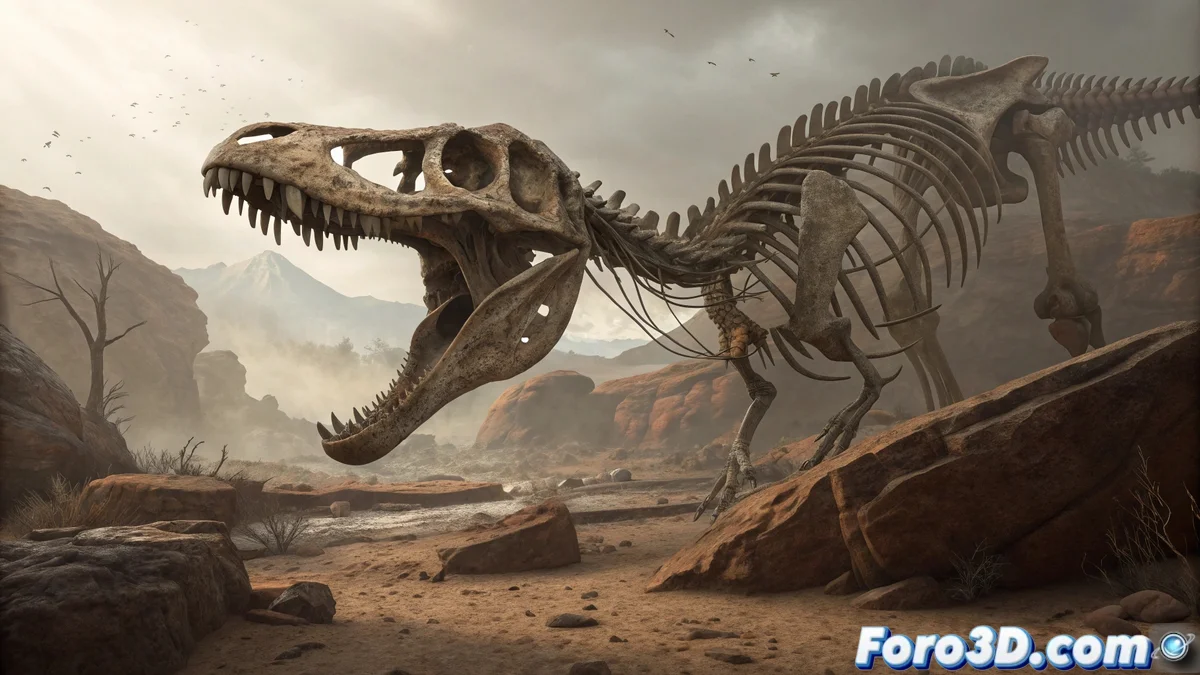
A Prehistoric Battle Frozen in Time
An extraordinary paleontological discovery has revealed a dinosaur fossil that preserves a crocodile trapped in its jaws, a dramatic scene frozen for millions of years. This exceptional find not only allowed the identification of a new species of predatory dinosaur but also offers a unique window into the interactions between prey and hunters in the prehistoric world. The perfect preservation of the hunting moment provides invaluable information about predation techniques and the ecology of the Mesozoic era. 🦖
Recreating the Crucial Moment in Blender
Blender presents itself as the ideal tool for digitally reconstructing this unique paleontological moment. The challenge lies in capturing the intensity of the predatory instant while maintaining the fossilized appearance of the specimens. This recreation requires a balance between the dynamism of the action and the mineralized rigidity typical of fossils, creating a scientifically accurate yet visually striking representation.
Key Elements for an Authentic Recreation
Achieving a convincing representation of this exceptional discovery requires attention to multiple technical and paleontological aspects.
- Precise Anatomy: Body shapes based on real fossil evidence.
- Dynamic Pose: Composition that conveys frozen movement.
- Fossilized Textures: Mineralized and time-eroded appearance.
- Geological Context: Sedimentary environment consistent with the find.
Fossils that capture interactions between species are the most vivid pages in the book of natural history.
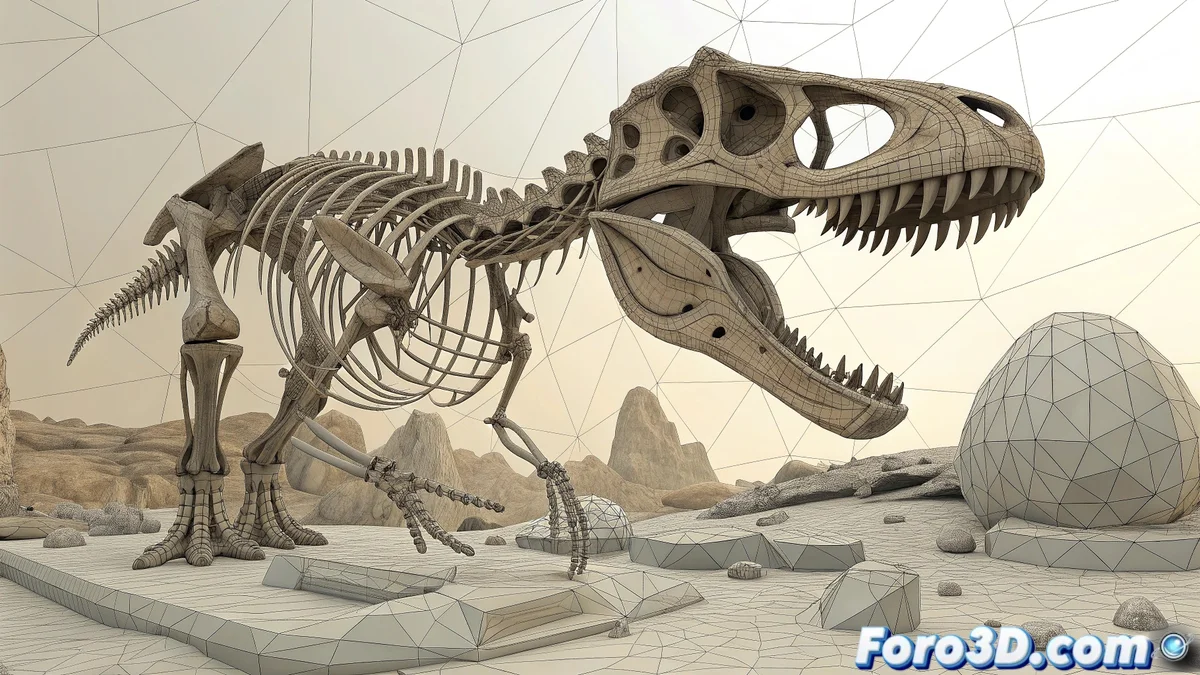
Step-by-Step Technical Guide in Blender
Start by meticulously organizing the project in Blender. Save the file as dinosaur_crocodile_fossil.blend and set up the appropriate scale units to maintain realistic proportions. Establish collections for each element: Dinosaur, Crocodile, Terrain, Sediments, Lighting. This organization will be crucial for handling the scene's complexity. 💀
Modeling the Fossilized Specimens
Begin with base meshes of anatomical reference for both creatures, adjusting proportions according to available paleontological data. Use sculpt mode to refine bone morphology and articulation, paying special attention to the dinosaur's jaw and the trapped crocodile's position. The key is to create a pose that is biologically plausible and visually dramatic.
Geological and Sedimentary Integration
Model the rocky terrain using sculpting and displacement tools to create realistic geological strata. The specimens should appear partially embedded in the rock matrix, with sediments covering some bone areas. Add fractures and cracks characteristic of fossilization processes to increase realism.
Fossilized Materials and Textures
Develop shaders that simulate the mineralized appearance of fossilized bones, combining earthy color maps with subtle subsurface scattering effects. Textures should show tone variations and erosion consistent with millions of years of exposure to geological elements. Surrounding sediments require rocky materials with visible stratification.
Museum-like and Dramatic Lighting
Set up a lighting system that evokes a paleontological museum presentation, with main light from above accentuating bone volumes. Use soft fill lights to reveal details in shadowed areas and create rim lights that outline the creatures' contours against the sedimentary background. The goal is to highlight the dramatic narrative while maintaining scientific clarity. 🔍
Render and Final Post-Production
Use the Cycles engine for the best quality in rendering organic and rocky materials. Set up high sampling to handle complex light interactions on eroded surfaces. In post-production, adjust contrast to define bone shapes, apply color correction toward warm earth tones, and add a subtle depth of field effect to direct attention to the interaction point between predator and prey.
While this dinosaur was celebrating its last dinner millions of years ago, it couldn't have imagined it would end up as a museum's star exhibit. The crocodile, on the other hand, probably wishes it had chosen a different prehistoric neighborhood. 😅