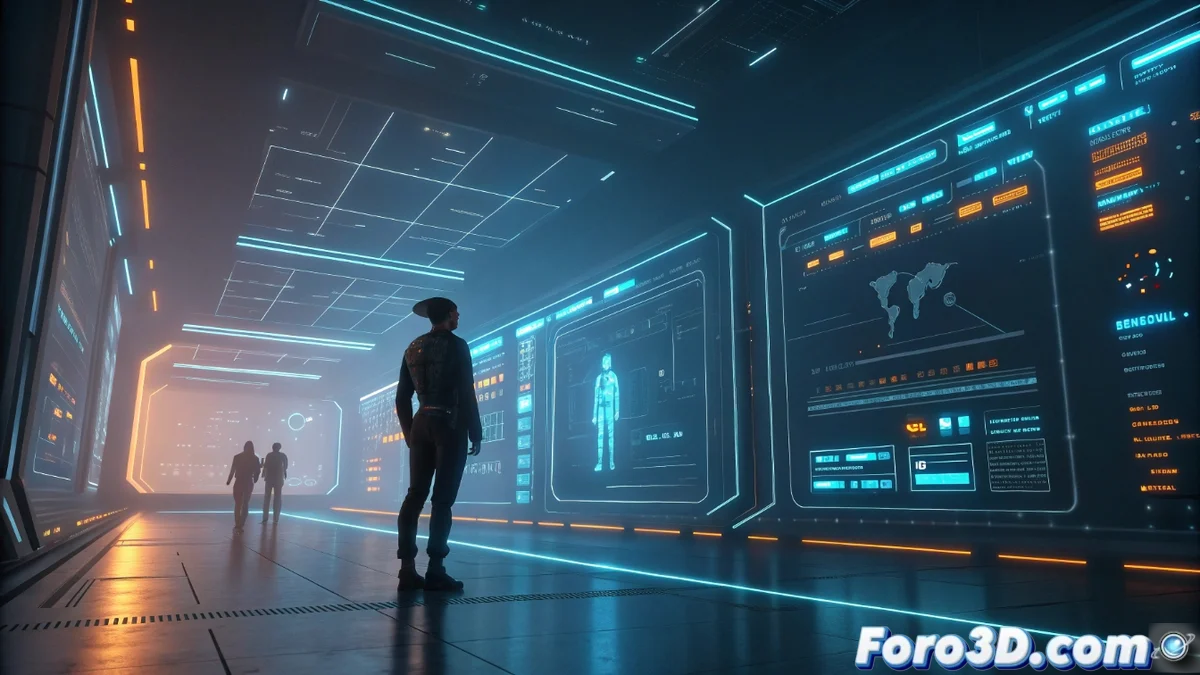
Unified Visual Controls System for Artificial Intelligence
This revolutionary architecture presents an interface that consolidates various types of visual controls within a single canvas comprehensible to artificial intelligence models. 🎨 By fusing descriptive text, specific subject references, positional coordinates, pose configurations, and design elements into an integrated visual representation, the model can analyze all guidelines concurrently and evaluate them synergistically.
Specialized Training Methodology
To cultivate these capabilities, research teams develop specifically designed datasets that instruct the model in interpreting and combining different modalities of visual control. The training process subjects the system to numerous cases where it must learn to preserve individual identities, respect exact locations and spatial distributions while processing multiple instructions simultaneously.
Key Training Components:- Exposure to multimodal examples that teach interaction between controls
- Development of integrated understanding of how different specifications complement each other
- Training to maintain coherence between identity, position, and design
This multimodal training enables the model to develop a holistic understanding of how different types of visual controls interact
Overcoming Previous Limitations
The fundamental advantage of this unified approach lies in its improved precision for preserving subject identities and complying with positional and design specifications. Compared to previous methodologies, this system exhibits superior performance in complex tasks that demand coordination of multiple visual elements.
Significant Improvements:- Joint representation of controls in a unified visual space
- Reasoning capability over relationships between components
- Generation of more coherent results with user intentions
Considerations and Current Limitations
Although it promises to transform image generation, the system occasionally may confuse anatomical details like hands with five or six fingers when extremely detailed precisions are requested, demonstrating that even the most advanced technologies experience moments of digital clumsiness. 🤖 This limitation underscores the need to continue refining these integrated systems to achieve higher levels of precision and reliability in critical applications.