Understanding Astigmatism: Causes, Symptoms, and Correction
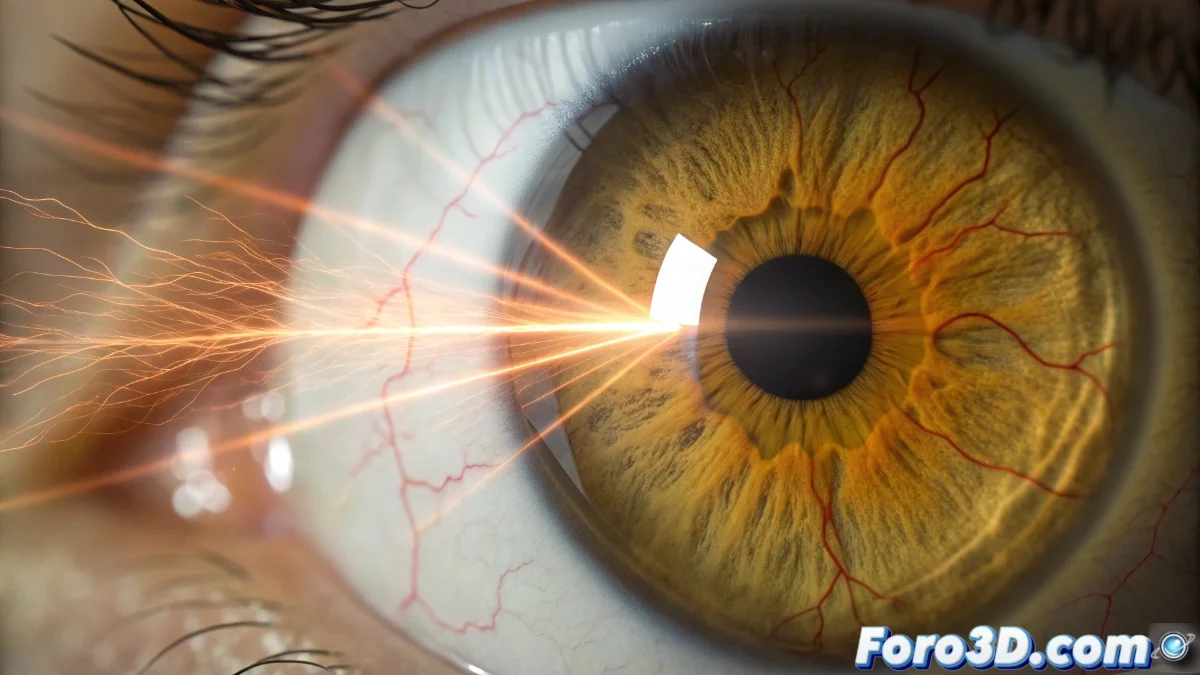
Astigmatism is a common refractive error that occurs when the cornea or lens has an irregular shape, preventing light from focusing properly on the retina. This causes blurred or distorted vision both up close and at a distance, affecting the perception of lines and contours in all directions 🌐.
Optical Mechanism Behind Astigmatism
In an eye with astigmatism, the corneal or lenticular surface adopts a more oval shape, similar to a rugby ball, instead of being spherical like a soccer ball. This asymmetry causes the ocular meridians to have different refractive powers, making light rays converge at multiple focal points. As a result, images appear elongated, blurry, or with shadows, making it difficult to distinguish similar characters like H, N, M or numbers like 8, 0, and 6, even with partial correction 🔍.
Main Characteristics of Astigmatism:- Irregular curvature of the cornea or lens that scatters light into several focal points
- Distorted vision in all directions, unlike myopia or hyperopia
- Difficulty perceiving straight lines and sharp contours in objects and text
Astigmatism not only clouds your vision but also turns straight lines into curves, challenging your perception of the visual world.
Classification and Diagnostic Methods
Specialists classify astigmatism based on the orientation of its principal meridians as regular or irregular, and in relation to other defects like myopia, hyperopia, or mixed. Diagnosis is performed through refraction exams with a phoropter or corneal topography, identifying the axes of greatest and least curvature via focal point diagrams. The corrective prescription includes parameters like cylinder, axis, and sphere in toric lenses or specialized contact lenses that compensate for corneal asymmetry 👁️.
Types of Astigmatism According to Classification:- Regular astigmatism: well-defined principal meridians correctable with standard lenses
- Irregular astigmatism: uneven corneal surface, often requiring customized lenses
- Mixed astigmatism: combines features of myopia and hyperopia in different meridians
Impact on Daily Life and Curiosities
Although astigmatism can make it difficult to see straight lines in a notebook, interestingly, it does not affect the ability to draw crookedly without effort. This refractive error highlights the complexity of the visual system and the importance of precise correction to improve quality of life. With advances in optical technology, it is now possible to effectively manage this condition, allowing for clear and comfortable vision in various activities 🎨.