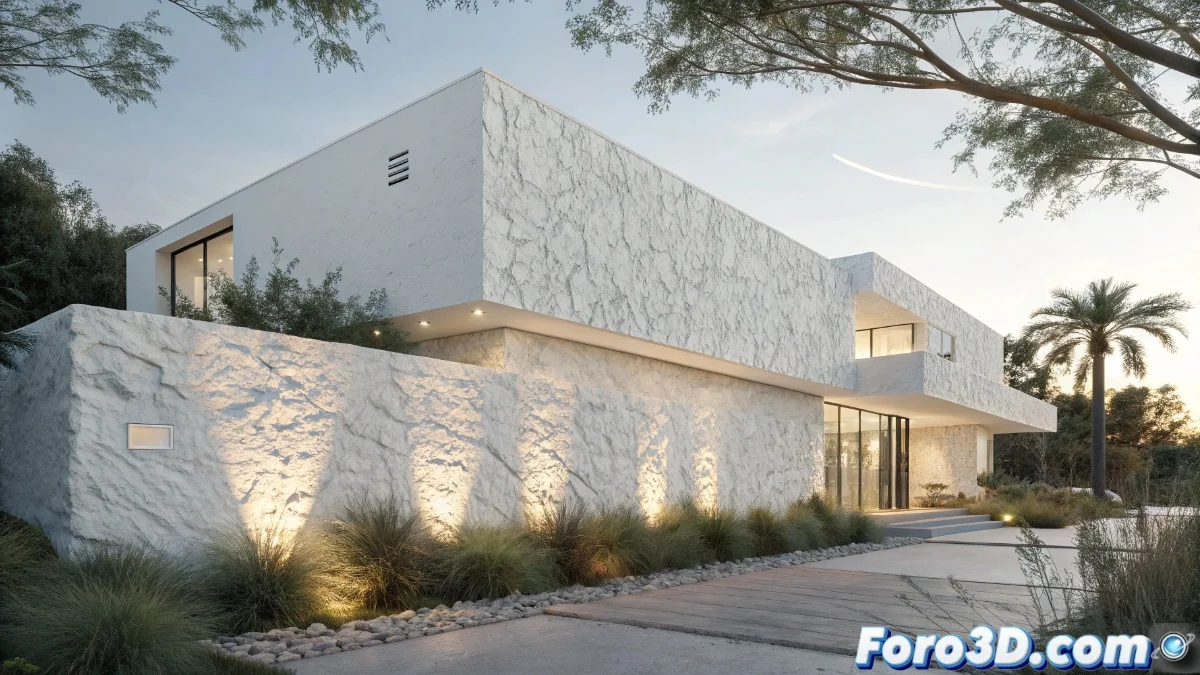
The Ultra-White Paint Revolutionizing Radiative Cooling in Buildings
The materials science field has reached an extraordinary milestone with the development of an ultra-reflective paint that redefines the limits of thermal management in constructions. This technological innovation achieves reflection of 98% of incident solar radiation, far surpassing the capabilities of conventional white paints available on the market. 🌟
Advanced Nanotechnological Composition
The secret of this revolutionary paint lies in its specialized formulation that incorporates high-purity barium sulfate nanoparticles. These microscopic particles disperse solar radiation with unprecedented efficiency, generating a powerful radiative cooling effect even under the most intense solar exposure. This unique property allows treated surfaces to maintain temperatures significantly lower than their immediate surroundings.
Main features of the technology:- 98% reflectivity of total incident solar light
- Composition based on optimized barium sulfate nanoparticles
- Active cooling capacity under direct solar radiation
This technology represents a paradigm shift in passive thermal control of buildings, offering sustainable solutions for urban air conditioning.
Dual Cooling Mechanism
The operation of this paint is based on the principle of radiative cooling, where materials emit heat in the form of infrared radiation toward outer space. By combining extraordinary solar reflectivity with high thermal emissivity in the atmospheric infrared band, the surface not only rejects most of the solar heat but also actively dissipates accumulated heat. This dual mechanism allows surface temperatures to reach up to 8 degrees Celsius below ambient temperature during peak insolation hours.
Advantages of the cooling system:- Drastic reduction in air conditioning system demand
- Significant decrease in energy consumption in warm climates
- Improvement in thermal comfort in indoor spaces
Urban Applications and Environmental Sustainability
The practical applications of this technology extend from residential building roofs and facades to urban infrastructure and large-scale industrial equipment. In metropolitan environments affected by the urban heat island effect, its massive implementation could significantly reduce overall ambient temperatures. Scientific studies demonstrate that its extensive use in urban areas could decrease electricity consumption for cooling by 20% to 40%, representing a crucial advancement in climate change mitigation. 🌍
Additional environmental benefits:- Composition free of volatile organic compounds (VOCs)
- Ecological alternative to conventional polluting paints
- Contribution to reducing the urban carbon footprint
Future Perspectives and Practical Considerations
Imagine being able to apply this transformative technology to your home and, in addition to changing its aesthetic appearance, have it function as a natural and free air conditioning system. Although the current cost still limits its mass adoption, the potential of this innovation is immense. Developers are working to optimize production processes to make it more accessible, while architects and urban planners already consider it a fundamental tool for designing smart and sustainable cities. The future of thermal management in construction has arrived, and it is brighter—and cooler—than we imagined. ❄️