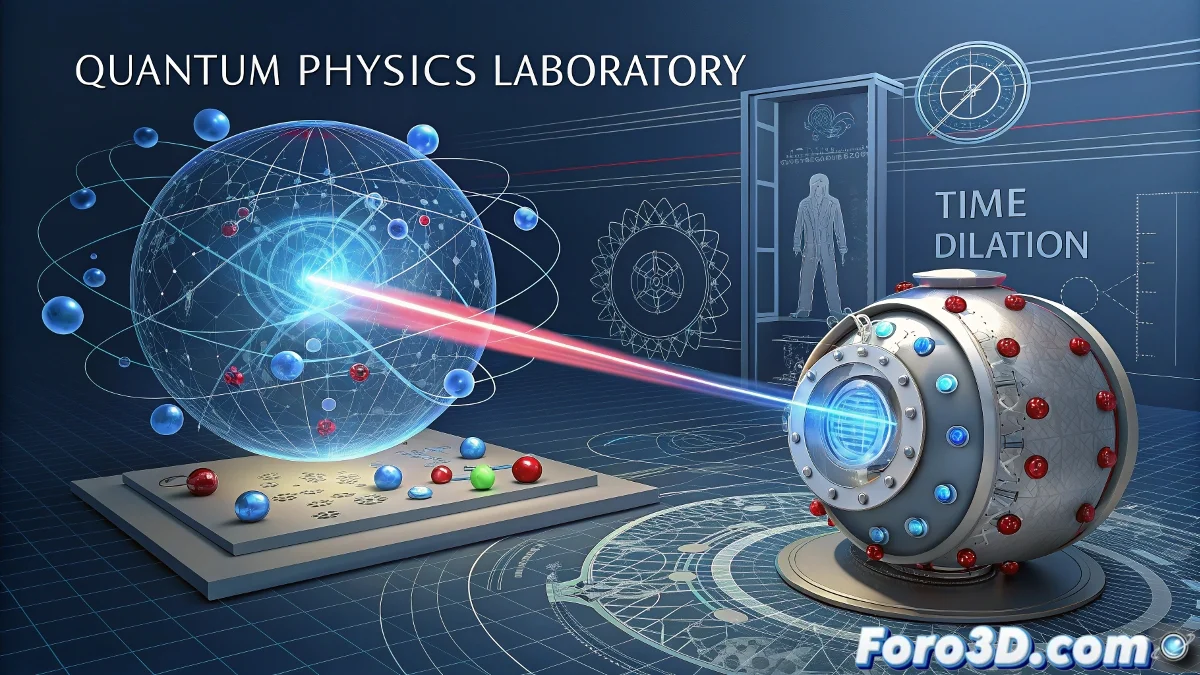
How Ultracold Clocks Work
The frontier of time measurement is being redefined by a new generation of atomic clocks that operate under extreme conditions. ⚛️ These unprecedented precision instruments use atoms cooled to temperatures near absolute zero, where the rules of quantum physics completely dominate the behavior of matter. The fundamental principle consists of trapping atoms in optical lattices created by lasers and using their natural oscillations as an ultraprecise time reference. At these cryogenic temperatures, atoms exhibit quantum phenomena such as state superposition and entanglement, allowing the detection of infinitesimal variations in the flow of time that would be completely imperceptible under normal environmental conditions.
Scientific Implications
The potential applications of this revolutionary technology extend far beyond simple time measurement. These ultracold clocks could transform fields like fundamental metrology, radically improving the precision of global navigation systems and telecommunications networks. Additionally, they constitute unique experimental tools for testing quantum theories of gravity and exploring the interface between quantum mechanics and general relativity. The ability to measure subtle time dilation effects at microscopic scales opens up entirely new possibilities for investigating how gravity affects the passage of time in quantum regimes.
Atoms exhibit collective quantum behaviors, such as superposition and entanglement
Cinema 4D Recreation
For visual artists and scientific communicators, these atomic clocks represent a fascinating visualization challenge. Cinema 4D offers the perfect tools to create comprehensible and aesthetically appealing representations of abstract quantum concepts. The challenge lies in translating phenomena that occur at extreme scales and temperatures into visualizations that capture both the technical precision and the underlying beauty of quantum physics.
Project Setup and Base Structure
Creating a scientifically accurate visualization requires careful planning from the initial phase. Project organization determines the clarity and efficiency of the workflow.
- Scientific Scale: Establish realistic proportions that reflect the microscopic dimensions of atomic components
- Modular Structure: Organize the scene into logically separated components for individual manipulation
- Technical References: Consult scientific diagrams of optical traps and laser configurations for authenticity
- Coordinate System: Set up working units that facilitate modeling components at different scales
Modeling Atomic Clock Components
The visual representation must balance scientific accuracy with communicative clarity. Each element must be recognizable and functional within the explanatory context.
- Creation of optical traps using procedural geometry and organized sphere arrays
- Modeling of laser systems with NURBS sweeps and extruded cylinders for light beams
- Development of the vacuum structure with cylindrical shapes and metallic components
- Incorporation of control and monitoring elements with credible technical details
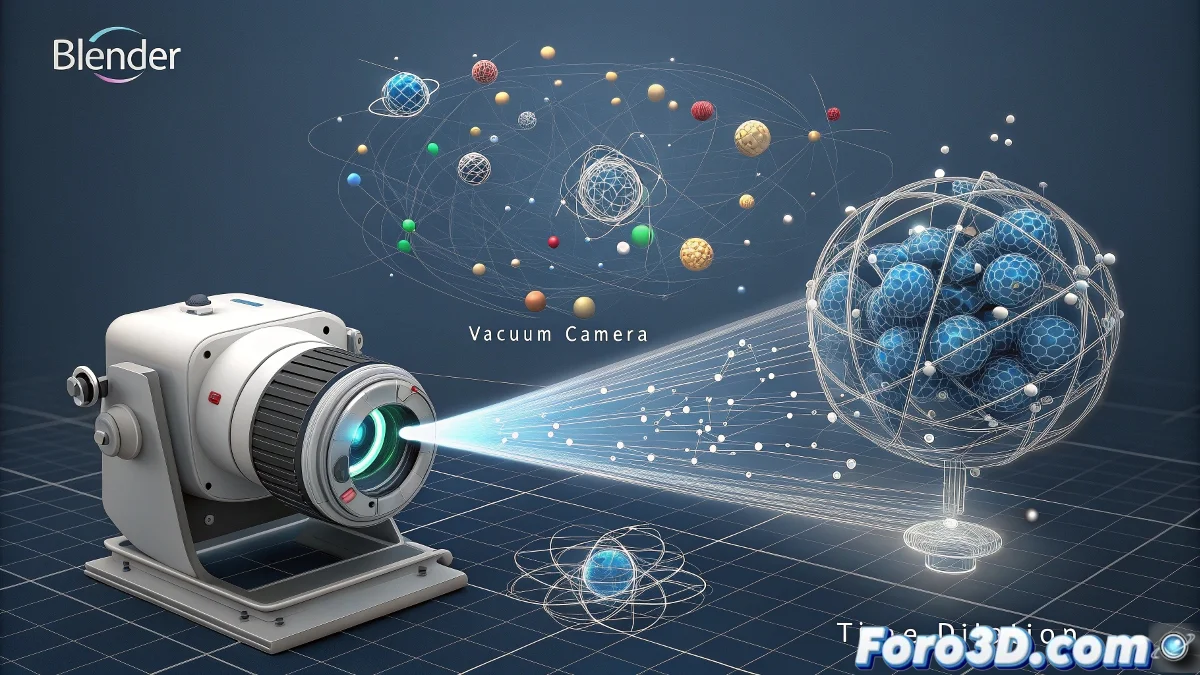
Materials and Visual Properties
The appearance of materials must communicate the real physical properties of the components while maintaining visual clarity. Surface treatment is crucial for realism.
- Application of metallic shaders with controlled specular reflection for structural components
- Development of emissive materials for lasers and optical elements with glow effects
- Creation of crystalline and transparent appearances for vacuum windows and optical elements
- Implementation of scientific textures with labels, indicators, and credible technical details
Animation Systems and Effects
Animation is fundamental to communicating the dynamic concepts of the clock's operation. Movement must reflect the underlying physical principles.
- Implementation of cloners and effectors to simulate atom arrays in optical traps
- Animation of atomic oscillations using noise expressions and periodic functions
- Creation of quantum superposition effects through animated transparencies and duplicates
- Simulation of laser cooling processes with particles and volumetric effects
Lighting and Scientific Rendering
The lighting setup must enhance explanatory clarity while creating an appropriate aesthetic for advanced scientific content. Lighting defines the emotional tone.
- Setup of soft area lights for general shadow-free illumination
- Use of point lights with specific colors to differentiate functional components
- Implementation of global illumination for realistic light interactions between surfaces
- Application of depth of field effects to guide attention to key elements
While scientists push the limits of time measurement, 3D artists demonstrate that sometimes the best way to understand time is by freezing it in a perfect render. ⏱️ Because, let's be honest, what could be more precise than a clock that measures time so exactly that it needs quantum physics to work?