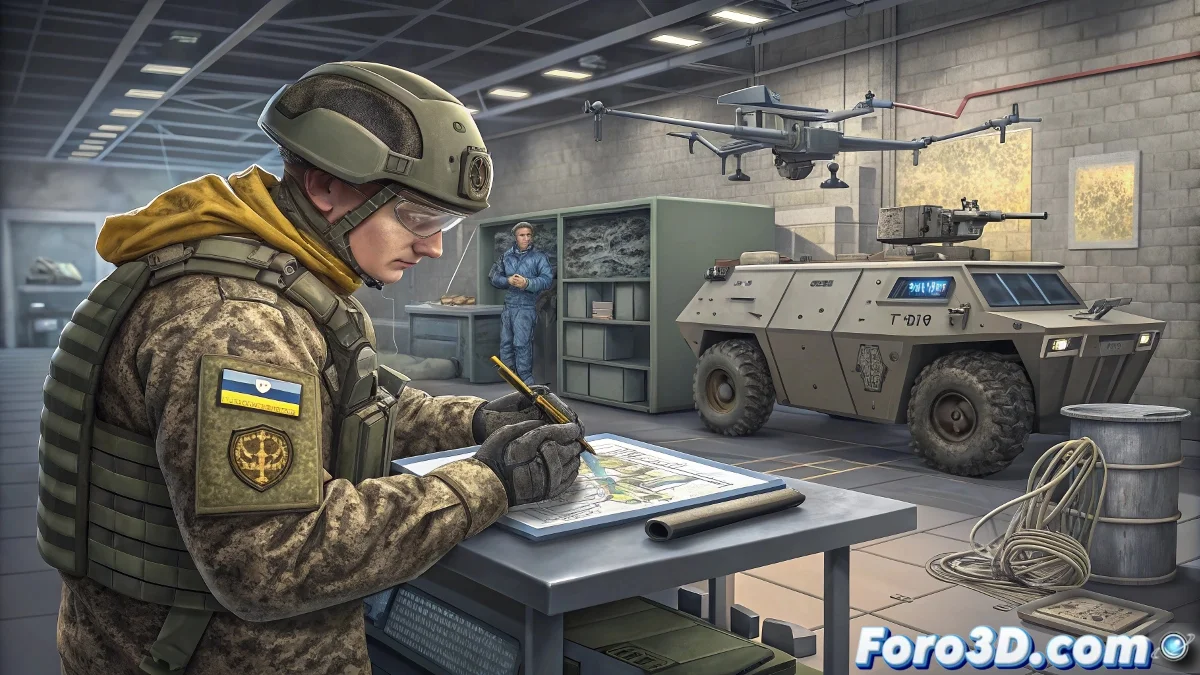
When 3D Printing Becomes a Strategic Weapon on the Battlefield
Ukraine is rewriting military logistics manuals through an innovative approach that combines digital technology and additive manufacturing. The integration of 3D printing into the military supply platform represents a strategic advancement in addressing the logistics chain in conflict. This implementation not only accelerates the production of critical parts but also secures communications and design data in an environment where cybersecurity is as important as manufacturing capability.
The system combines secure digital platforms with decentralized 3D printers that can operate near the front lines, drastically reducing wait times for components that previously required complex international supply chains. What used to take weeks is now resolved in hours, transforming the maintenance and adaptation capabilities of units in the field. The technology thus becomes a force multiplier as significant as any conventional weapon. 🖨️
In modern warfare, a well-protected digital file can be more valuable than a supply convoy
Components of a Revolutionary System
This integration encompasses multiple technological and operational aspects that together create a cohesive solution.
- Secure digital platform with end-to-end encryption for critical designs
- Specialized 3D printers capable of operating in adverse field conditions
- Validated design library for frequently used parts and critical components
- Verification system that ensures the quality and specifications of manufactured parts
The ability to digitally update designs based on battlefield experiences creates a continuous improvement cycle that traditional supply chains cannot match in speed or efficiency.
Practical Applications in the Theater of Operations
For Ukrainian units, this technology solves immediate logistical problems in previously impossible ways.
- On-demand manufacturing of adapters for equipment from different origins
- Production of wear parts for vehicles and weapon systems
- Creation of specialized tools for maintenance and repairs
- Development of customized solutions for specific tactical challenges
The system's flexibility allows printing everything from simple clamps to more complex components for communications systems or drones, demonstrating how digital manufacturing can scale according to operational needs.
Implications for the Future of Military Logistics
This development could establish a new standard for military logistics in 21st-century conflicts. The lesson is clear: logistical resilience now includes distributed manufacturing capability.
The Ukrainian experience demonstrates that in conflict environments where traditional supply chains are vulnerable, the ability to produce locally what is needed, when it is needed, becomes a strategic advantage. Other armies are watching closely as 3D printing moves from promising technology to a combat-proven tool. 🎯
And if design files are better protected than state secrets, hackers might soon be more interested in stealing 3D blueprints than nuclear codes... though printing a tank is still more complicated than downloading the file 😉