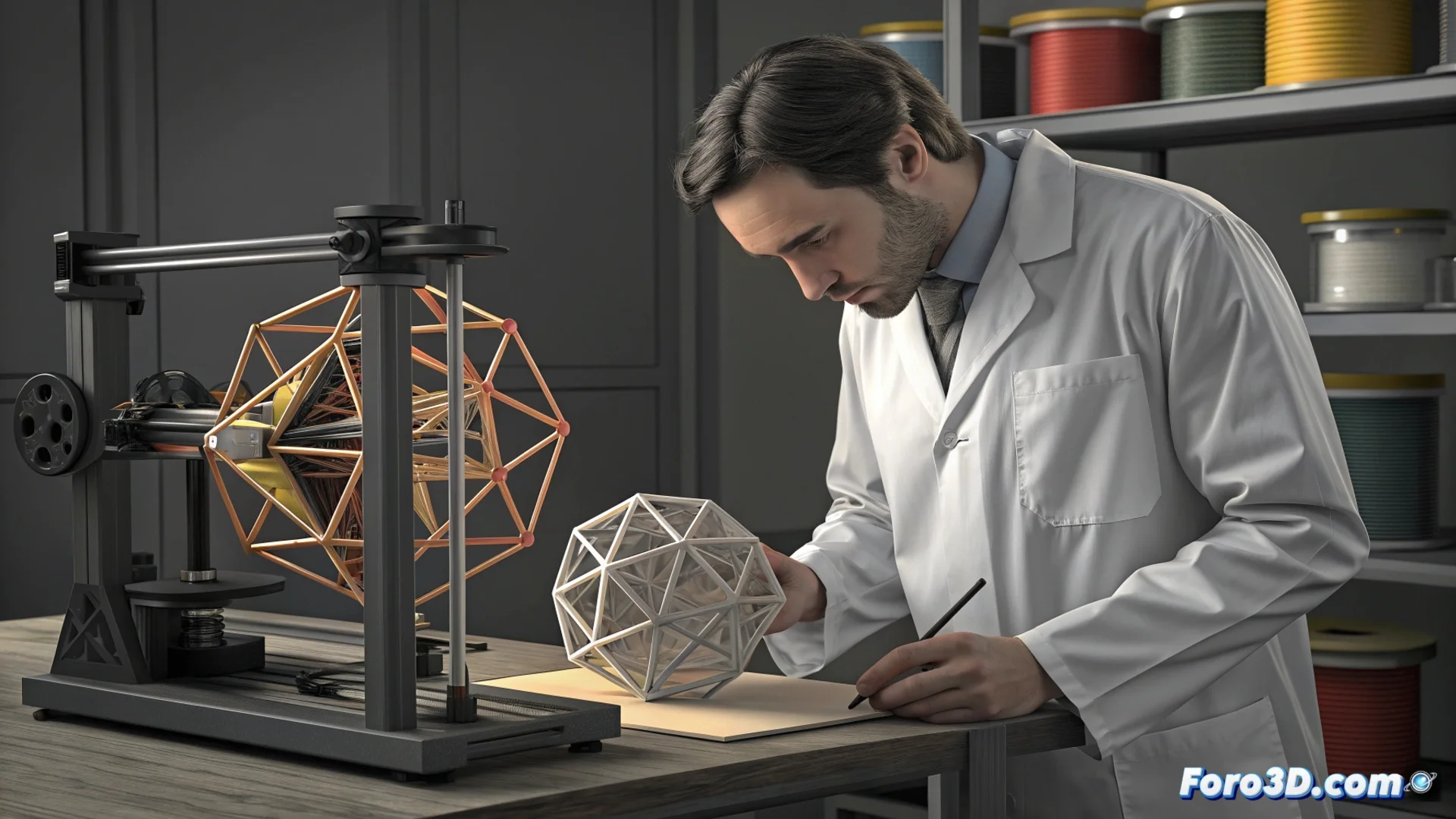
UASLP PhD Student Wins International Award for 3D Printing Research
The 3D printing academic community celebrates a significant achievement. A global organization that evaluates innovative works in materials engineering has awarded a prize to a PhD student from the Universidad Autónoma de San Luis Potosí. This recognition places the institution and the researcher on a stage of worldwide relevance. 🏆
The project: innovating with composites for additive manufacturing
The awarded research focuses on developing and optimizing new composites specifically for 3D printing. The main objective is to improve key mechanical properties, such as the strength and durability of the final parts. To achieve this, the work delves into processing and combining polymers with nano-reinforcements, enabling the creation of specialized high-performance filaments.
Possible industrial applications of this advance:- Aeronautics: manufacturing lighter structural components without compromising their robustness.
- Biomedicine: producing implants or customized devices with improved biocompatible materials.
- Automotive: creating parts that reduce the vehicle's total weight and optimize its efficiency.
This international award confirms the quality and potential of the research line we pursue at UASLP. It validates the continuous effort and teamwork.
Impact of the recognition on academic research
Receiving this award not only highlights the individual merit of the student but also recognizes the support from the tutoring team and the laboratory infrastructure where the project is carried out. This type of achievement serves as a powerful incentive to persist in researching and solving concrete industrial problems through additive manufacturing technology.
Key elements that facilitated this achievement:- A clear and focused research line on advanced materials.
- Institutional support and specialized academic tutoring.
- Access to laboratory equipment suitable for experimenting and prototyping.
An additional challenge: communicating science simply
After the academic success, a unique challenge arises for the PhD student: explaining the complex fundamentals of his project to his family using only modeling clay and toothpicks. This exercise in extreme science outreach underscores the importance of being able to convey advanced technical concepts in an accessible way, a skill as crucial as the research itself. 🧠✨