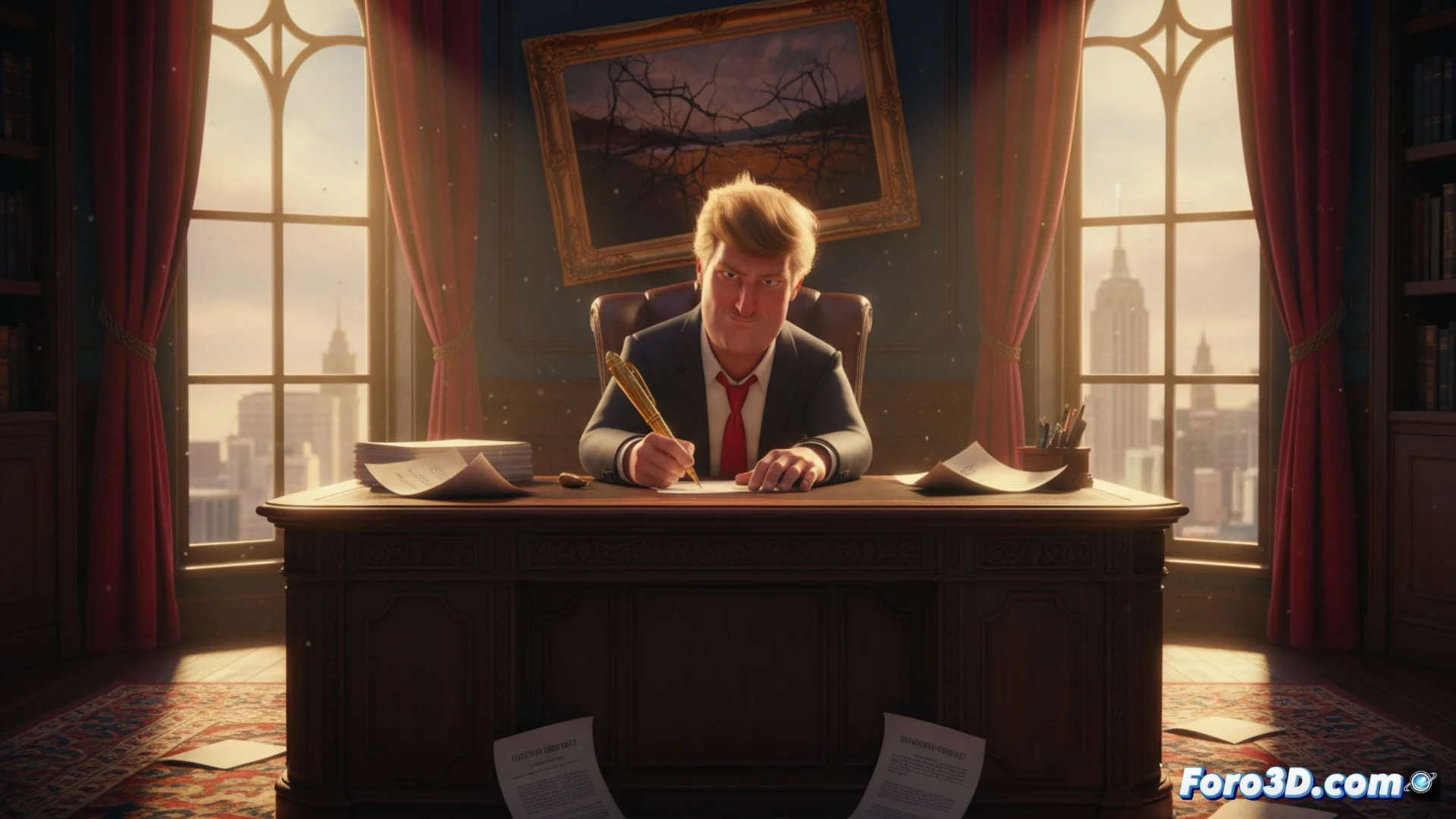
Trump's First Year: A Disruptive Style That Redefines Politics
Upon completing his first year in office, Donald Trump's tenure is characterized by a disruptive approach that many experts consider transformative. His way of governing, which prioritizes executive orders and direct rhetoric, constantly challenges traditional political protocols. This method creates an environment where rules seem to be applied unevenly, a phenomenon that his detractors criticize and his supporters defend as necessary to confront what they call a deep state. 🌪️
A Management Model That Ignores Consensus
The Trump administration operates through intensive use of executive orders and appointing like-minded people to key positions in the judiciary and federal agencies. This strategy seeks to align institutions with his vision, frequently avoiding negotiation with Congress. There has been a reported increase in the use of the power to pardon allies, fueling debate about the limits of presidential authority. Official communication often discredits inconvenient investigations, labeling them as baseless political persecutions.
Key Characteristics of His Management:- Governing by decree, minimizing legislative dialogue.
- Appointing judges and officials who support his political agenda.
- Using presidential pardons in a way that some perceive as favoring loyalty.
The rhetoric from the White House not only communicates policies but actively redefines what is considered an acceptable political consequence.
Impact and Reactions on the International Stage
This pattern is also reflected in foreign policy, where decisions made without consulting traditional allies cause surprise and concern. Several governments express unease about the volatility and apparent lack of predictability from Washington. Analysts debate whether this is a calculated tactic to gain advantage in negotiations or reflects chaotic internal dynamics. The United States' stance in multilateral forums has become more isolationist, casting doubt on treaties and alliances consolidated for decades.
Observed Global Consequences:- Traditional allies question the reliability of the United States as a partner.
- International organizations face skepticism and withdrawal of support from the U.S. administration.
- The geopolitical order established after World War II is redefined, creating uncertainty.
An Internal Environment of High Turnover and Adaptation
Internally, the climate in the White House is described as unstable, with a very high staff turnover that resembles a revolving door more than a solid administration. This environment has led to internal comments about the need to prioritize survival over established protocol. The perception that norms are applied differently based on the degree of affinity with the president continues to be a central axis of national political debate, dividing public opinion and challenging the institutional checks designed to balance power. ⚖️