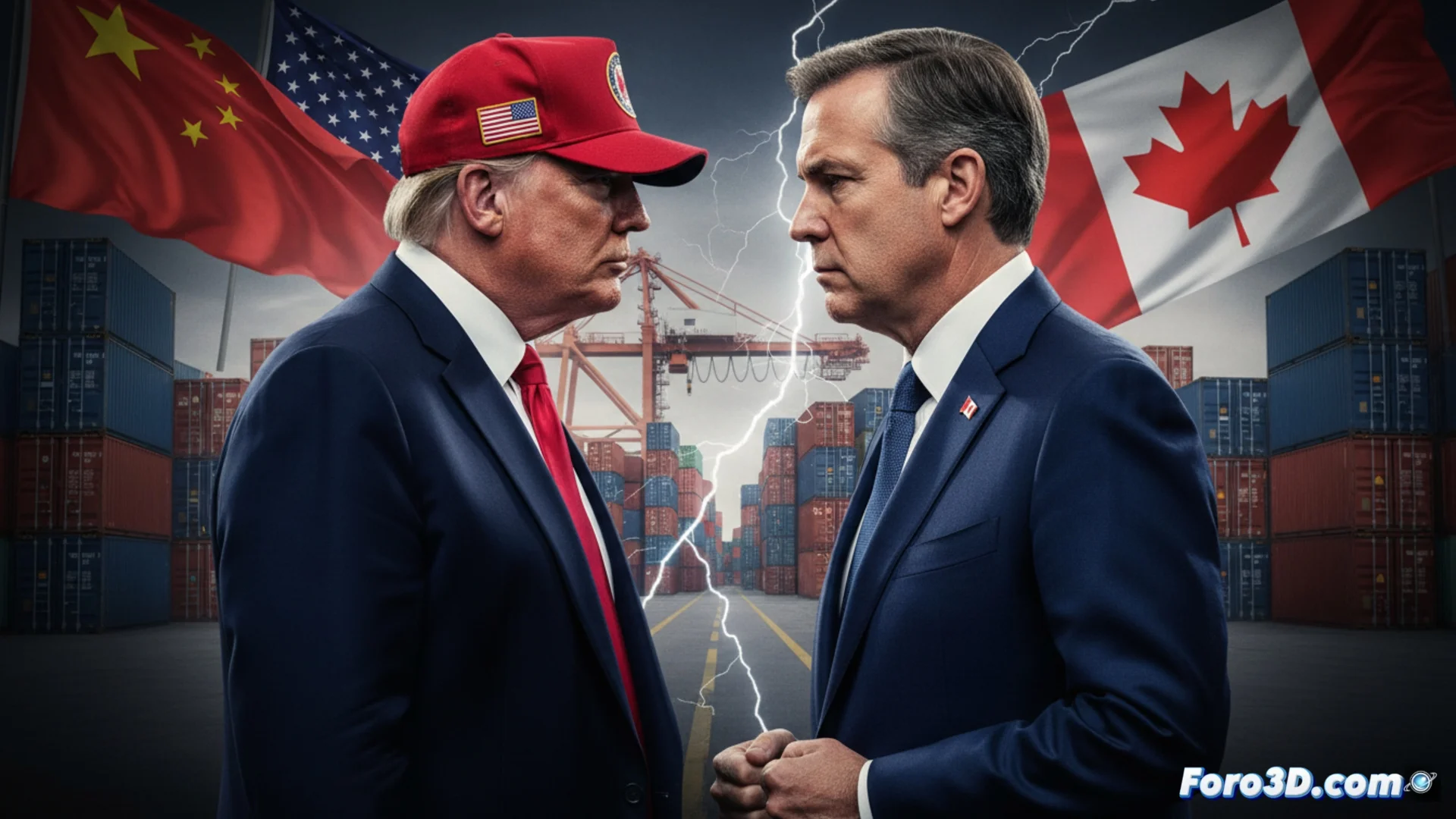
Trump Threatens Canada with 100% Tariffs if It Trades with China
The U.S. leader, Donald Trump, stated that he will impose 100 percent rates on all imports from Canada if this country finalizes a trade deal with China. Through his social media, he argues that such an agreement would turn Canada into a transshipment port for Chinese products, damaging the U.S. economy and social fabric. This warning heightens the already existing friction with the Canadian Prime Minister, Mark Carney. ⚠️
The Beijing Tour That Sparked the Crisis
The conflict escalated after Carney recently visited Beijing to negotiate. The discussed pact includes lowering taxes on Chinese electric vehicles and agricultural products. This rapprochement between Ottawa and Beijing appears to be the direct reason for Trump's threat. Both nations are attempting to diversify their economic ties in an uncertain global landscape.
Key points of the discussed agreement:- Reduce tariffs on electric vehicles manufactured in China.
- Lower tariffs on various Chinese agricultural products.
- Seek greater bilateral trade integration.
"If Canada becomes a transshipment port for China, we will respond forcefully. 100% tariffs on everything." - Statement attributed to Donald Trump.
A Public Clash of Statements
The tariff threat comes after a public exchange of harsh words between both leaders. Trump and Carney have openly shown their disagreements, marking a stage of constant frictions in the relationship. Trade policy thus emerges as the main field of dispute between Washington and Ottawa, with consequences for all of North America.
Factors sharpening the tension:- Contradictory statements on sovereignty and trade.
- Competing economic interests in the region.
- Canada's search to reduce dependence on the U.S.
Rhetoric or Real Action?
While some experts point out that Trump has already used similar tactics before, others wonder if this time the alleged transshipment port will end up unloading more words than tangible goods. The episode underscores the volatility of current economic alliances and how tariff warnings are used as a tool of geopolitical pressure. The final outcome between rhetoric and action remains to be defined.