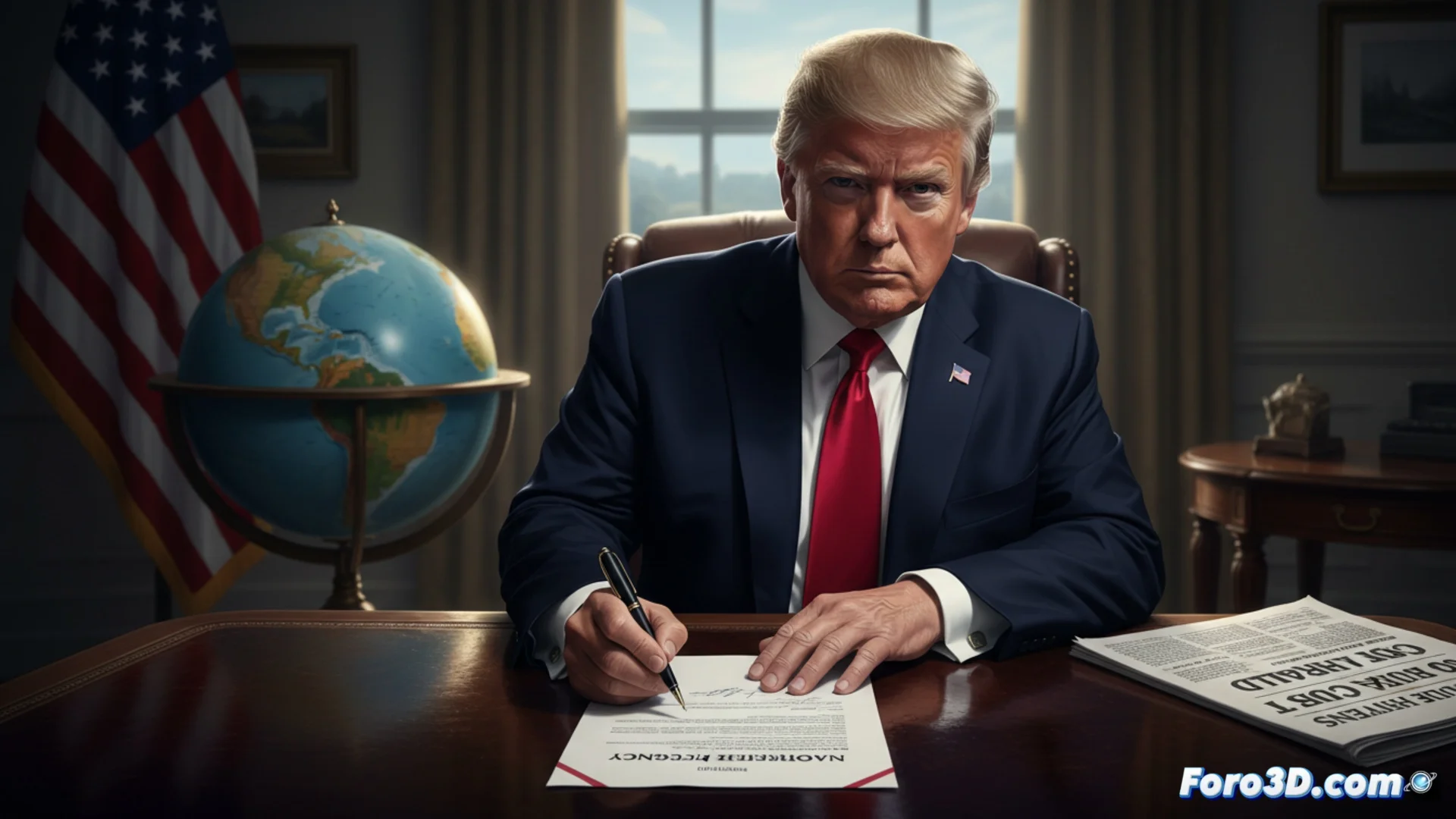
Trump Signs Executive Order to Sanction Oil to Cuba
This Thursday, the U.S. president Donald Trump activates an executive order that declares a national emergency linked to Cuba. The action empowers the government to impose punitive tariffs on goods from any country that trades or supplies oil to the Caribbean island. The central objective is to intensify the economic blockade on the Havana regime, which Washington identifies as a risk to its security and foreign policy. 🚨
Legal Bases and Arguments of the Order
The presidential document is based on the Trading with the Enemy Act, enacted in 1917, and the National Emergencies Act. By declaring the emergency, the president obtains special powers to control commercial exchanges and apply coercive measures of an economic nature. The official text argues that Cuba destabilizes Venezuela and supports other governments in the region, which would threaten U.S. interests. This decision expands the limitations already in place under the long-standing embargo.
Key Points of the Justification:- Historical laws are invoked that grant the president exceptional powers during emergencies.
- The Cuban government is accused of maintaining links with adversarial actors on the continent.
- The action seeks to extend and strengthen the pre-existing framework of economic sanctions.
The U.S. government seeks to increase economic pressure on the Cuban government, which it qualifies as a threat to national security.
Global Impact and Consequences
The measure could affect third countries that currently maintain commercial relations with Cuba, especially those that supply it with crude oil or petroleum derivatives. Nations such as Russia, Venezuela, or even Washington's allies in other matters could see their exports to the U.S. burdened with additional tariffs. Experts indicate that this may lead to new diplomatic frictions and hinder bilateral commercial ties. The explicit goal is to force Havana to change its internal political course and its foreign stance. 🌍
Possible International Scenarios:- Energy supplier countries to Cuba face the risk of tariffs on their products in the U.S.
- Diplomatic tensions may arise with allies and adversaries alike.
- Bilateral commercial relations are complicated for those who challenge these sanctions.
A Historical Paradox
The irony lies in declaring a national emergency by pointing to an island that has endured an embargo for more than sixty years as a threat. Its main energy supply depends precisely on other nations defying and evading that type of prohibitions. This action reflects the continuity of a policy of maximum pressure, whose effects transcend Cuban borders and affect the regional geopolitical dynamics. ⚖️