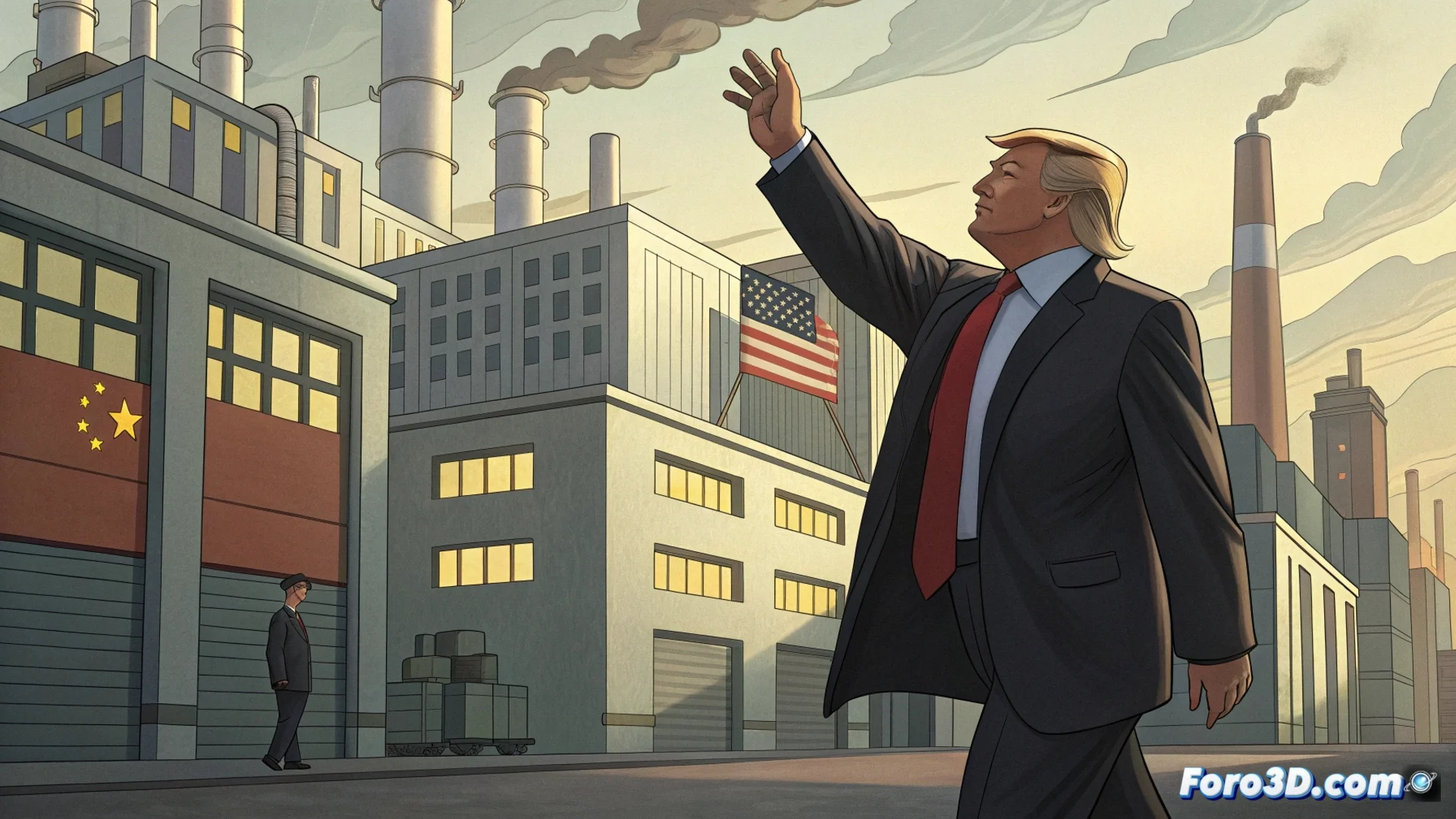
Trump Invites Chinese Companies to Produce in the US with One Condition
Former President Donald Trump has made a public invitation to Chinese corporations that want to access the U.S. market. However, this openness comes with a fundamental requirement: they must install their manufacturing plants on U.S. soil, abandoning the model of exporting directly from Asia. 🏭
The Core Axis: Manufacture Locally to Employ Locally
This approach seeks to fundamentally alter the trade dynamics between the two powers. Trump argues that numerous brands sell items made outside the country, which, in his view, harms the domestic workforce. By requesting that factories be built within the United States, he aims for companies to invest in infrastructure and hire local workers. The explicit goal is to reduce dependence on imported goods and strengthen national industry.
Key Changes in Trade Strategy:- Transform the buyer-seller relationship into one of direct productive investment.
- Prioritize job creation for U.S. citizens.
- Reduce the trade deficit by strengthening internal production capacity.
The idea is clear: come, but leave your business model at the door. Observers point out the paradox of a figure with firm rhetoric toward China now extending a conditional invitation.
Consequences for Global Trade and Industries
This proposal has the potential to reconfigure supply chains in multiple sectors. If Chinese companies accept, they would face the need to completely reorganize their logistics operations and absorb the higher costs of manufacturing in the United States. This scenario poses an operational and financial challenge, but it also represents a strategic opportunity to get closer to the end consumer and avoid potential future tariffs or trade barriers.
Possible Implications:- Companies must evaluate the feasibility of relocating their production capacity.
- Future tariff barriers could be avoided by having operations within the country.
- It reflects a protectionist economic vision that prioritizes national manufacturing over international trade based on imports.
An Approach that Redefines the Rules of the Game
In short, the condition imposed by Trump prioritizes local employment and domestic investment as pillars for accessing the U.S. market. This stance, aligned with the America First slogan, challenges Chinese companies to rethink their global presence. Beyond the perceived irony, the underlying message is direct: to sell here, it is necessary to produce and create wealth within national borders. 🇺🇸