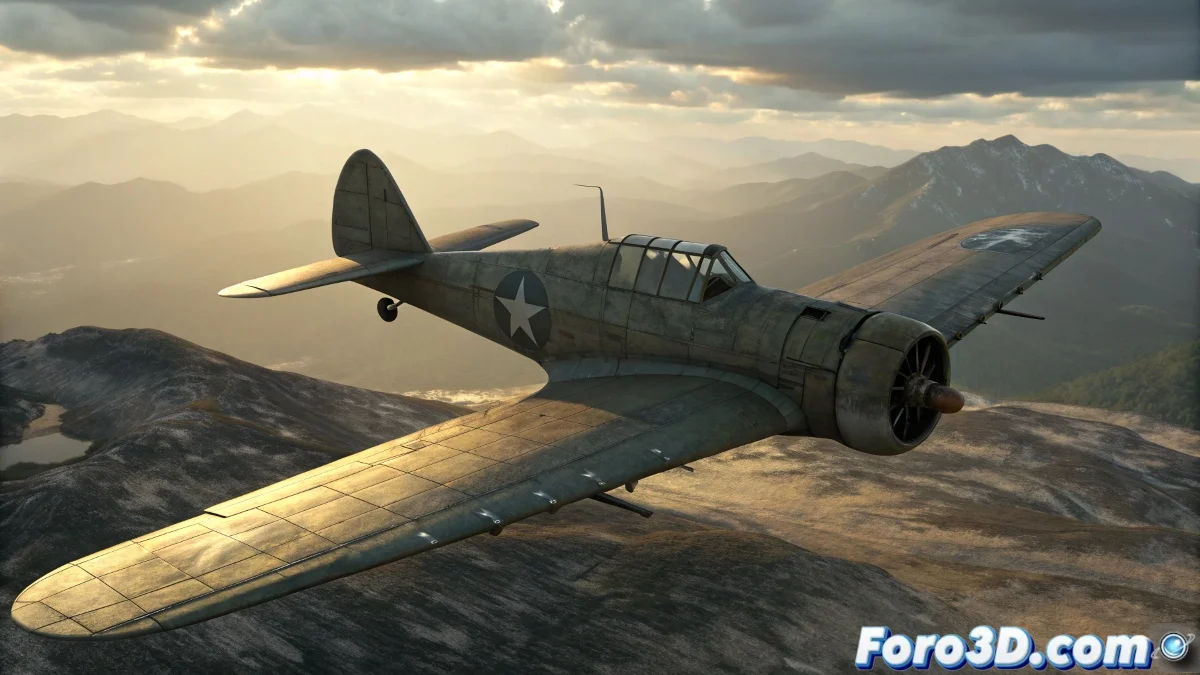
The Challenges of Texturing an F-14 Tomcat
When you face texturing an F-14 Tomcat in Cinema 4D and the textures don't apply correctly, you're experiencing one of the most common challenges in modeling complex aircraft. The F-14 presents particularly challenging geometries with complex curved surfaces, variable geometry wings, and multiple components that require different mapping approaches. Typical problems include stretched textures on the fuselage's curved surfaces, distortions on the wings, and difficulties aligning elements like insignias and paint details across different parts of the model. The key is understanding that fighter jets require a specific texturing strategy that combines different projection methods.
Diagnosis of Common Issues in Aircraft
Texturing problems in aircraft models usually stem from incompatibilities between the geometry and the selected mapping method. Identifying the specific type of problem you have is the first step toward the solution.
- Stretching on curved surfaces of the fuselage
- Distortion on wings and stabilizers with complex angles
- Misalignment of elements between different parts of the model
- Scale issues in repetitive textures
Mapping Strategies for Complex Aircraft
For a model like the F-14, you need to combine multiple mapping techniques according to the specific characteristics of each part of the aircraft.
Texturing an F-14 is like painting a real airplane: you need different techniques for the fuselage, wings, and details
- Cylindrical mapping for the main fuselage
- Planar projection for wings and flat surfaces
- Manual UVW unwrap for complex areas
- Coordination between multiple materials and textures
Optimized Workflow in Cinema 4D
To achieve the best results in Cinema 4D, follow a structured process that begins with proper model preparation.
Mastering the texturing of complex aircraft like the F-14 Tomcat is a skill that transcends this specific project 🛩️. Every technique you learn and every problem you solve will better prepare you for future vehicle modeling projects, whether working with airplanes, cars, or any other complex surface that requires a professional texturing approach.