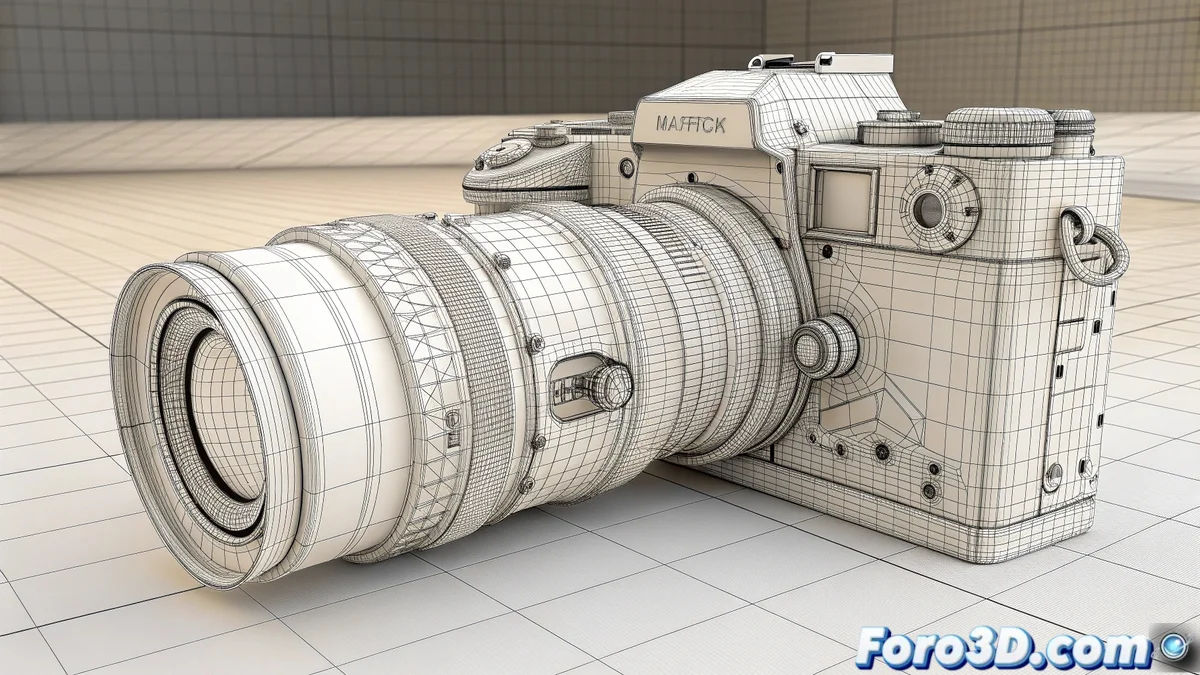
The Post-Boolean Headache
Any Rhino user who has performed a boolean operation and then tried to apply a chamfer has experienced it: the Fillet command fails inexplicably. 🚫 At first glance, the edges look perfect, but the resulting topology from the union, difference, or intersection of solids is usually more complex than it appears. These failures are not a software bug, but the result of underlying geometry that does not meet the requirements for a clean chamfer.
Diagnosis: Cleaning is Key
The first step should always be to inspect the geometry. Rhino includes essential tools for this purpose. The Check command analyzes the object for irregularities, while ShowEdges reveals naked or non-manifold edges that are the nightmare of any rounding operation. 🔍 Often, the solution is as simple as exploding the resulting solid (Explode), removing problematic surfaces, and rejoining them (Join) to obtain a cleaner topology.
An apparently perfect edge can hide chaotic topology inside.
Alternative Strategies to Direct Boolean
When the boolean persistently causes problems, it's smarter to change the modeling strategy. Instead of doing a boolean subtraction to create a notch, you can trim (Trim) the main surface with a curve and then extrude the edge to create the depth. 📐 Another robust method is to perform the chamfer in 2D: draw the part profile with curves, apply FilletCorners to the corners, and then extrude the already chamfered profile to create a perfect solid from the start.
- Tolerance Adjustment: A model tolerance that is too loose or strict can cause failures. Adjust it according to the project scale.
- Redraw the Geometry: Sometimes, it's faster to redraw a simple surface than to repair a damaged one.
- Step-by-Step Chamfering: Apply small chamfers incrementally increasing the radius.
Prevention and Efficient Workflow
The best solution is preventive. Modeling precisely from the beginning, avoiding unnecessarily complex boolean operations, saves many problems. 💡 Planning the order of operations is also crucial; sometimes it's better to apply chamfers before booleans, if the geometry allows it. Rhino is an extremely powerful tool, but it demands an orderly and methodical workflow to achieve impeccable results.
Applying a chamfer in Rhino after a boolean can be as unpredictable as spreading butter on bread straight out of the toaster: sometimes it slides smoothly, and other times it takes half the slice with it. 🍞 Patience and the right technique make the difference.