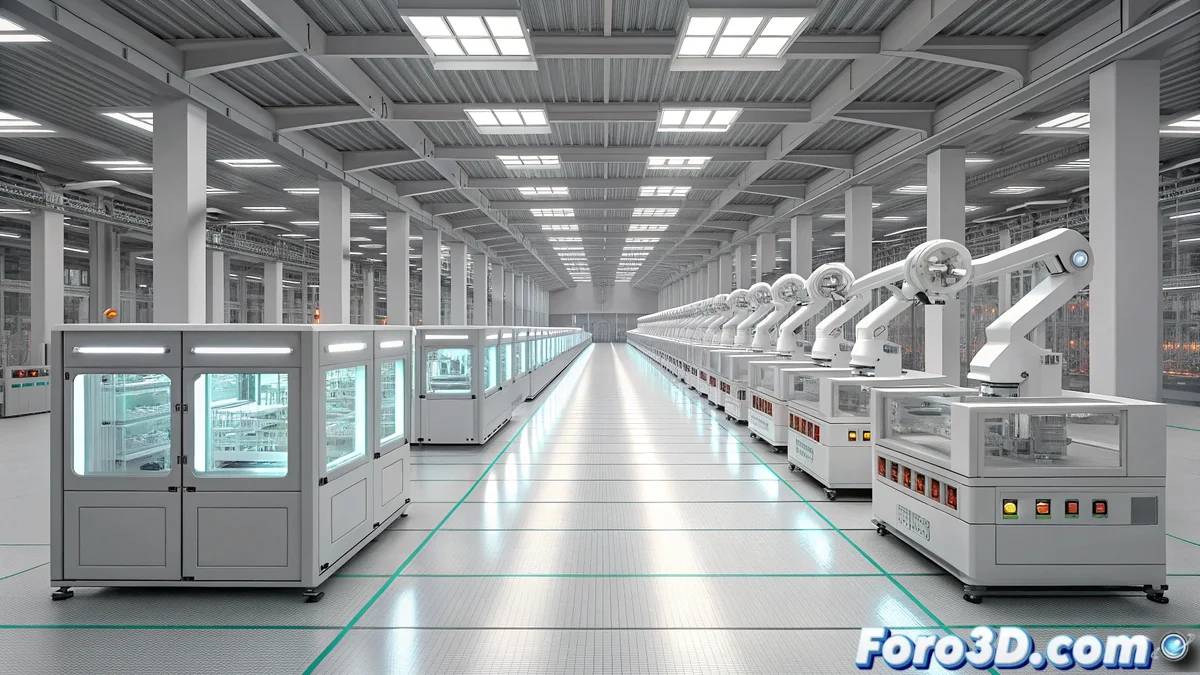
The pharmaceutical revolution arrives with a 3D seal
Triastek has marked a historic milestone in the global pharmaceutical industry by inaugurating in Nanjing what is considered the world's largest 3D-printed drug production plant. This fully automated facility represents a quantum leap in drug manufacturing, capable of producing up to 300 million tablets annually through additive processes that challenge traditional methods. A paradigm shift that could redefine how we conceive mass production of pharmaceuticals.
MED® Technology: the backbone of innovation
The heart of this production revolution beats with Triastek's patented Melt Extrusion Deposition (MED®) technology. This process radically simplifies tablet manufacturing, reducing multiple traditional stages to just three integrated phases: mixing and melting, printing, and packaging. The precision of 3D printing allows for the creation of complex internal structures impossible to achieve with conventional methods, improving both the efficacy and quality of medications.
Competitive advantages of additive manufacturing
- Production of 300 million tablets annually
- Significant reduction in production stages
- Greater quality control and consistency
- Possibility of complex internal structures
The pioneering regulatory framework
Triastek has achieved a historic milestone by obtaining China's first pharmaceutical license for 3D printing production, positioning itself as the second company worldwide to commercialize drugs manufactured through additive manufacturing. This regulatory advancement not only validates the technology but also sets a crucial precedent for the integration of innovative methods in highly regulated industries.
Strategic alliances and future development
- Collaborations with giants like Eli Lilly and Merck
- More than 70 dosage form designs developed
- Validation in more than 10 studies with human data
- Integration with Siemens for advanced automation
A demonstration of how the convergence of disruptive technologies can transform traditional industries, creating new standards of efficiency and personalization.
For the global pharmaceutical industry, Triastek's success represents the materialization of long-anticipated trends: drug personalization, production decentralization, and complete digitization of manufacturing processes. The implications for access to medications and agility in developing new treatments could be profoundly transformative 💊.
And so what began as printing figurines and prototypes ends up producing millions of tablets that could save lives... although the first 3D printing enthusiasts probably never imagined their machines would end up in regulated pharmaceutical labs 😅.