When 3D Printing Takes a Seat in the Cycling World
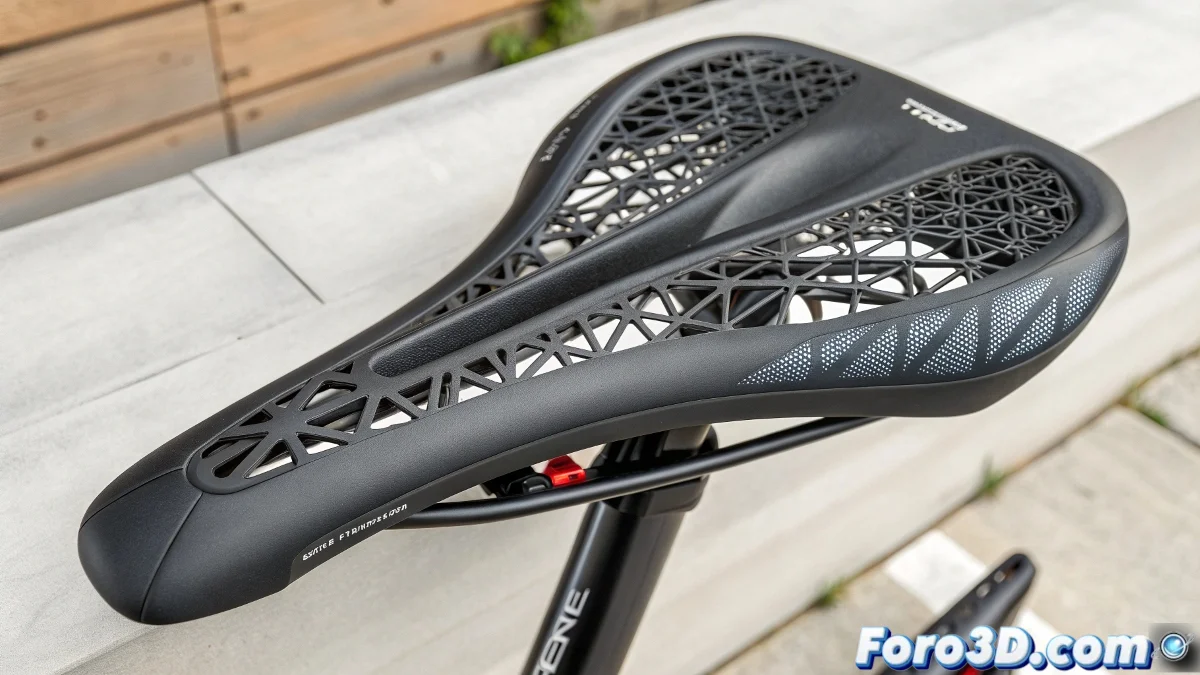
Trek revolutionizes the cycling components market with its new AirLoom saddle line, manufactured using 3D printing to offer unprecedented comfort and performance. 🚴♂️✨ This innovation leverages the unique capabilities of additive manufacturing to create complex internal structures that adapt to the cyclist's anatomy, reduce weight, and improve ventilation—all while decreasing material waste compared to traditional production methods.
The Technology Behind the Comfort
The AirLoom saddles use 3D printing to create internal lattice structures that would be impossible to manufacture with conventional methods. 🏗️ The design allows for variable density zoning, offering firm support where needed and flexibility where comfort is required. Integrated air channels run through the entire structure, promoting airflow during long rides and reducing problematic pressure points.
The AirLoom saddles represent the convergence between mass customization and athletic performance, demonstrating how 3D printing can transform even the most traditional cycling components.
Key Advantages of Additive Design
- Anatomical Customization: Adaptation to different pelvis types and pedaling styles.
- Weight Reduction: Optimized lattice structures that maintain strength while eliminating unnecessary material.
- Improved Ventilation: Controlled porosity that allows active airflow during pedaling.
- Sustainability: Manufacturing with minimal material waste compared to traditional injection molding.
Applications by Cycling Discipline
The AirLoom saddles are available in configurations specific to different disciplines: 🏔️ Road cycling with aerodynamic shapes, mountain biking with greater impact absorption, and urban riding with the perfect balance between comfort and efficiency. Each variant uses different printing parameters to optimize performance in its specific context.
Customization Process
Cyclists can choose from pre-configured options based on their body type and discipline, or opt for personalized 3D scanning for truly custom-fit saddles. 📐 The additive manufacturing process allows these customizations to be produced without additional tooling costs, making a level of customization previously reserved for professionals accessible.
Impact on Performance
Tests with professional athletes show measurable improvements in comfort during long races and more efficient power transfer. ⚡ The reduction in pressure points allows cyclists to maintain aerodynamic positions for longer without discomfort, potentially affecting competitive results in endurance events.
Future of Cycling Manufacturing
This technology opens possibilities for customization in other components—handlebars, stems, even frames—using the same principles of generative design and additive manufacturing. 🔮 Trek plans to expand the AirLoom line with integrated sensors and active adjustment systems in future iterations.
Thus, as 3D printing continues to advance, our butts will thank us for the personalized comfort… although the technology still can't solve those steep climbs that make us suffer just the same. Because in the cycling of the future, the only thing that should hurt are the legs, not the seat. 😉