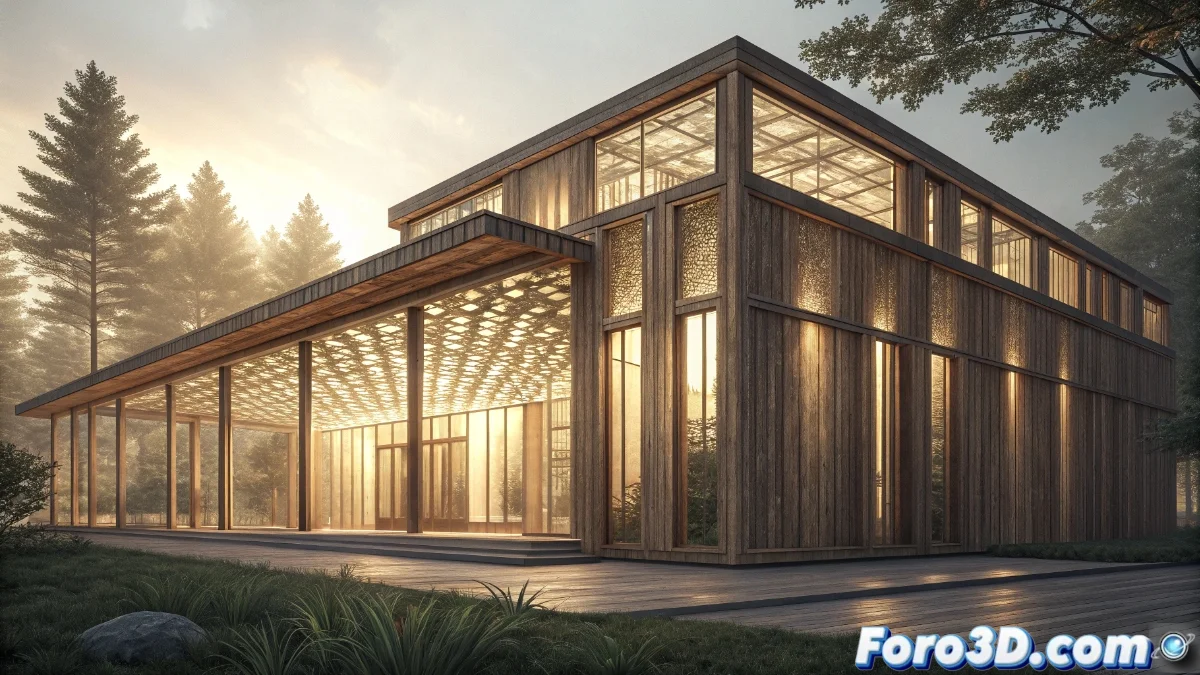
Transparent Wood: The Innovative Material That Fuses Nature and Technology
Transparent wood emerges as a revolutionary solution in the field of construction materials, integrating the structural robustness of traditional wood with light transmission capabilities comparable to those of glass. This advancement is achieved through advanced chemical processes that remove lignin—the opaque component of wood—replacing it with specialized polymers that preserve mechanical integrity while allowing controlled light passage. The result is a hybrid composite that redefines possibilities in architectural design and environmental sustainability 🌳➡️🔍.
Technical Superiority and Structural Advantages
This composite material demonstrates exceptional performance compared to conventional glass, particularly in applications requiring high safety standards and efficiency. Its fibrous structure gives it a superior impact resistance, minimizing fracture risks under mechanical stresses or external forces. Simultaneously, it presents improved insulating properties that significantly contribute to energy savings in buildings, maintaining stable thermal conditions with less reliance on climate control systems.
Key Features:- Greater impact resistance than traditional glass, reducing breakage risks
- Excellent thermal insulation that optimizes energy efficiency in constructions
- Structural flexibility that enables applications in innovative architectural designs
Transparent wood represents the perfect symbiosis between material tradition and technological innovation, offering solutions where sustainability meets advanced functionality.
Environmental Sustainability and Ecological Benefits
From an environmental perspective, transparent wood constitutes a significant advancement toward more responsible construction models. Its manufacturing process consumes considerably less energy than glass production, while also utilizing renewable resources from sustainably managed forests. The material exhibits a higher degree of biodegradability than conventional transparent plastics, with a notably reduced carbon footprint throughout its entire life cycle.
Ecological Advantages:- Production processes with lower energy consumption compared to glass
- Use of renewable resources from responsibly managed forest sources
- Improved biodegradability and significant reduction in carbon footprint
Integration of Tradition and Technological Innovation
It is particularly inspiring how contemporary technology allows us to return to fundamental natural materials used ancestrally, now through sophisticated nanotechnology processes and specialized polymer synthesis. This material evolution symbolizes the perfect marriage between traditional knowledge and scientific innovation, transforming the very essence of wood into a translucent material that retains all its structural virtues while acquiring new optical capabilities 🌟.