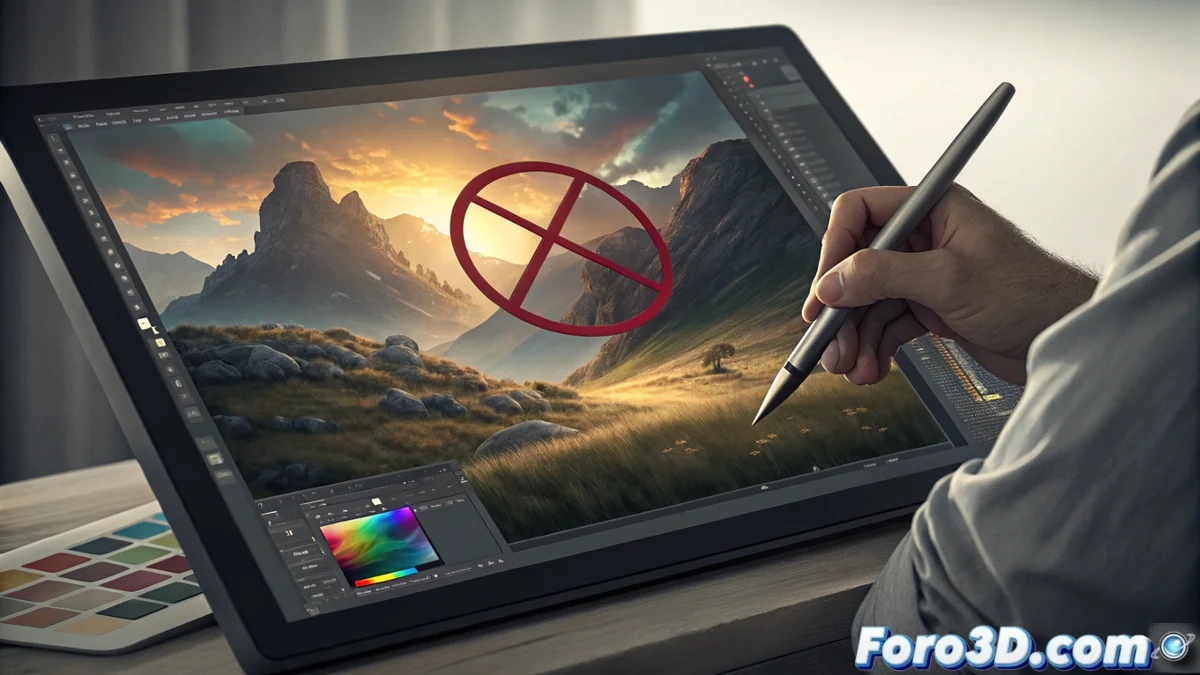
Training to Perceive Color Without Using the Eyedropper
This digital painting exercise poses a key challenge: disable the eyedropper tool. Starting from a photograph, the illustrator must mix each tone with their own hands in the color picker. The goal is not to duplicate a pixel, but to understand how light and color form in reality and then interpret it on screen. 🎨
Forcing the Brain to Process Color
By blocking access to the exact hexadecimal code, your mind processes visual information more deeply. Instead of a click, you must break down what you see: analyze if an area is warmer or cooler, if it leans toward green or magenta, and define its luminosity. This constant cycle of analyzing and manually mixing, whether with wet brushes or the picker, trains your eye to detect nuances you previously ignored.
What this process develops:- A sharper perception of subtle differences between tones.
- A more confident and quicker chromatic judgment for making decisions.
- A more intuitive control when creating and modifying any working palette.
The goal is to understand color construction, not copy a pixel.
Advantages of Practicing Consistently
Including this routine in your study generates a practical understanding of chromatic harmony. You become less dependent on the software's automatic tools and more confident when inventing palettes for imaginative scenes. The ability to mix precisely translates into pictorial work with greater authority and a more organic appearance.
Key benefits you gain:- Understand and apply color theory instinctively.
- Create illustrations with a more vibrant and personal palette.
- Build a visual and muscle memory for color, invaluable in any digital project.
The Moment of Truth on Your Canvas
The final test comes when you try to match a skin tone or the reflection in water. After several adjustments, you discover that your manual mix has more richness and vibration than the original pixel you wanted to copy. This is the sign that you have begun to perceive color with true depth. 🖌️